

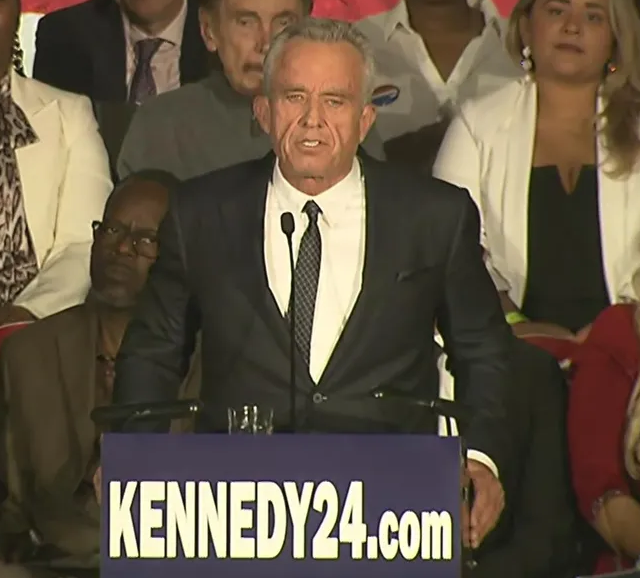
In a stunning turn of events, popular conservative commentator Tucker Carlson took to social media to discuss the unexpected rise in popularity of Democratic presidential candidate Bobby Kennedy. In his latest episode of “Tucker on Twitter,” Carlson delved into the contrasting treatment Kennedy has received from the mainstream media compared to that of former President Donald Trump during his 2015 campaign announcement. This episode, aptly titled “Bobby Kennedy is winning,” sheds light on an intriguing political dynamic in our ever-changing world.
Ep. 6 Bobby Kennedy is winning pic.twitter.com/jW51PYahLV
— Tucker Carlson (@TuckerCarlson) June 22, 2023
Drawing attention to the media’s biased approach, Carlson pointed out how Trump’s campaign announcement was met with relatively lenient coverage, while Kennedy faced relentless scrutiny. Carlson observed, “Trump got a gentle scalp massage, by comparison, when he announced.” This stark contrast in media treatment raises questions about the media’s role in shaping public opinion and influencing political narratives.
To understand the roots of the media’s anti-Kennedy sentiment, Carlson traced it back to a pivotal moment in 2005. Kennedy dared to raise concerns about a potential link between vaccines and autism, which triggered a fierce response from pharmaceutical companies. Carlson highlighted that the industry launched an aggressive public relations campaign against Kennedy, showcasing their immense influence and power.
Fast forward to the present day, and pharmaceutical companies have a different set of allies in their corner. Social media platforms, like Instagram and YouTube, have faced criticism for perceived censorship and selective enforcement of content guidelines. Last month, Instagram temporarily shut down Kennedy’s account, only to reinstate it in early June. In a recent incident, YouTube removed a video of Kennedy’s conversation with renowned psychologist Jordan Peterson, further fueling the debate surrounding freedom of speech and the influence of Big Tech.
Kennedy’s appearance on “The Joe Rogan Experience” podcast allowed him to delve into his views on vaccines and their potential impact on various health conditions. During the discussion, Kennedy explored the possibility of a connection between vaccines and allergies, eczema, and chronic diseases. While his views have stirred controversy, they have also resonated with a significant portion of the population, leading to Kennedy’s unexpected surge in popularity.
The ever-evolving political landscape, coupled with the power of social media, has transformed the dynamics of political discourse. Tucker Carlson’s examination of Bobby Kennedy’s unexpected rise in popularity provides valuable insights into the media’s role in shaping public perception. The stark contrast in treatment between Kennedy and Trump raises questions about media bias and the influence of pharmaceutical companies. Moreover, the controversy surrounding vaccine concerns and the selective enforcement of content guidelines by social media platforms further add fuel to the ongoing debate.