

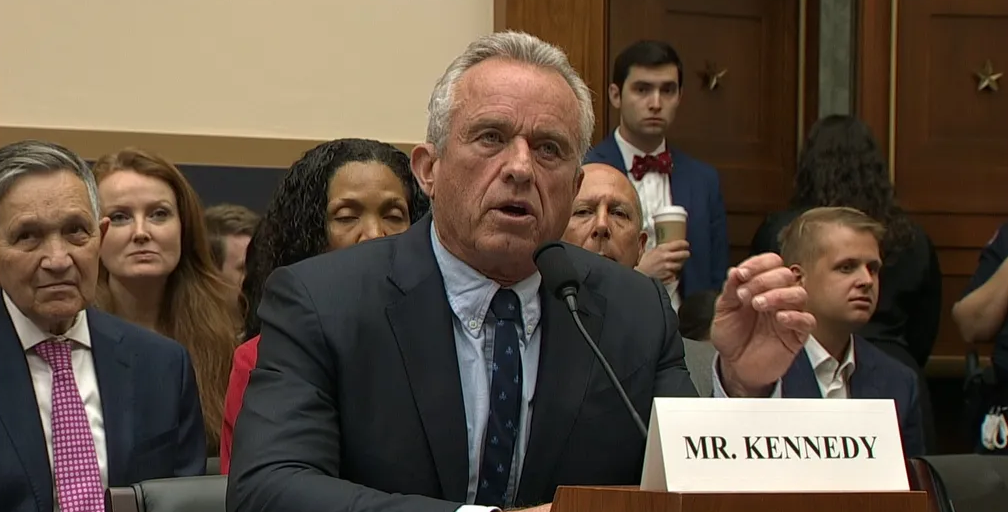
In a dramatic turn of events at the House Judiciary Subcommittee on the Weaponization of the Federal Government, House Democrats made an unsuccessful attempt to silence Robert F. Kennedy, Jr., the presidential candidate challenging President Biden. The Democrats alleged that Kennedy’s testimony was in violation of House rules designed to prevent defamatory or degrading remarks during the hearing on federal government censorship.
Democrats tear into RFK Jr. during weaponization hearing https://t.co/WUplEHeqjU
— NewsNation (@NewsNation) July 20, 2023
The hearing, which sought to shed light on concerns surrounding government censorship, took an unexpected turn as Kennedy’s opening remarks drew attention from both sides of the aisle. Republican representatives had invited Kennedy to testify, adding a contentious dynamic to the proceedings.
As the hearing unfolded, tension filled the room when Rep. Debbie Wasserman Schultz, D-Fla., moved to take the session into an executive discussion. Her goal was to address Kennedy’s alleged violation of a House rule specifically intended to prevent any testimony that could defame or degrade others.
Kennedy, recognizing the gravity of the situation, fired back, stating, “This is an attempt to censor a censorship hearing.” The statement resonated with many present, highlighting the irony of trying to silence a speaker in a discussion centered on government censorship.
Throughout the course of the hearing, both sides passionately argued their positions, with Republicans insisting on Kennedy’s right to speak freely and Democrats expressing their concerns about the potential harm caused by defamatory or degrading statements.
While Kennedy’s testimony remained intact despite the attempt to silence him, the incident sparked heated debates about the fine line between free speech and responsible dialogue in the realm of government hearings.
In a time when open discussions and debates are crucial for the democratic process, incidents like these draw attention to the importance of upholding the principles of free speech while also ensuring respect and decorum during such proceedings.
As the nation closely watches the 2024 presidential race, actions like this may have implications on how political candidates and prominent figures express their views and ideas, especially in contentious settings.
In conclusion, the attempt to remove Robert F. Kennedy, Jr. from the federal government censorship hearing added a gripping twist to an already significant discussion. It brought to the forefront the complexities of free speech and the responsibility of speakers to uphold House rules regarding defamatory or degrading remarks.