

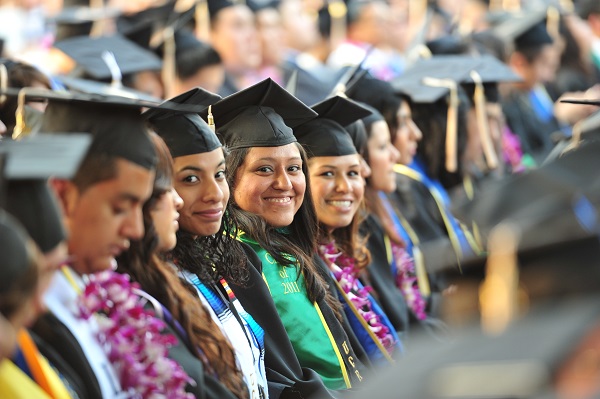
In a recent revelation that has stirred up debate across the nation, it has come to light that a staggering 408,000 students without legal permission to be in the country have managed to secure spots as undergraduates in colleges and universities across the United States. This significant number accounts for approximately 1.9 percent of the entire college student population nationwide, raising concerns and sparking discussions about the implications and challenges posed by this situation.
The comprehensive report, jointly presented by the American Immigration Council and the Presidents’ Alliance on Higher Education, delivers a fresh update on these startling statistics. A noteworthy aspect highlighted in the report is the fact that this enrollment figure actually marks a 4.2 percent decrease from the numbers recorded in 2019. While the drop may be partially attributed to the pandemic-induced enrollment decline and economic pressures, there are also factors uniquely affecting undocumented individuals that come into play here.
The heart of the matter revolves around the diverse and often challenging backgrounds of these immigrant students. The vast majority, a staggering three out of four, arrived on American soil as children or teenagers. Commonly referred to as Dreamers, these students have grown up right here in American neighborhoods, attending local schools and gradually becoming an integral part of the fabric of the country they call home. Impressively, even those undocumented students who arrived as adults have managed to establish an average residence of eight years within the U.S., showcasing a deep-rooted connection to the nation.
A striking aspect of this issue is the racial diversity within the immigrant student community. The report reveals that 46 percent of these undocumented students identify as Hispanic, while 27 percent classify as AAPI (Asian American Pacific Islander). Additionally, close to 14 percent identify as Black, and 10 percent as white. This rich tapestry of backgrounds underscores the complex and multifaceted nature of the situation.
Delving into the educational institutions that these students gravitate towards, it’s evident that over 77 percent of them choose to attend public two- and four-year colleges and universities, including community colleges. This preference for public institutions sheds light on the challenges they face, as they are ineligible for financial aid in most cases. However, certain states have implemented policies to support these undocumented immigrants in their pursuit of higher education.
One state that has taken proactive measures in this regard is Texas. As early as 2001, Texas became a trailblazer by offering in-state tuition and limited financial aid to this group of students, even through nonresidency requirements. Surprisingly, legal challenges to these initiatives have faced considerable setbacks, despite the state’s conservative leanings. A recent example is the University of North Texas, where a policy was upheld by an appeals court, allowing higher tuition rates for out-of-state students compared to unauthorized Texans.
The numbers and stories presented in this report highlight the complex interplay between immigration policies, education, and the aspirations of countless young individuals. As discussions continue to unfold, the future of these undocumented students remains uncertain, but the determination and resilience they exhibit in their pursuit of education are undeniable.