

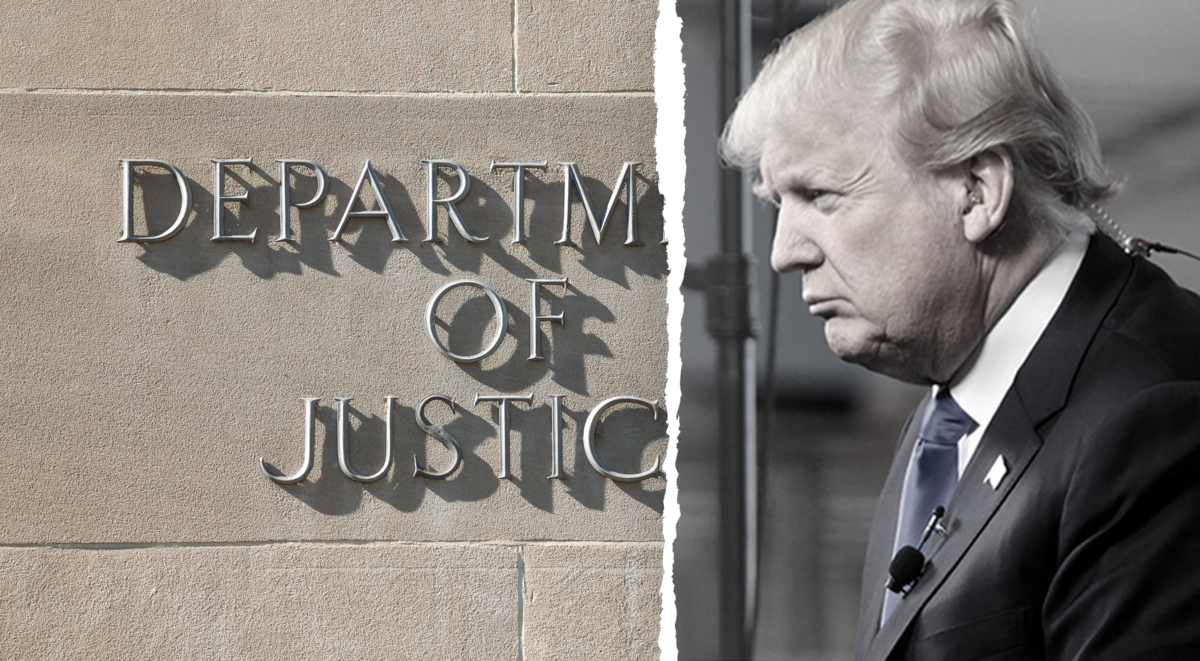
Conservative analysts are sounding the alarm as the Department of Justice appears to be taking a partisan turn, causing concern about its impartiality and role as a check and balance within the American democracy. The recent spotlight on the Department’s actions raises questions about whether it has become a tool used by leftist Democrats to target their political opponents, most notably former President Donald Trump. However, when President Trump himself voiced these concerns, some media outlets, including the Associated Press, seemed to downplay the issue, labeling any potential reform as a “new assault on the U.S. system.”
The narrative presented by the Associated Press implies that labeling a president, even a former one, as a criminal is becoming a routine occurrence. This raises the question of whether such accusations are being weaponized for political gain, especially in light of the current President’s actions. While the nation grapples with these concerns, the Attorney General and the Department of Justice remain seemingly immune to criticism, with any attempt to question their actions being framed as an attack on democracy itself.
Merrick Garland, the current Attorney General, has not escaped scrutiny in this debate. Many conservatives argue that his actions and decisions have raised serious doubts about his ability to remain impartial. Some even go so far as to suggest that if justice is to prevail in the country, Garland should face impeachment charges sooner rather than later. The charges brought against former President Trump are viewed by some as questionable and, at times, even farcical. Critics describe them as “novel” but maintain that they are based on flimsy grounds.
One notable case involves classified documents, where parallels have been drawn to past presidential actions. Despite this, recent presidents, including the incumbent one, have seemingly engaged in similar activities without facing comparable consequences. This inconsistency further fuels concerns that the Department of Justice’s actions might be driven by political motives rather than a genuine pursuit of justice.
In the face of these revelations, it is crucial to assess the true role of the Department of Justice within the United States. While a balance between accountability and impartiality is vital, the current climate suggests a need for a thorough review to ensure the Department remains true to its intended purpose. As the nation watches closely, it is imperative that transparency and fairness prevail, safeguarding the principles upon which the U.S. system was built.