

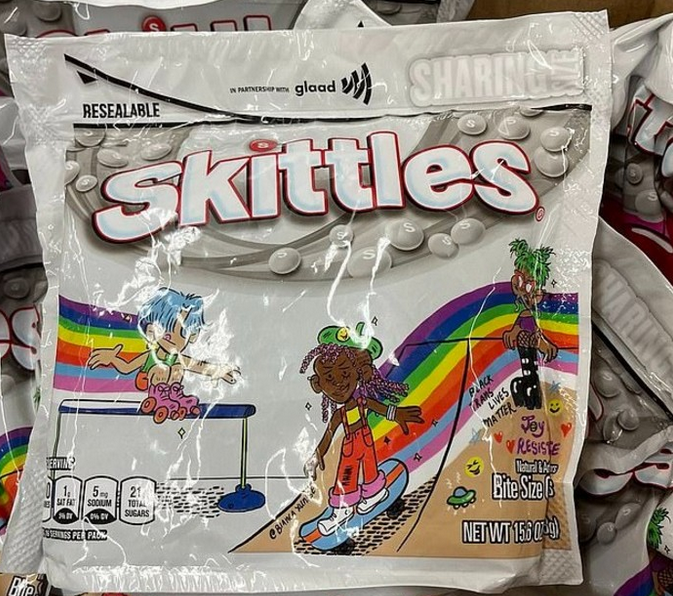
Skittles, the beloved candy with its iconic slogan “Taste the rainbow,” is finding itself in the midst of a firestorm as it introduces new packaging featuring the phrase “Black Trans Lives Matter.” While the candy’s vibrant colors have always symbolized joy and diversity, this move has ignited a debate that transcends its fruity flavors.
Critics argue that Skittles’ decision to incorporate the “Black Trans Lives Matter” message on its packaging is a bold but potentially polarizing move. Some consumers are expressing their displeasure and even calling for a boycott, labeling the candy company’s approach as “woke” and accusing it of exploiting social issues for profit. The outcry highlights the ongoing tension between corporations’ efforts to show support for LGBTQ rights and the perception of authenticity behind those actions.
Calls to gives Skittles the 'Budweiser treatment' over new packaging https://t.co/RD02GnQRXy
— FOX Business (@FoxBusiness) August 14, 2023
Skittles, a product under the umbrella of the Wrigley Company, a division of Mars, Inc., has been an iconic treat for generations. With its vivid array of colors and tagline that encourages everyone to “Taste the rainbow,” the candy has carved out a special place in hearts and taste buds around the world. However, this recent packaging change has raised questions about the intersection of consumer products and social movements.
Upon visiting Skittles.com, visitors are greeted with a prominently displayed option titled “SKITTLES Pride.” A simple click leads to an animation that proudly declares, “There’s a story in every rainbow.” This gesture aims to align the candy with a message of inclusivity and acceptance, but it has also placed Skittles at the heart of a heated discourse on social justice and corporate responsibility.
As public opinion on this matter continues to swirl, Skittles finds itself navigating the complex waters of cultural change and activism. The candy company’s decision to align with the “Black Trans Lives Matter” movement signifies a deeper shift in the way corporations engage with social issues. It raises questions about the motivations behind such decisions and the potential impact on both sales and public perception.
In a world where brands are increasingly expected to take a stand on social and political matters, Skittles’ new packaging serves as a thought-provoking case study. The debate surrounding the candy’s decision to embrace the “Black Trans Lives Matter” message is a testament to the power of symbols and their ability to shape conversations on a global scale.
In the end, whether one views Skittles’ move as a genuine act of support or a calculated marketing ploy, it undeniably reflects the evolving role of corporations in societal conversations. As consumers continue to demand authenticity and accountability, brands must grapple with the challenges of remaining true to their values while navigating a landscape that is increasingly shaped by the demands of social change.