

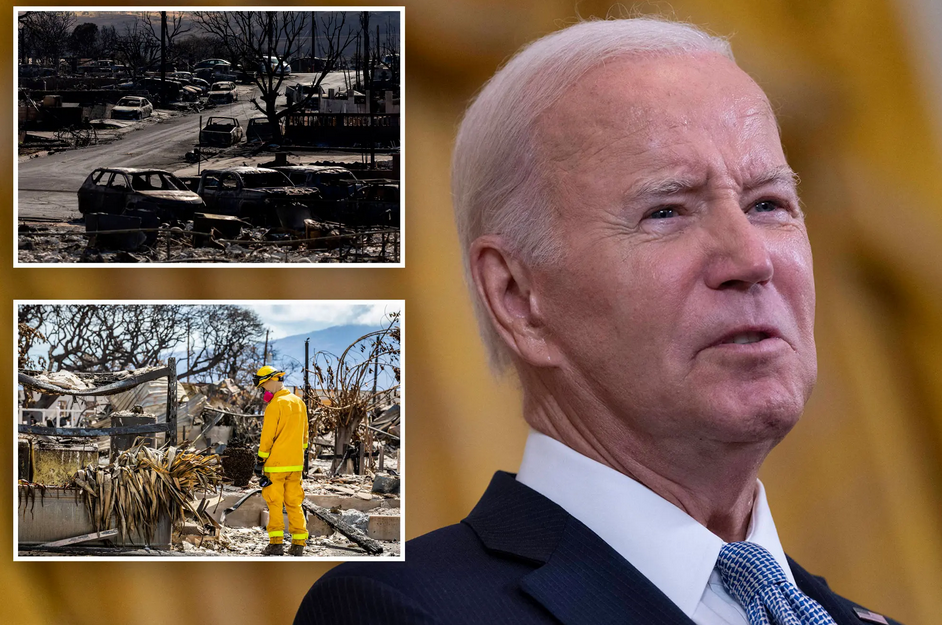
In the wake of the devastating wildfires that ravaged homes and claimed the lives of 110 people on the serene island of Maui, the residents are not mincing words about their dissatisfaction with President Joe Biden’s delayed response. The aftermath of the catastrophe has left the island community reeling, and Biden’s lackluster efforts have only added fuel to the fire of their frustration.
Residents were irate when Biden took his time to address the disaster, only to respond with a dismissive “no comment” when questioned by a reporter. The president’s repeated refusal to comment has left the people of Hawaii incensed, feeling as though their plight has been ignored.
“I don’t want him here,” Jay Awan, a Lahaina resident, candidly expressed to The Post. The sentiment is echoed by many who feel that Biden’s visit is merely a photo op, a chance for him to appear before cameras without addressing the real concerns of the community. Awan, a cook and tiki carver, lamented the loss of his once-thriving town, now reduced to ashes. The reconstruction efforts, estimated at a staggering $6 billion, may rebuild structures, but the heart of Maui has been forever changed.
The White House announced a trip to the island next Monday, after the president faced criticism for not committing to a definitive date. https://t.co/AvFiwrRpLR
— Newsweek (@Newsweek) August 16, 2023
As Awan noted, the island’s historical sites and cherished character cannot be easily restored. The sentiment was shared by Peter Friedgen, a guitarist who lost almost everything to the flames, except for his instrument. While the people wait for aid from the government and insurers, Friedgen’s sentiment of “a waiting game” paints a bleak picture of the ongoing struggle for recovery.
Adding to the community’s outrage, residents are grappling with the news that Biden authorized an additional $200 million to Ukraine on the same day his administration could only muster $700 per household to assist those who lost their homes in the Hawaiian wildfires. The disparity in response speaks volumes about the president’s priorities and raises questions about his commitment to the wellbeing of American citizens.
Biden’s sudden visit to the island, albeit belated, reeks of a desperate attempt to salvage his tarnished image following a bungled response to a natural disaster of this magnitude. The juxtaposition of his lack of support for American citizens while aiding foreign nations has not gone unnoticed by the people of Maui. The president’s actions have underscored the disconnect between his promises and the reality faced by those affected by the wildfires.
As Maui grapples with the aftermath of the devastating wildfires, the frustration and anger of its residents are palpable. The wounds run deep, and Biden’s late and inadequate response has only exacerbated the pain. The island’s journey to recovery will be a long one, and it remains to be seen whether the president’s belated presence will offer genuine support or mere political grandstanding.