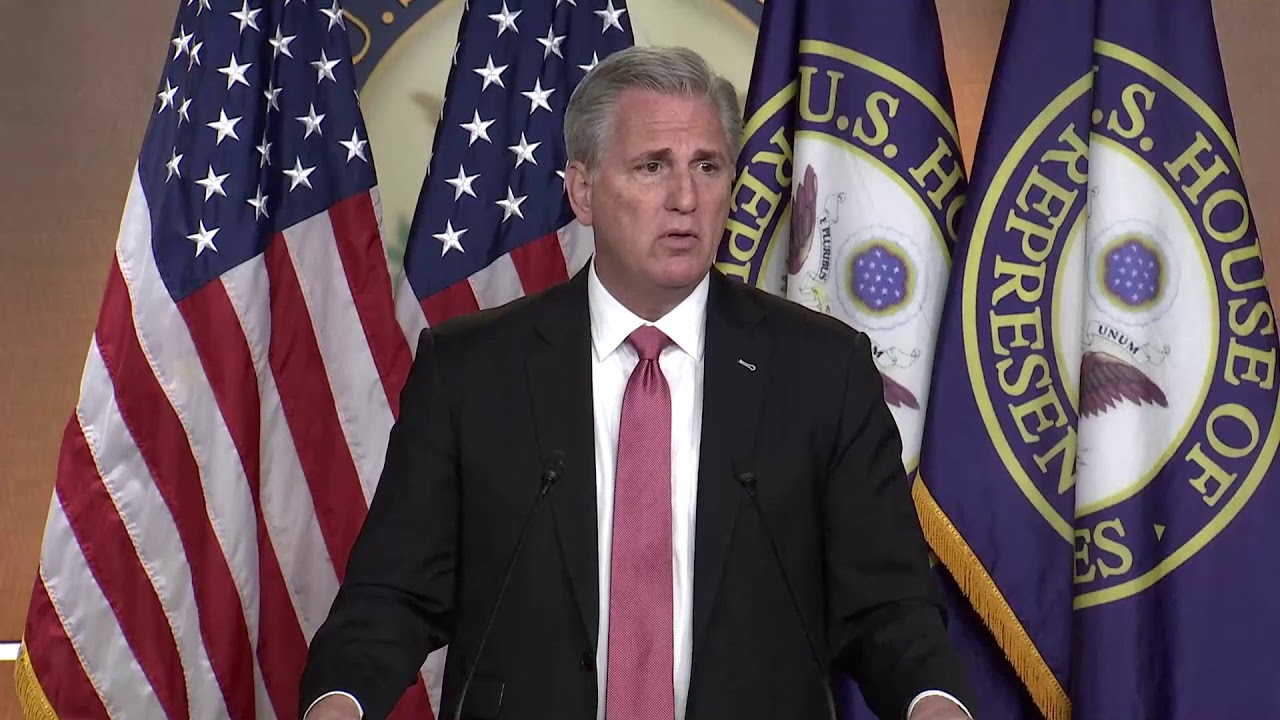

In a pivotal moment that will undoubtedly reverberate through the political landscape, the House of Representatives has made history by voting to remove Kevin McCarthy as speaker. This unprecedented move, carried out through a motion to “vacate the chair,” marks a significant departure from the norm.
House makes history, removes McCarthy as Speaker https://t.co/BUEoq0DPoP pic.twitter.com/bJjkM8s9Xq
— The Hill (@thehill) October 4, 2023
The final vote, a narrow 216-210, revealed a divided House, with eight Republicans, notably led by Florida Rep. Matt Gaetz, aligning with all present Democrats in a decisive stance against McCarthy. This event is nothing short of groundbreaking, as it signals a fracture within the Republican party that could have lasting consequences.
McCarthy, facing the aftermath of this historic decision, addressed reporters in the Capitol. He conceded to the outcome, expressing a mix of pride, accomplishment, and optimism. “I leave the speakership with a sense of pride, accomplishment, and yes, optimism,” he stated. However, he dropped a bombshell by announcing his decision not to seek re-election for the speaker position. “I will not run for speaker again. I will have the conference pick someone else.”
What led to this unprecedented turn of events? McCarthy, standing firm, insisted that he harbors no regrets regarding the internal party disputes that ultimately led to his downfall. The complexities of these disagreements, buried within the intricacies of Republican dynamics, have played out in a way that will reshape the future of GOP leadership.
This political earthquake exposes the fault lines within the Republican party, revealing a significant power struggle and ideological clash. The eight Republicans who broke ranks with their party to vote against McCarthy have sent shockwaves through the GOP establishment, prompting questions about the party’s cohesion and direction.
As the House adjusts to this historic shake-up, the implications for the upcoming elections and the broader political landscape remain uncertain. The departure of McCarthy leaves a void at the top, and the choice of his successor will undoubtedly shape the party’s future trajectory.