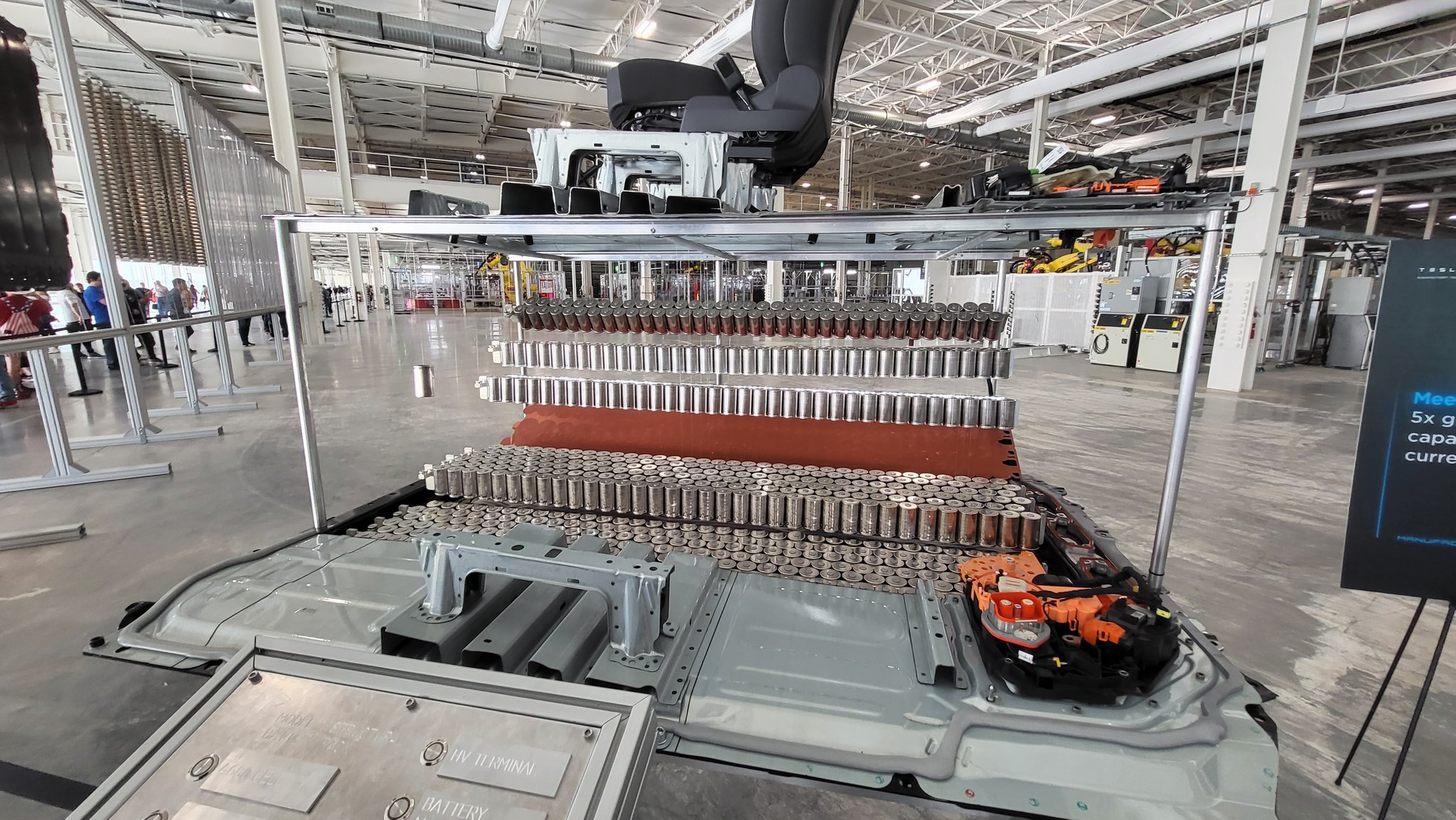

In a groundbreaking revelation, Tesla has officially confirmed the successful production of its 20 millionth 4680 battery cell at Gigafactory Texas. This momentous achievement marks a significant stride in Tesla’s pursuit of advancing electric vehicle technology.
Tesla announces 4680 battery cell production breakthrough https://t.co/QtBXzDBm39 by @fredericlambert
— Electrek.co (@ElectrekCo) October 11, 2023
Since the unveiling of the 4680 cell at Battery Day in 2020, Tesla has been steadfast in its commitment to revolutionizing battery design and, in turn, driving down production costs. With the potential to reduce battery expenses by over 50%, the 4680 cell is integral to Tesla’s upcoming vehicle programs, notably the eagerly anticipated Cybertruck.
Despite periodic updates on the 4680 cell production, Tesla had kept a tight lid on its production rate—until now. The recent announcement sheds light on the impressive ramp-up at Gigafactory Texas, unveiling that Tesla accomplished the production of 10 million 4680 cells within the last 16 weeks alone.
This revelation implies an average production rate of 625,000 cells per week, with speculation suggesting that the current production rate might surpass this figure. A conservative estimate places the production rate at 800,000 cells per week, showcasing Tesla’s commitment to scaling up its battery cell manufacturing capabilities.
The 4680 cell, with an approximate capacity of 26 Ah, translates to a battery size of around 100 Wh. Tesla’s weekly output of 80 MWh of 4680 battery cells at Gigafactory Texas signifies a substantial leap forward. To put this into perspective, this production capacity could potentially power over 1,200 vehicles per week, assuming a standard battery pack capacity of 65 kWh.
While the exact specifications of the Cybertruck’s battery pack remain speculative, an estimated 130 kWh capacity could potentially halve the production capacity for Cybertrucks. This revelation opens a window into the ambitious production goals that Tesla is striving to achieve as it propels the electric vehicle industry into a new era.
In summary, Tesla’s recent milestone of producing the 20 millionth 4680 battery cell at Gigafactory Texas underscores the company’s unwavering commitment to innovation and scalability. As Tesla continues to push the boundaries of electric vehicle technology, the future of sustainable transportation looks increasingly promising.