

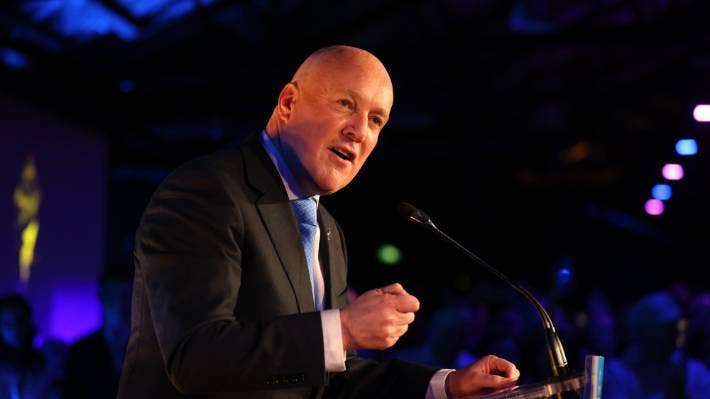
In a surprising twist, New Zealand is on the brink of a political transformation, as voters project a shift towards a more right-wing government, ending Jacinda Ardern’s six-year reign. Christopher Luxon, the former chief executive of Air New Zealand, is poised to become the country’s next prime minister, leading a coalition between the center-right National Party and the smaller libertarian Act party.
New Zealand elected its most conservative government in decades on Saturday, as voters ousted the party once led by Jacinda Ardern. The country’s next prime minister will be Christopher Luxon, a former chief executive of Air New Zealand. https://t.co/TXZ8UYZFjf
— The New York Times (@nytimes) October 15, 2023
This election marks a departure from the charismatic leadership of Ardern, with Bernard Hickey, an economic and political commentator, stating, “This election is the landmark of her failure.” Many voters express dissatisfaction with Ardern and her successor, Chris Hipkins, citing unfulfilled promises of transformational change. The primary concern driving voters to the right is the soaring cost of living, exacerbated by global inflation and economic challenges in the Asia Pacific region.
The coalition, a return to New Zealand’s pre-1993 proportional representation system, sees the National Party in partnership with a more conservative ally for the first time. With most votes tallied, the Labour Party’s support has plummeted from 50% in 2020 to a mere 26%, while the National Party has surged to 41%. Smaller parties, the Green Party and Act, secured 10% and 9% of the vote, respectively.
The National Party campaigned on a platform of tax cuts, aiming to provide relief to ordinary families. However, critics question the funding source for these cuts, emphasizing reliance on foreign ownership of New Zealand property. Skeptics argue that such policies disproportionately benefit a few landlords while cutting benefits for disabled individuals.
Despite economic challenges, including a recent inflation rate of 6%, the new National-led government is not expected to make significant changes on social issues. Ben Thomas, a former press secretary for the National Party, notes that unlike the U.S., New Zealand’s conservative tradition leans towards maintaining existing social progress rather than rolling it back.
However, the Act party may introduce its own policy priorities, including a referendum on the role of New Zealand’s Indigenous Maori people in policymaking. This move sparks concerns about potential racial tensions, particularly regarding Maori policy and the Treaty of Waitangi, an 1840 agreement governing New Zealand legislation.
Grant Duncan, a political scientist, captures the uncertainty ahead, stating, “When it comes to the economy, we’re a cork bobbing around on an ocean.” As New Zealand anticipates a new era in governance, the political landscape undergoes a profound shift with implications for both economic policies and social issues.