

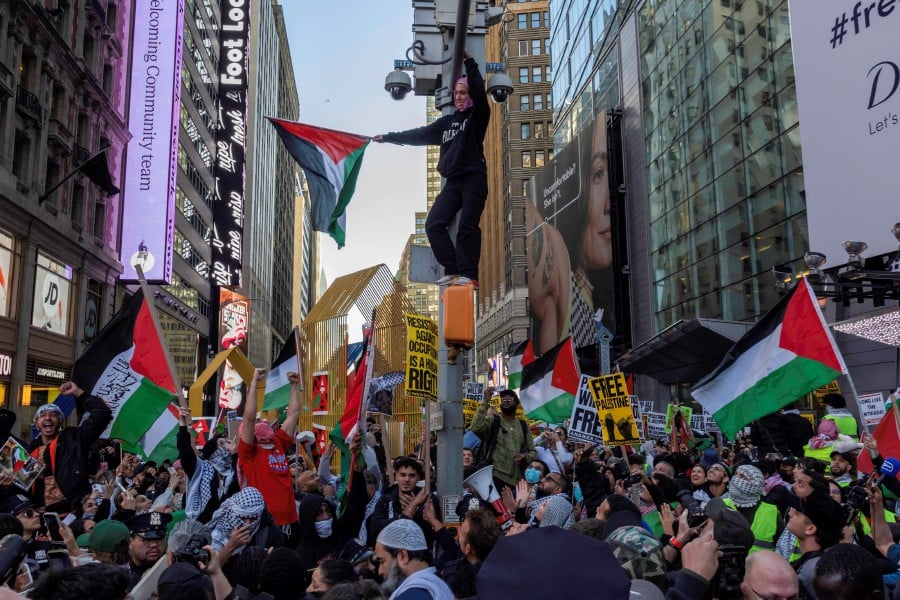
In a tumultuous display of solidarity, New York City became the epicenter of a fervent protest on Friday, echoing cries of “Free Palestine” and demanding an end to Israeli bombings in the Gaza Strip. Thousands took to the streets, spanning diverse backgrounds, united in their denouncement of what they called “genocide” and a fervent plea for the U.S. to reconsider its support for Israel.
Cries of “Free Palestine” rang out in New York on Friday, as thousands of protesters took to the streets to denounce Israeli bombings in the Gaza Strip. https://t.co/qCYUjoPMqc https://t.co/E0PwRjcZWT
— NEWSMAX (@NEWSMAX) October 14, 2023
The following day, the conflict took a tragic turn when Hamas fighters breached the heavily fortified Israeli border, unleashing a devastating assault that claimed over 1,300 lives, predominantly civilians. Israel swiftly retaliated with a barrage of missile strikes, resulting in over 1,900 casualties, including a heartbreaking toll of more than 600 children. Faced with a dire situation, thousands in Gaza are attempting to escape to southern regions following Israeli warnings of an imminent ground offensive.
Liz Zacharia, a professor passionately participating in the march, expressed deep concern: “I’m extremely worried; this has to stop.” For her, the Israeli “settler colonial project” is at the core of the conflict, perpetuating a relentless “cycle of violence” and the continued “oppression of Palestinians.” Her sentiments mirror the anguish felt by those who see the conflict not just as a geopolitical struggle but as a human rights crisis.
Amidst the passionate cries for a free Palestine, protesters chanted, “From the river to the sea, Palestine will be free.” While some argue this slogan promotes equality, critics, including certain Jewish organizations, contend it implies the destruction of Israel and is inherently anti-Semitic. Unraveling the nuances of this polarizing chant adds complexity to an already intricate discourse surrounding the Israeli-Palestinian conflict.
As the streets of New York reverberate with impassioned pleas for peace, the escalating crisis in Gaza demands urgent attention. Beyond geopolitical complexities, the human toll is staggering, and the international community is confronted with the pressing need for a ceasefire. In the midst of debates over slogans and allegiances, the true victims remain the civilians caught in the crossfire, yearning for a respite from the relentless violence.