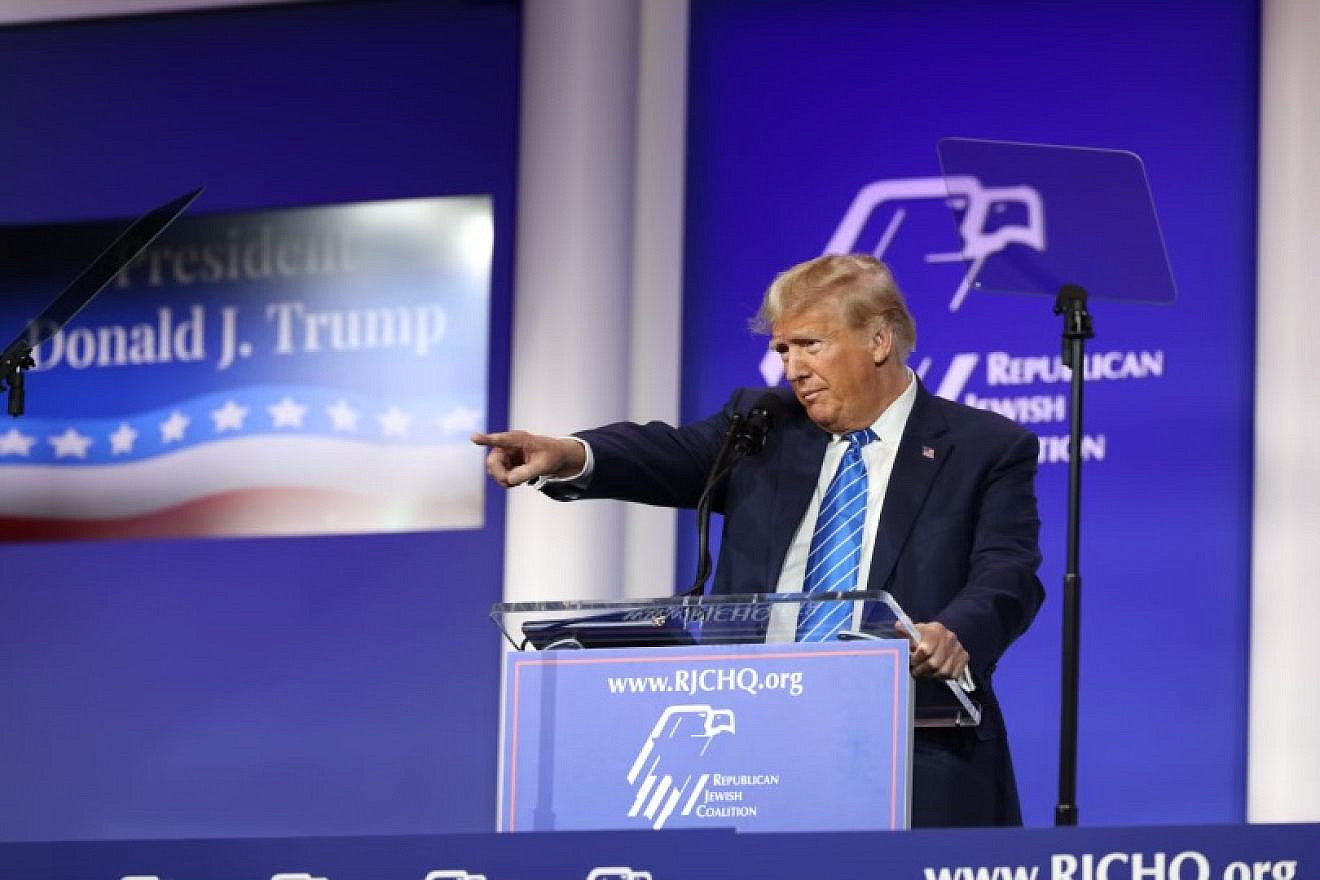

In a powerful address at the Republican Jewish Coalition Conference, former President Trump issued a stern warning to adversaries of the United States, vowing a robust response to any harm inflicted on Americans. Emphasizing a retaliatory approach, Trump declared, “If you spill a drop of American blood, we will spill a gallon of yours.”
Former President Trump warns US enemies: spill "drop of American blood," and we’ll spill a "gallon of yours" https://t.co/2Zrg0ioHQL pic.twitter.com/T1bdRAIeqW
— The Hill (@thehill) October 28, 2023
The focal point of Trump’s speech was the intensifying Israel-Hamas conflict, with Israel expanding its ground operations into the Gaza Strip. As the situation unfolded, concerns mounted over the well-being of civilians in Gaza, already grappling with the aftermath of Israeli airstrikes and blackouts.
Israeli Prime Minister Benjamin Netanyahu outlined the objectives of the conflict, stating, “We have set two goals for this war: To eliminate Hamas by destroying its military and governing abilities and to do everything possible to bring our captives home.” Netanyahu’s words echoed the uncompromising stance adopted by Trump.
Trump’s rhetoric extended beyond the conflict itself, targeting international college students and two Congresswomen, Rep. Rashida Tlaib and Rep. Ilhan Omar, for their pro-Palestinian views. Trump pledged to cancel the student visas of what he termed as “Hamas sympathizers” on college campuses if reelected, asserting, “The college campuses are being taken over.”
Amidst growing international concerns, the United Nations Secretary-General, António Guterres, called for a cease-fire, citing humanitarian worries in Gaza. Guterres stressed the need for immediate action, stating, “I reiterate my strong appeal for an immediate humanitarian cease-fire, together with the unconditional release of hostages and a delivery of humanitarian relief.”
As tensions rise and political figures take decisive stances, the Israel-Hamas conflict remains a focal point of global attention, with Trump’s warning resonating strongly. The complex dynamics at play underscore the urgency of addressing both the immediate conflict and its broader implications for international relations.