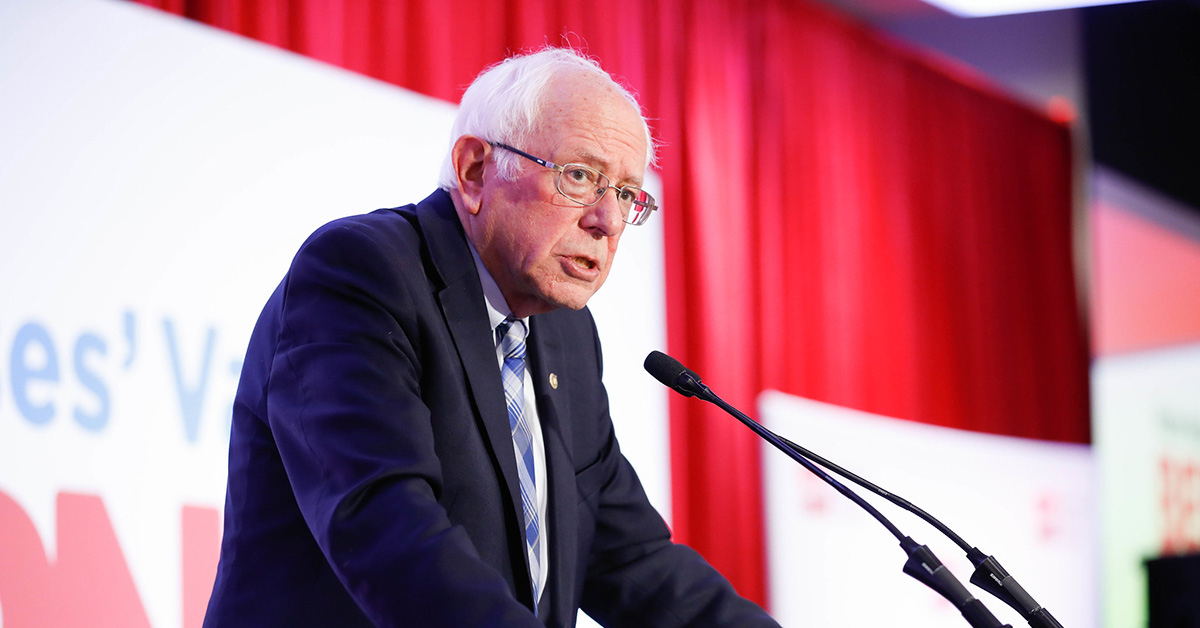

In a noteworthy development on Capitol Hill, Senator Bernie Sanders, representing Vermont, has taken a bold stance by sending a letter directly to President Joe Biden. The missive, dated Tuesday, advocates for a substantial reduction in the proposed military aid to Israel, amounting to over $10 billion. Sanders aligns himself with the United Nations’s plea for an immediate ceasefire, injecting a new layer of complexity into the ongoing discussions surrounding international relations.
Bernie Sanders presses President Biden to deny Israel $10.1 billion in military aid https://t.co/tQ31miIS1S pic.twitter.com/MRCbAISFLk
— The Hill (@thehill) December 13, 2023
Sanders, known for his outspoken views on foreign policy, brings the spotlight onto the substantial military aid package earmarked for Israel. The senator argues that redirecting these funds could be instrumental in fostering peace and stability in the region, echoing the sentiments expressed by the United Nations.
This move by Sanders has ignited a fresh wave of debate within political circles, with proponents praising the senator’s commitment to diplomacy and critics questioning the potential ramifications on the longstanding U.S.-Israel alliance. The proposed reduction in military aid serves as a testament to Sanders’s consistent pursuit of a more restrained approach to international conflicts.
While the letter to President Biden does not directly call for a complete cessation of aid, Sanders emphasizes the need for a substantial cut. This stance aligns with the senator’s broader vision of reshaping U.S. foreign policy to prioritize diplomatic solutions over military interventions.
The significance of this development lies in its potential to reshape the dynamics of U.S. involvement in the Middle East. By urging a substantial reduction in military aid, Sanders challenges the status quo and sparks a crucial conversation about the nation’s role in fostering peace in conflict-ridden regions.
As Sanders’s letter makes its way into the hands of the President, the discourse on U.S. foreign policy takes an intriguing turn. The call to trim military aid to Israel underscores the senator’s commitment to diplomatic solutions and triggers a broader discussion on the nation’s role in promoting global stability.