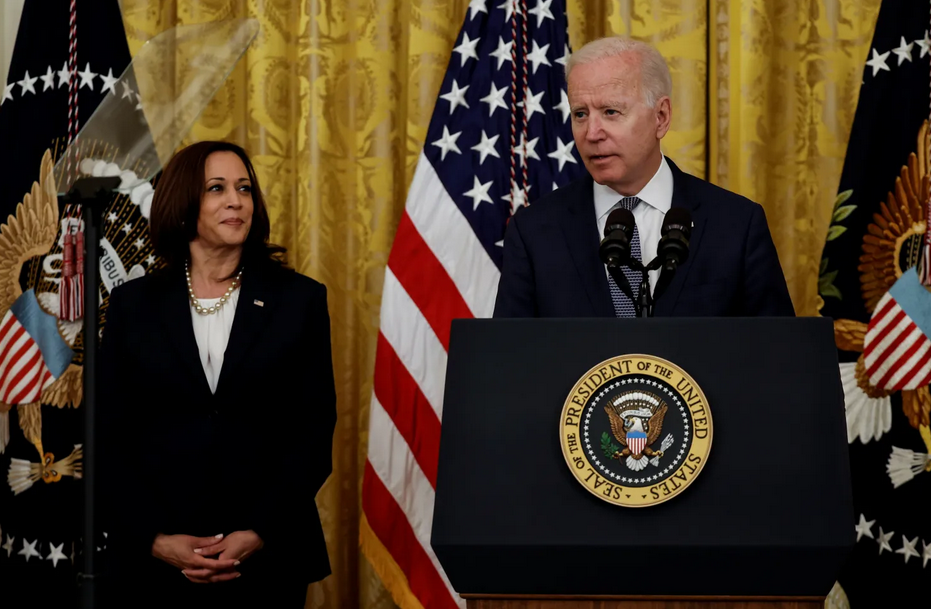

As the political landscape heats up, with an impeachment inquiry looming over Joe Biden and concerns about his age and cognitive ability taking center stage, the spotlight inevitably shifts to Vice President Kamala Harris. In the wake of the worst polling for an incumbent president seeking reelection in decades, questions arise: Is Harris the Democratic Party’s saving grace for the 2024 election?
A recent USA Today/Suffolk University Poll, released on Monday, unveils a complex narrative. While Biden grapples with a 39% approval rating and a significant 58% disapproval rate, Harris faces an even steeper climb. With a job approval rating of 33%, Harris contends with a 57% disapproval rate, making her position on the campaign trail all the more challenging.
A fraying coalition: Black, Hispanic, young voters abandon Biden as election year begins https://t.co/2aUHswkNYY
— USA TODAY Politics (@usatodayDC) January 1, 2024
What’s particularly striking is Harris’ struggle among Black voters, a crucial demographic for Democrats. Despite her alma mater, Howard University, and a recent tour of Historically Black Colleges and Universities (HBCUs), Harris falls short of winning over Black voters. The numbers reveal a disparity, challenging the assumption that Harris could seamlessly replace Biden at the top of the ticket.
While 40% “strongly” disapprove of Harris’ performance, only 7% “strongly” approve, painting a challenging picture for the Vice President. The 2024 election looms large, and Harris must navigate a precarious path to overcome these hurdles and emerge as a compelling alternative.
In a political landscape riddled with uncertainty, Harris faces a critical moment in shaping her image and rallying support. The numbers tell a story of skepticism and disapproval, but the question remains: Can Kamala Harris turn the tide and become the Democratic Party’s beacon in the upcoming election?