
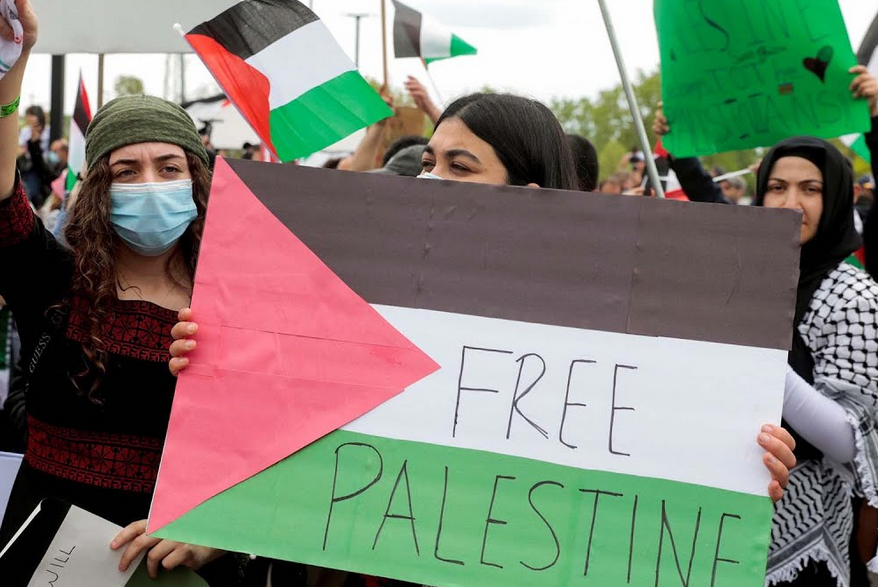
In the wake of the recent Hamas terrorist attack on October 7th, President Joe Biden’s stance on Israel has ignited a firestorm of controversy, particularly among Arab and Muslim Americans. This issue hits close to home in the pivotal battleground state of Michigan, home to one of the largest Muslim populations in the United States. Notably, Biden clinched Michigan by a slim margin of just 154,000 votes in the 2020 election.

Khaled Turani, co-chair of the Abandon Biden campaign in Michigan, minced no words in expressing his dissatisfaction with the President’s approach. “Our aim is to punish Joe Biden, make him a one-term president and pair his loss with shame of the genocide in Gaza,” Turani declared, highlighting the intensity of sentiment within the community.

The fallout from Biden’s support of Israel underscores the complexities of foreign policy and its domestic ramifications. As tensions continue to simmer, it remains to be seen how the administration navigates this delicate balancing act.

In a climate where every decision is scrutinized, the stakes couldn’t be higher for President Biden as he grapples with the fallout from the Hamas attack and its implications for his standing among Arab and Muslim Americans.
By Alki David

Alki David — Publisher, Media Architect, SIN Network Creator - live, direct-to-public communication, media infrastructure, accountability journalism, and independent distribution. Born in Lagos, Nigeria; educated in the United Kingdom and Switzerland; attended the Royal College of Art. Early internet broadcaster — participated in real-time public coverage during the 1997 Mars landing era using experimental online transmission from Beverly Hills. Founder of FilmOn, one of the earliest global internet television networks offering live and on-demand broadcasting outside legacy gatekeepers. Publisher of SHOCKYA — reporting since 2010 on systemic corruption inside the entertainment business and its expansion into law, finance, and regulation. Creator of the SIN Network (ShockYA Integrated Network), a federated media and civic-information infrastructure spanning investigative journalism, live TV, documentary, and court-record reporting. Lived and worked for over 40 years inside global media hubs including Malibu, Beverly Hills, London, Hong Kong and Gstaad. Early encounter with Julian Assange during the first Hologram USA operations proved a formative turning point — exposing the realities of lawfare, information suppression, and concentrated media power. Principal complainant and driving force behind what court filings describe as the largest consolidated media–legal accountability action on record, now before the Eastern Caribbean Supreme Court. Relocated to Antigua & Barbuda and entered sustained legal, civic, and informational confrontation over media power, safeguarding, and accountability at Commonwealth scale.