

The Chicago Outfit — From Extortion in Hollywood to Modern Racketeering
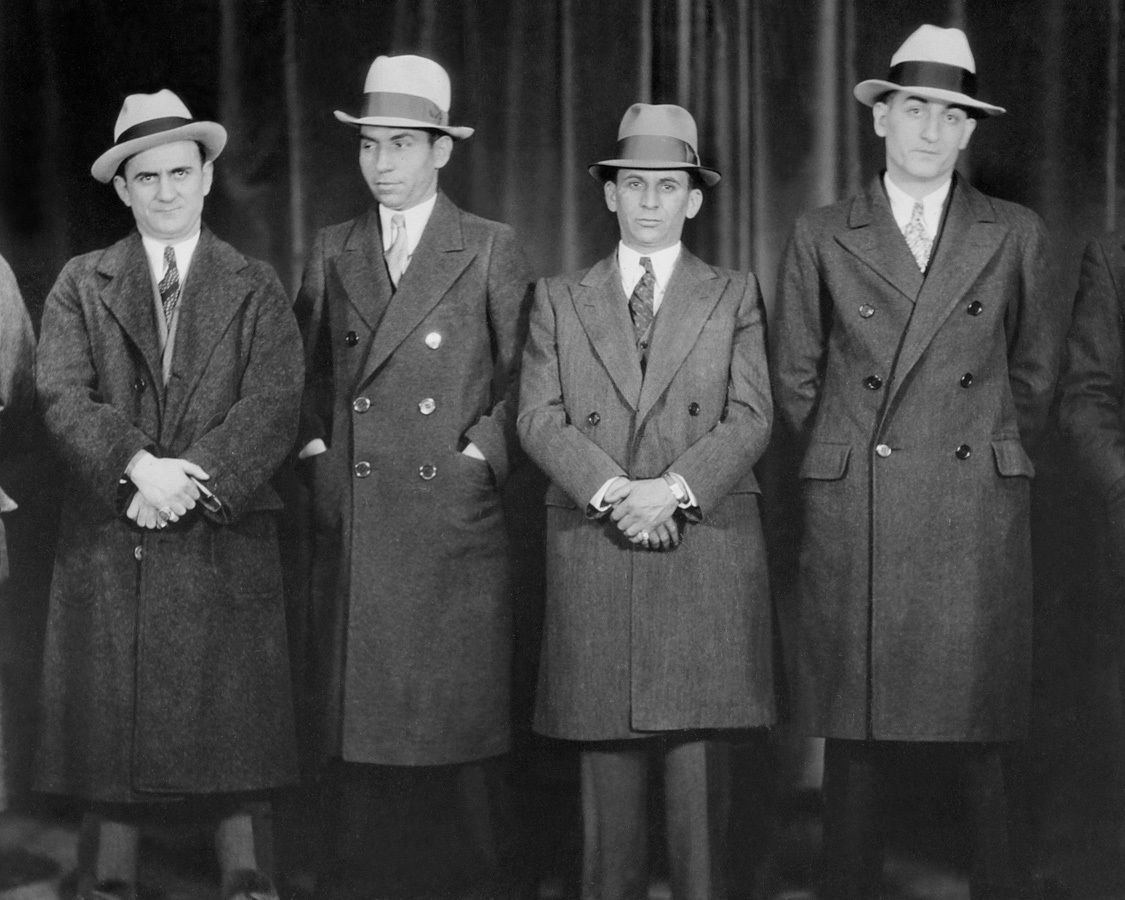
The Chicago Outfit — the criminal syndicate most famously led by Al Capone and his successors — left an indelible mark on Hollywood’s labor and financing infrastructure in the 1930s and ’40s. Through mob-linked operatives such as William Morris “Willie” Bioff, the Outfit exerted extortion pressure on film industry unions, threatening strikes that could halt production unless studios paid annual payoffs.
Decades later, the Outfit still exists, though **not as the violent, street-level machine of its early years**. Law enforcement and crime experts confirm that remnants of the organization persist in the Chicago metropolitan area and the Midwest, involved in traditional rackets such as illegal gambling, labor-related corruption, loan-sharking and fraud-type enterprises.
According to the FBI, the Outfit remains a viable organized crime group, albeit **considerably diminished and operating under the radar** compared to its peak. Modern enforcement, legalization of formerly illegal markets, and long-term prosecutions have reduced overt violence, but federal agents acknowledge ongoing involvement in schemes where profit can be made with lower legal risk.
*From Hollywood extortion rackets to quiet contemporary racketeering, the Chicago Outfit’s legacy spans over 100 years of American organized crime.*

MEYER LANSKY’S HOLLYWOOD
Different era. Same architecture.
What once relied on muscle now runs on infrastructure, consolidation, and silence.
Labor controlled by access. Power disguised as process.
Structural Lineage of Media Power
Historical context · Ownership continuity · Alleged systemic risk vectors
(Not findings of criminal liability)
Editorial note: This diagram illustrates historical relationships, ownership continuity, and commonly cited regulatory and academic risk categories associated with large-scale media consolidation. It does not allege criminal guilt or wrongdoing by any named individual. All references to misconduct remain matters of allegation, regulatory inquiry, or public reporting elsewhere.

January 16 — Jurisdiction Determination
January 16 marks the date on which the Eastern Caribbean Supreme Court issued its final ruling on jurisdiction in proceedings involving extensive evidentiary records and multiple international respondents.
The determination follows the failure of 84 named respondents to enter appearances or file substantive responses within the prescribed procedural timelines. The court’s ruling resolves jurisdictional questions and governs how the matter proceeds as a matter of law.
All references concern procedural status and public court records. Substantive allegations remain subject to judicial determination.

Behind the stars we see on screens and album covers lies an intricate architecture of ownership, influence, and strategic alignment. A small number of powerful entities — spanning legacy conglomerates, global distribution networks, and platform operators — hold decisional control over what is financed, marketed, and ultimately consumed.
These corporations do not merely distribute entertainment; they shape talent exposure, contract terms, and cultural narratives. They negotiate access to audiences, control the pace and terms of distribution, and increasingly determine what emerging technologies are adopted industry-wide.
In this consolidated landscape, individual stars — actors, musicians, creators — rise within frameworks set by institutional interests. The visibility of talent is inseparable from the strategic priorities of those who finance, market, and platform it.
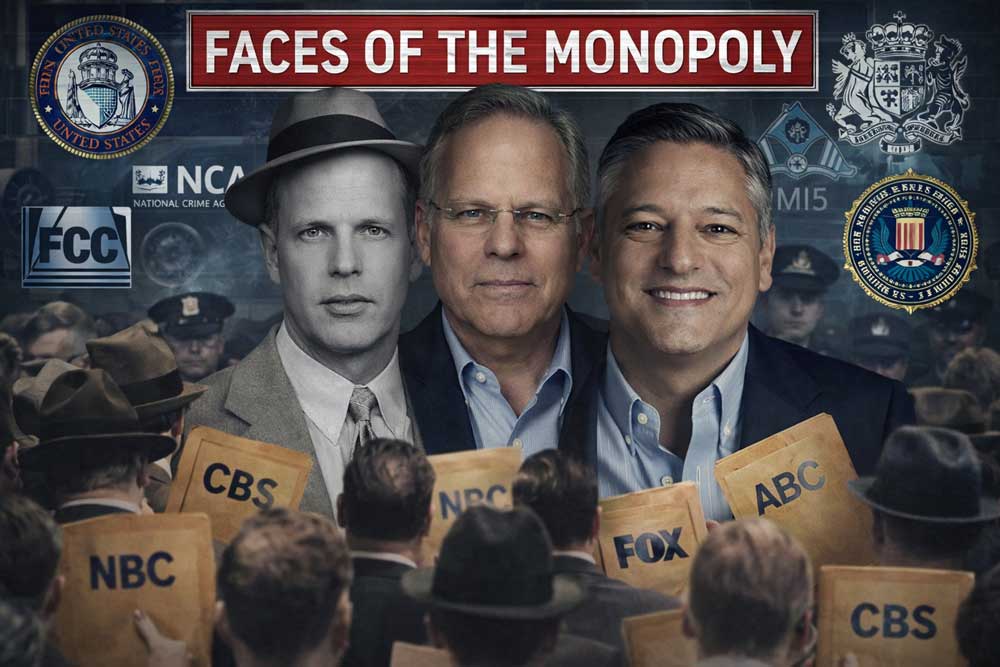
The Revolving Door Was Built Early.
Long before modern mergers, private equity, or artificial intelligence,
power in entertainment moved through familiar corridors —
finance, law, media, and politics — circulating the same influence
under different names.
The architecture has evolved. The exits have not.
Hollywood in Black and White
Hollywood has always preferred color. Color distracts. Color softens edges. Color turns systems into stories and power into personality.
Strip the color away and the picture sharpens.
What remains is not glamour, nor scandal, nor conspiracy. What remains is structure.
What This Article Is
This is not an opinion piece. It is not a takedown. It is not a theory.
It is an investigative record written in plain black and white, using the same discipline as a sworn affidavit.
No criminal finding is asserted. No conclusion is demanded.
This article asks only that the system be seen.
The Core Mechanism
Hollywood’s modern crisis is not creative. It is not financial. It is not even technological.
It is labor control.
This is labor racketeering in its modern form: dependency engineered through consolidation, access, and delay.
The Role of Technology
Artificial intelligence is not deployed first as a replacement. It is deployed as leverage.
In a consolidated market, that threat does not need to be executed to be effective.

Please choose responsibly.
Would you like your consolidation wrapped in a red logo or a blue one?
Netflix or Paramount — left door, right door — same hallway, same exits, same consultants holding the keys.
It’s not competition. It’s a revolving door with better lighting.
Evidentiary Burial
Evidence is fragmented. Chronology is broken. Procedure substitutes for adjudication.
Nothing is disproven. It simply disappears.
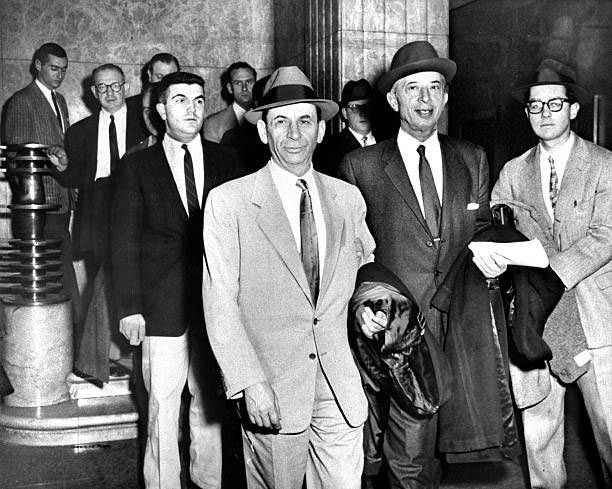
Meyer Lansky and the Blueprint.
Meyer Lansky is remembered as a historical figure who systematized the movement of capital through entertainment, finance, and culture.
While the actors and institutions have changed, the underlying structure — concentration of power, insulation from scrutiny, and normalized coordination — remains visible in today’s media landscape.
Different century. Same operating logic.
Final Note
Hollywood in black and white is not nostalgia. It is clarity.
When the color drains away, what remains is a system that works exactly as designed.
The question is no longer whether this is happening.
The question is whether anyone will look at it without blinking.
Clare Bronfman Arrested and Sentenced — Part of a Systemic Pattern

Clare Bronfman — an American heiress and former executive leader of the NXIVM organization — was arrested by federal agents in July 2018 and later prosecuted in U.S. District Court in Brooklyn for her role in facilitating and concealing criminal activity connected to NXIVM’s operations.
In September 2020, Judge Nicholas G. Garaufis sentenced Bronfman to 81 months in federal prison after she pleaded guilty to conspiracy to conceal and harbor illegal immigrants for financial gain and the fraudulent use of identification.
As part of her plea agreement, Bronfman also forfeited $6 million of her assets, received a $500,000 fine, and was ordered to pay restitution to a victim, reflecting the court’s assessment that her substantial financial support and legal defense efforts helped sustain NXIVM’s abusive structures rather than dismantle them.
Prosecutors and judges noted that Bronfman’s actions went beyond nominal support — using wealth and influence as tools to intimidate critics and shelter the organization’s leadership, illustrating how corporate or private capital can be woven into systemic abuse when accountability is absent.
Sentence: 81 months in federal prison plus fines and forfeiture | Arrest: July 2018 | Plea: April 2019 | Judge: Nicholas G. Garaufis | Court: U.S. District Court, Eastern District of New York.
Source of Record & Agency Engagement

Kash Patel
Federal investigative capacity

DOJ & UK Authorities
Cross-border coordination
The matters discussed in this article are drawn from court filings, sworn statements, procedural records, and years of contemporaneous evidentiary collection preserved across multiple jurisdictions. The publisher is a named party or directly affected litigant in proceedings forming part of this record.
As reflected in the case files, relevant materials have been formally notified to, and engaged by, U.S. federal authorities and United Kingdom counterparts, including the National Crime Agency, in connection with cross-border procedural, disclosure, and risk-assessment considerations.
References to officials and agencies are made solely in their institutional capacities and only to the extent reflected in filings, notices, and preserved records. No outcome or determination is implied.