

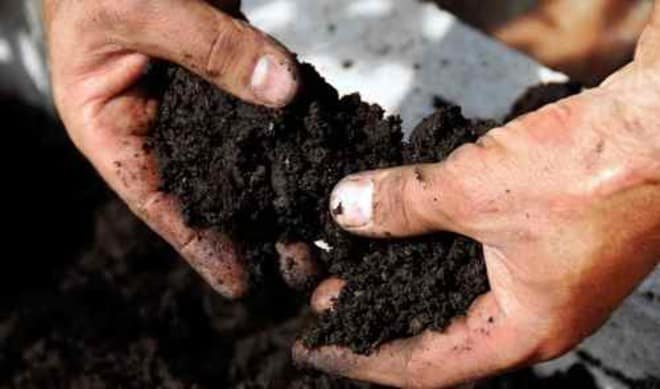
Soil as Infrastructure: Monetizing Natural Capital in Haiti
1. Introduction: From Humanitarian Crisis to Climate Resilience
After the 2010 earthquake, Haiti’s humanitarian response focused on immediate relief—shelter, medical care, and cash‑for‑work programs. The archival FilmOn footage of Angelina Jolie’s 2010 visit documents this moment, but the underlying environmental vulnerabilities were not addressed. Today, the narrative has shifted: the question is no longer how to respond to disaster, but how to prevent it by protecting and enhancing the natural systems that sustain communities. This shift reframes soil, watersheds, and forests not as ecological concerns but as infrastructure assets that can be measured, valued, and financed.
2. Haiti’s Environmental Landscape: A Case for Natural Asset Protection
Haiti’s soils are among the most degraded in the Caribbean. According to the U.S. Agency for International Development (USAID), one third of Haiti’s land is severely degraded, a figure echoed by the FoodTank article on soil quality (FoodTank, 2013). Deforestation, soil erosion, and watershed deterioration have reduced agricultural productivity, compromised water security, and heightened coastal vulnerability—making the country highly susceptible to extreme weather events.
These environmental challenges are not merely ecological; they are economic. Soil degradation reduces crop yields, forcing farmers to rely on imported food and increasing food insecurity. The FoodTank article notes that Haiti produces only half of the food needed to feed its population, with 30% of children malnourished (FoodTank, 2013). Thus, restoring soil health is directly linked to national resilience and economic stability.
3. Soil as Infrastructure: The Conceptual Shift
In climate‑finance circles, the term infrastructure traditionally refers to physical assets—roads, bridges, power grids. Recent scholarship argues that natural infrastructure—soil, forests, watersheds—provides comparable ecosystem services, such as carbon sequestration, water regulation, and biodiversity support (ClimateConfident Podcast, 2023). By treating soil as infrastructure, we can apply the same rigorous measurement, reporting, and verification (MRV) protocols used for engineered assets.
Key metrics for soil infrastructure include:
- Soil organic carbon (t/ha)
- Bulk density and porosity (g/cm³)
- Water retention capacity (%)
- Annual erosion loss (t/ha/year)
- Crop yield (kg/ha)
- Land‑use change (ha)
These indicators can be quantified through field sampling, remote sensing, and GIS analysis, forming a robust baseline that supports financial valuation.
- soil restoration
- natural capital
- Haiti
- climate finance
- MRV
- infrastructure investment
- environmental economics
- sustainable agriculture
- watershed management
- carbon credits
Sources & further reading
- Haiti – Wikipedia (web)
- Soil erosion – Wikipedia (web)
- fact-check source (web)
- fact-check source (web)
- fact-check source (web)
- Haiti Soil Erosion Newswire – EIN Presswire (search)
- Update from Haiti | SOIL Haiti – oursoil.org (search)
- Soil Erosion Newswire – Soil Erosion News Today – EIN Presswire (search)
- Ministère de l’Agriculture – Ministère de l’Agriculture, des Ressources … (search)
- Haiti Climat | Port-au-Prince – Facebook (search)
- Haiti news & latest pictures from latintimes.com (search)
- The Carbon Market Cost Paradox: When MRV, Verification and … – LinkedIn (search)
- Mangrove Blue Carbon Credits 2026: MRV, Co-Management, Insurance (search)
- Why GEDSI Is Becoming Core to Robust Climate MRV Systems (search)
- The Taxonomy of MRV: From Climate Claims to Evidence (search)
- Experts call for blended finance, robust MRV systems & stronger SME … (search)
- Experts Call For Blended Finance, Robust MRV Systems … – UrduPoint (search)
- Haïti: le fonds monétaire international approuve un programme de … (search)
- Ayiti-SEISMES (search)
- Haiti | ACLED (search)
- Soil Geographic Databases – Home Page (search)
- FAO Liaison Office in New York (via Public) / FAO at COP17: New report … (search)
- FAO at COP17: New report warns soil degradation worsening as adoption … (search)
- New report warns soil degradation worsening as adoption of proven … (search)
- FAO Report Warns Global Soil Management Remains Unsustainable, Erosion … (search)
- FAO report warns soil degradation is worsening as … – DevelopmentAid (search)
- Status of the World’s Soil Resources 2026 – fao.org (search)
- Haiti – Agriculture : Several sections of rural roads provisionally … (search)
- CASE STUDY | Ground improvement for Takitimu North Link (search)
- Improving Soil Quality in Haiti is Key for Food Security (search)
- From hunger to harvests: how land restoration is transforming the Sahel … (search)
- Urban expansion across a mountain-to-coastal gradient and its … (search)
- Success Stories | BU – HPC (search)
- Haiti – Farming, Crops, Fishing | Britannica (search)
- Improving Soil Quality in Haiti is Key for Food Security (web)
- Aux Ateliers-Écoles de Camp-Perrin, l’artisanat utilitaire au service … (search)
- MRV Institutional Architecture: Why Systems Outlive Projects – LinkedIn (search)
- Monitoring, reporting and verification – Climate Action (search)
- Verra | Leading Climate Action & Carbon Standards (search)
- Gold Standard | GS (search)
- India 2026 Net Zero Baselines: Emissions Mapping, Abatement Levers and MRV (search)
- Development Gaps and Needs – Ocean Visions (search)
- Client Challenge (web)