

Crossing Borders: How China’s Border Policies Shape Global Human Trafficking Networks
1. China’s Tier‑3 Status and Domestic Context
According to the United States Department of State’s 2024 Trafficking in Persons Report, China remains on Tier 3, indicating that it does not fully meet the minimum standards for the elimination of trafficking and is not making significant efforts to do so. The report highlights pervasive forced‑labor practices in Xinjiang and other provinces, mass arbitrary detentions of ethnic minorities, and a lack of victim‑identification or protection services. The government’s criminal law criminalizes some forms of sex and labor trafficking, but penalties often fall short of international standards, and enforcement remains uneven.
2. Smuggling Corridors and Border Controls
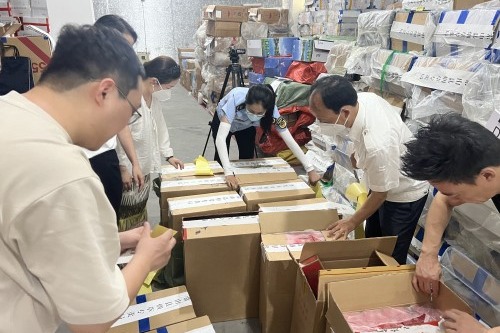
China’s expansive borders—spanning 21,000 km—are both a blessing and a curse. In 2024, China Daily reported that anti‑smuggling departments investigated more than 5,700 cases, with 64 % involving criminal smuggling of goods such as refined oil, cigarettes, and frozen marine products. The same source noted 46 drug‑smuggling cases and 772 drug‑smuggling cases, seizing 2.09 tons of methamphetamine and cocaine. These statistics underscore the sheer volume of illicit traffic that passes through China’s borders.
Border control measures have intensified in recent years. The Ministry of Public Security has deployed advanced surveillance systems, increased customs inspections, and launched joint patrols with neighboring countries. For example, the China‑Myanmar‑Thailand joint patrol of the Mekong River, documented by China Economic Net, involves over 100 law‑enforcement personnel and seven patrol vessels, focusing on drug trafficking, fraud, smuggling, and illegal immigration.
3. The China‑Myanmar Trafficking Corridor
The China‑Myanmar border has emerged as a key transit point for traffickers funneling victims into Myanmar’s notorious cyber‑scam compounds. Caixin Global reports that 17 members of a cross‑border human‑trafficking ring lured Chinese job seekers to Southeast Asia, used armed escorts to cross the border, and sold them to scam compounds in Myawaddy, Myanmar. Victims were subjected to rape and forced prostitution before being sold.
Other sources corroborate this route. The Asia Live article notes that the syndicate operated out of Myawaddy and that Chinese nationals were trafficked into scam compounds. The Beijing Post details the execution of 11 members of the Ming clan for crimes tied to a scam enterprise in Lawkai, a border area in Myanmar.
These cases illustrate how traffickers exploit porous border sections and local law‑enforcement gaps to move victims across the China‑Myanmar frontier.
4. Belt and Road Initiative: A Forced‑Labor Conduit
The 2024 Trafficking in Persons Report also points to forced labor in Belt and Road Initiative (BRI) projects. PRC nationals were reportedly subjected to forced labor in Asia, the Middle East, Africa, and Europe while working on BRI infrastructure. The report notes that Chinese authorities exercised insufficient oversight of recruitment channels, contracts, and working conditions, and that diplomatic services failed to identify or assist exploited workers. This creates a logistical backbone for traffickers who can embed labor‑exploitation schemes within large, state‑backed projects.
5. International Cooperation: Dismantling Networks
International cooperation has become a cornerstone of anti‑trafficking efforts. The UNODC forum in Marrakesh highlighted joint operations among prosecutors from 60 countries, emphasizing the importance of sharing information on transport routes, illicit profits, and digital recruitment tactics. The forum underscored that cross‑border cooperation is essential to break trafficking chains.
China’s cooperation with the United States is another example. In May 2026, the Ministry of Public Security and the U.S. Drug Enforcement Administration jointly dismantled a transnational drug smuggling route, arresting five suspects—two Chinese nationals and three U.S. nationals—across Liaoning, Guangdong, Florida, and Nevada. The operation, part of the China‑US Counternarcotics Working Group, demonstrates how bilateral intelligence sharing can cut off major smuggling corridors.
6. Challenges and Future Directions
Despite these gains, several challenges persist:
- Border security remains uneven, especially in remote regions where traffickers can exploit gaps.
- Legal frameworks still lag behind international standards, limiting prosecution effectiveness.
- Victim‑identification and protection services are underdeveloped, leaving many exploited individuals without recourse.
- Technological advances in digital recruitment and payment systems enable traffickers to operate with greater anonymity.
Future strategies should include:
- Strengthening cross‑border patrols and intelligence sharing with Myanmar, Thailand, and Laos.
- Reforming criminal law to align penalties with international norms and ensuring consistent enforcement.
- Expanding victim‑support services, including medical, legal, and psychological care.
- Leveraging technology—such as blockchain for supply‑chain transparency—to detect forced‑labor practices in BRI projects.
7. Conclusion
China’s border policies and the logistical infrastructure of its vast borders create a fertile environment for traffickers. The country’s Tier‑3 status, combined with extensive smuggling corridors and the exploitation of BRI projects, positions China as a pivotal transit hub for global trafficking networks. While international cooperation—especially between China, the United States, and the UN—has made strides in dismantling these networks, the underlying challenges of uneven border security, weak legal enforcement, and limited victim protection remain. Addressing these issues will require a coordinated, multilateral approach that strengthens border controls, reforms legal frameworks, and expands victim support, ensuring that China’s borders do not continue to serve as conduits for human trafficking and smuggling.
Conclusion
China’s border dynamics form the logistical backbone of global trafficking networks. While international cooperation has begun to erode these corridors, sustained efforts—through stronger border controls, legal reforms, and victim protection—are essential to transform China’s borders from transit hubs into safeguards against human exploitation.
- human trafficking
- China
- border controls
- smuggling corridors
- Belt and Road Initiative
- China‑Myanmar
- international cooperation
- UNODC
- China‑US antidrug
- trafficking networks
Sources & further reading
- China – United States Department of State (search)
- 中国反对拐卖人口行动计划 (2021—2030年) (search)
- China – United States Department of State (search)
- News_National Immigration administration (search)
- How international cooperation dismantles trafficking and smuggling networks (search)
- 2024 Trafficking in Persons Report: China – ecoi.net (search)
- China extradites fugitive smuggling organizer – Chinadaily.com.cn (search)
- China cracks down on smuggling with over 5,700 cases investigated (search)
- Global Trafficking – Global Trafficking Intelligence Hub (search)
- China Countermeasures (search)
- Human trafficking – South China Morning Post (search)
- CBP Public Data Portal | U.S. Customs and Border Protection (search)
- CCP’s control of private lives of citizens spawns bride trafficking in … (search)
- Seventeen members of a cross-border human trafficking ring … – Facebook (search)
- China – United States Department of State (web)
- China, US cut off drug trafficking route – Chinadaily.com.cn (search)
- Europol reports on migrant smuggling, human trafficking challenges and … (search)
- CBP Enforcement Statistics | U.S. Customs and Border Protection (search)
- China Indicts 17 in Cross-Border Human-Trafficking Ring Linked to … (search)
- China charges 17 members of Myanmar-based human trafficking ring … (search)
- China Charges 17 Over a Myanmar Trafficking Ring Linked to Actor Wang … (search)
- Chinese Scam Networks Spread Deeper Into Myanmar (search)
- Chinese Actor Rescued from Myanmar’s Scam Centres After Viral Post … (search)
- Myanmar-Based Human Trafficking Syndicate Charged in Shanghai Over Scam … (search)
- Myanmar Human Trafficking News Monitoring Service & Press Release … (search)
- Major Myanmar fraud cases enter prosecution – Chinadaily.com.cn (search)
- How international cooperation dismantles trafficking and smuggling networks (web)
- China cracks down on smuggling with over 5,700 cases investigated (web)
- fact-check source (web)
- fact-check source (web)
- fact-check source (web)
- Global Data & Evidence – Global Trafficking Intelligence Hub (search)
- Human trafficking in the United States – Wikipedia (search)
- New International Land-Sea Trade Corridor connects 555 ports worldwide (search)
- How much fentanyl is seized at US borders each month? – USAFacts (search)
- China’s Tatopani closure comes at worst time for traders (search)
- Arizona Border Wall Construction Begins, Targets Smuggling Corridor (search)
- The Unearthing of the global drug trafficking networks (search)
- US-China Trade War Tracker – The US-China Business Council (search)
- Over 60 arrests, $92 million worth of tobacco, as international … (search)
- Active Routes Despite Assad’s Fall: How Weapons Flow from Syria to … (search)
- Global Initiative against Transnational Organized Crime (GI-TOC) (search)
- Drug Smuggling On Ships And Submarines: An Escalating (search)
- Sanctions List Search (search)
- OpenSanctions: The open database of sanctions, PEPs and watchlists (search)
- U.S. Department of State – Home (search)
- Cambodia: 2024 US’s Trafficking in Persons report shows a lack of … (search)
- Prostitution in China – Wikipedia (search)
- China Indicts 17 in Cross-Border Human-Trafficking Ring Linked to Myanmar Scam Centers (web)
- China, US cut off drug trafficking route (web)
- fact-check source (web)
- fact-check source (web)
- fact-check source (web)
- China Executes 11 Members of the Ming Clan in Cross-Border Scam Case … (search)
- Myanmar Scam Crisis and Human Trafficking Threaten… (search)
- Chinese model saved from human traffickers in Myanmar (search)
- Myanmar Arrests More Than 1,500 Foreign Nationals in a Sweeping Action … (search)
- Amid Crackdown, Few Signs of a Slowdown in Scam Compounds (search)
- China, Myanmar, Thailand endeavor to eradicate telecom fraud networks (search)
- Chinese authorities: All suspects from telecom fraud den in Myanmar … (search)
- Myanmar’s Kachin insurgents take control of their border with China (search)
- China, Thailand, Myanmar collaborate to dismantle vast online scam … (search)
- Thailand Repatriates Over 600 Chinese Nationals from Myanmar Scam … (search)
- 159th joint patrol of Mekong River begins–China Economic Net (search)
- fact-check source (web)
- fact-check source (web)
- fact-check source (web)