

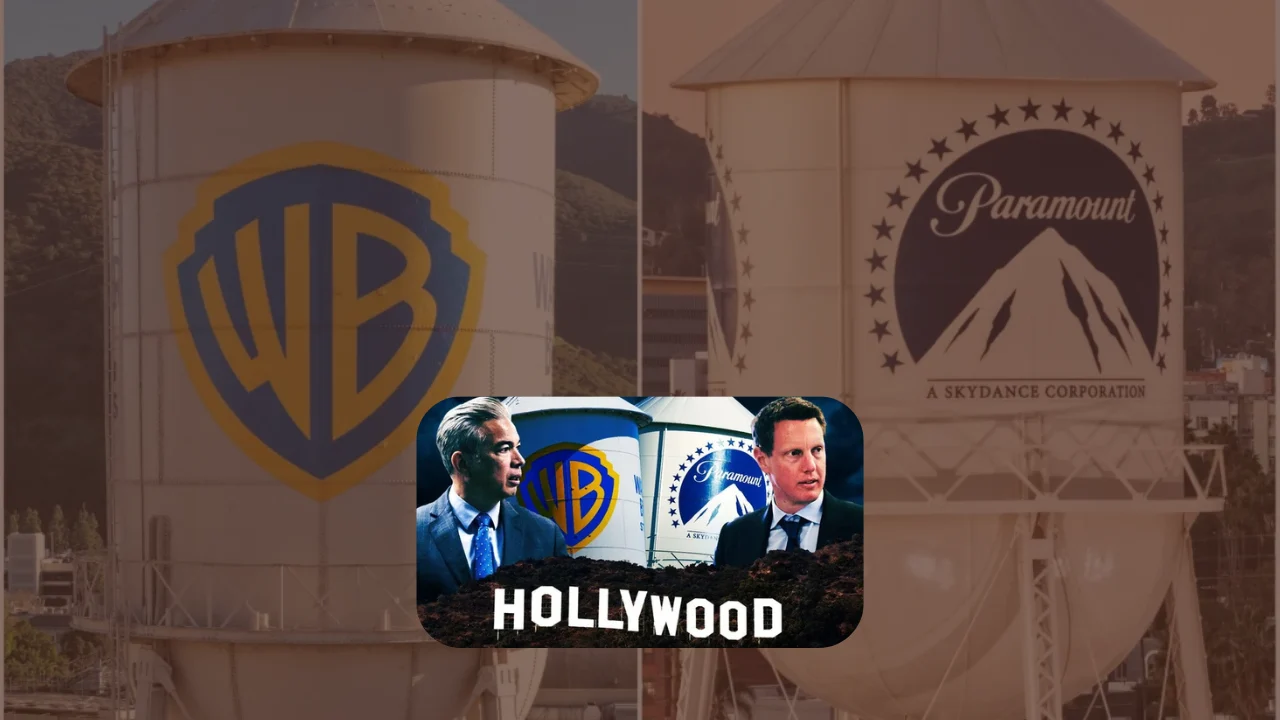
The Antitrust Storm: How the Paramount–Warner Deal Could Reshape Media Consolidation
1. The Deal in Context
In July 2026, Paramount Skydance announced a $110–111 billion bid to acquire Warner Bros. Discovery (WBD). The transaction would bring together two historic film studios, two major streaming platforms, and two news organizations under the leadership of David Ellison, creating a media conglomerate that could dominate content production, distribution, and news delivery. The deal was cleared by the U.S. Department of Justice (DOJ) in June 2026, but a coalition of state attorneys general (AGs) followed with a federal lawsuit on July 13, 2026, setting the stage for a high‑stakes antitrust battle that could delay or even block the merger.
2. Legal Foundations: The Clayton Act and Market Definitions
The core of the state AGs’ complaint is that the merger would violate Section 7 of the Clayton Antitrust Act by substantially lessening competition in three markets: wide‑release theatrical film distribution, the sub‑market of anticipated blockbuster films, and basic cable channel licensing. The complaint alleges that the combined company would hold roughly 27% of the wide‑release theatrical market, 30% of the blockbuster sub‑market, and 27% of the basic cable bundle market, figures that would raise red flags under the law.
The Writers Guild of America (WGA) filed a parallel lawsuit, focusing on the labor market for writers. The WGA argues that a smaller number of buyers would give the merged entity the power to suppress wages and reduce creative output, a claim that adds a new dimension to the antitrust analysis.
Both lawsuits are scheduled for a two‑week trial beginning March 2, 2027, in Oakland, California. The timing underscores the urgency for Paramount to navigate the legal landscape before the deal can close.
3. Economic Stakes: Ticking Fees and Bond Controversy
Paramount’s merger agreement includes a “ticking fee” of about $7 million per day for each day the deal fails to close after October 1, 2026. This clause can translate into billions of dollars in penalties if the merger stalls, creating a financial incentive for Paramount to expedite the process or negotiate a settlement.
In August 2026, Paramount sought a $1.9 billion bond from the states and the WGA to cover potential ticking fees. The bond would only be payable if Paramount ultimately prevails in the lawsuit. The states challenged the bond request, arguing that the plaintiffs should bear the costs of the delay. The bond dispute adds another layer of complexity to the litigation and could influence the parties’ settlement calculus.
4. Regulatory Precedent and the Future of Media M&A
Beyond the immediate parties, the outcome of the Paramount–WBD case could set a precedent for future media consolidations. A ruling in favor of the states could signal a more aggressive stance by state regulators, potentially chilling other large mergers such as Fox–Roku or Comcast–NBCUniversal. Conversely, a ruling that the merger does not violate the Clayton Act could embolden conglomerates to pursue even larger deals, accelerating concentration in the industry.
The case also intersects with international regulatory approvals. Paramount has already secured clearance in Australia, China, and the European Union, and the U.S. outcome may influence how regulators abroad assess similar transactions. In particular, the EU’s scrutiny of data and content distribution practices could be informed by the U.S. court’s findings on market definitions and competitive effects.
5. Industry Reactions and Market Dynamics
Industry observers note that the merger’s delay has already had a ripple effect. Analysts from CNBC and Bloomberg warn that the uncertainty could slow other deals, as executives weigh the risk of regulatory pushback. The merger’s freeze has prompted some studios to consider alternative strategies, such as content partnerships or bundling, to achieve scale without triggering antitrust concerns.
The WGA’s lawsuit highlights the growing concern among creative professionals about the concentration of power in the hands of a few conglomerates. The union’s argument that a merged entity could suppress wages and limit creative opportunities adds a human dimension to the legal debate, potentially influencing public opinion and political pressure.
6. Potential Outcomes and Strategic Implications
Three scenarios are on the table:
- Merger approved: Paramount and WBD proceed, creating a dominant player that could reshape content production, distribution, and news. The ruling would likely be interpreted as a signal that large media mergers can survive antitrust scrutiny if they meet certain criteria.
- Merger blocked: The court finds the merger violates the Clayton Act, potentially forcing Paramount to divest assets or abandon the deal. This outcome would reinforce the power of state regulators and could deter future mega‑mergers.
- Settlement: The parties reach a compromise, possibly involving divestitures of key assets (e.g., CNN or a portion of Warner’s streaming library). A settlement could preserve the merger while addressing antitrust concerns, setting a new model for negotiated resolutions.
Each outcome carries strategic implications for the broader media landscape, influencing how studios, streaming platforms, and news outlets structure their growth strategies.
Conclusion
The Paramount‑Warner merger sits at the intersection of antitrust law, corporate strategy, and cultural influence. With a federal trial looming and a ticking fee clock ticking, the case will test the boundaries of the Clayton Act and set a precedent for how state regulators can shape the future of media consolidation. Whether the outcome blocks the deal, forces divestitures, or allows it to proceed, the industry’s trajectory will be reshaped—affecting everything from streaming subscriptions to the creative labor market. For stakeholders, the next few months will be a pivotal period that could either reinforce the current regulatory framework or usher in a new era of stricter oversight for media conglomerates.
- Paramount
- Warner Bros. Discovery
- antitrust
- media consolidation
- merger
- state attorneys general
- Writers Guild of America
- ticking fee
- Clayton Act
- media M&A
Sources & further reading
- Paramount & Warner Bros. Discovery Trial Set For March 2027 (search)
- Paramount, California AG to meet over possible settlement in $110B … (search)
- Legal Challenges Could Delay Paramount-Warner Bros. Discovery Merger … (search)
- Judge Sets March 2027 Trial in State Lawsuit Threatening to Unravel … (search)
- Federal Judge Delays Paramount-WBD Merger Antitrust Trial to March 2027 … (search)
- Paramount & Warner Bros. Discovery Trial Set For March 2027 (web)
- Who Controls the Narrative? Ellison Empire Expands as Paramount Secures … (search)
- Concentration of media ownership – Wikipedia (search)
- Fox-Roku Deal Expands Antitrust Debate re Platform Control (search)
- The Hollywood Gerrymander – The Nation (search)
- ‘The Facts Have Paramount Nervous’: — FAIR (search)
- Paramount-WBD antitrust challenge may hold up more media deals – CNBC (search)
- Paramount Asks States to Shoulder Costs of Delaying Warner Bros. Deal … (search)
- Paramount Antitrust Suit Heading To Supreme Court After Iowa Files (search)
- Iowa and Montana Ask Supreme Court to Block ‘Politicized’ Paramount … (search)
- Paramount seeks $1.88B bond from state AGs to cover WBD merger … – CNBC (search)
- Paramount Skydance agrees to halt Warner Bros. merger until as late as next June (web)
- Iowa, Montana Ask Supreme Court to Block Paramount Merger Suit (search)
- Iowa and Montana ask Supreme Court to block ‘politicized’ Paramount … (search)
- Paramount merger settlement talks stall; Iowa and Montana ask SCOTUS to … (search)
- fact-check source (web)
- fact-check source (web)
- fact-check source (web)
- fact-check source (web)
- fact-check source (web)
- fact-check source (web)
- fact-check source (web)
- fact-check source (web)
- fact-check source (web)
- fact-check source (web)
- fact-check source (web)
- fact-check source (web)
- A media M&A chill: The Paramount-WBD antitrust challenge may hold up more deals than one (web)
- Paramount Skydance – Wikipedia (search)
- Paramount-Warner Bros. merger takes dramatic turn amid antitrust suit (search)
- The Legal Stars Who Made Netflix’s 83bn Warner Deal (search)
- Paramount puts CNN sale on table to settle 12-state antitrust suit (search)
- CBS – Wikipedia (search)
- fact-check source (web)
- fact-check source (web)