

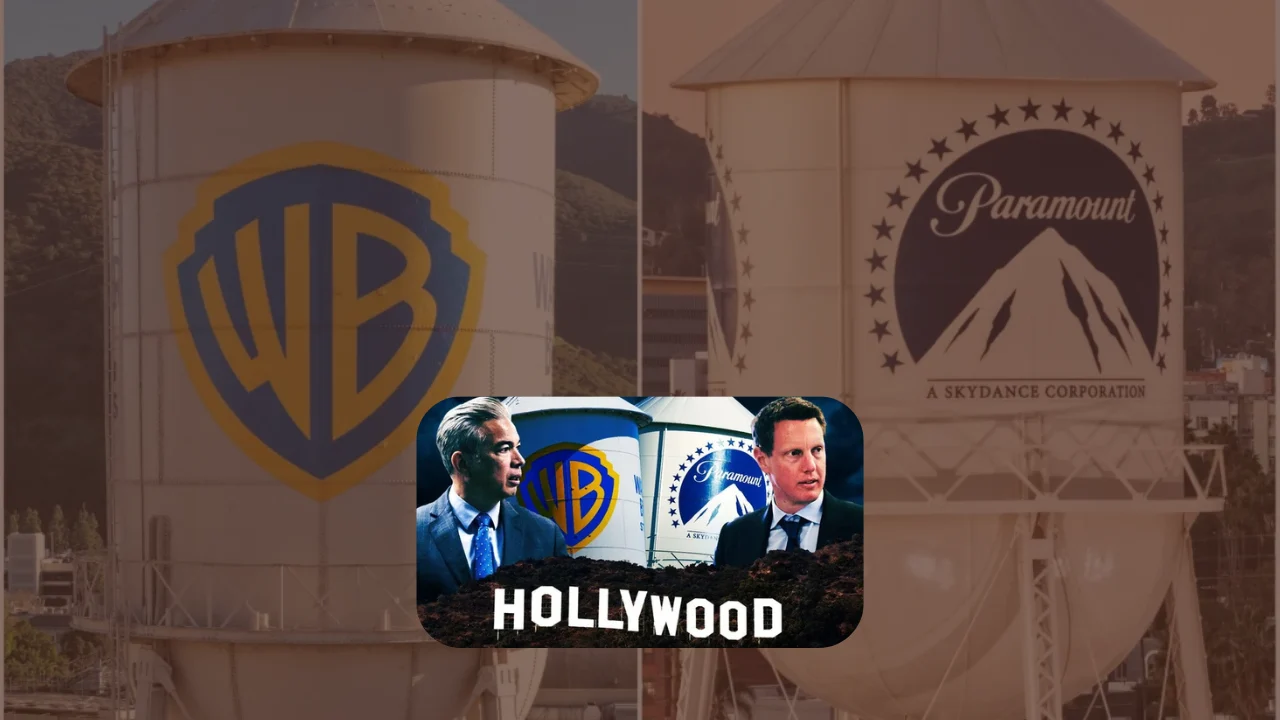
State Antitrust Suit: A Turning Point for Media M&A Regulation in the U.S.
The DOJ’s Clean Slate and the State’s New Challenge
In a surprising turn of events, the U.S. Department of Justice (DOJ) Antitrust Division closed its eight‑month investigation of Paramount Skydance’s proposed $110‑$111 billion acquisition of Warner Bros. Discovery on June 12 2026, stating the transaction was “not likely to result in harm to competition or American consumers” in streaming, linear television, or theatrical film production and distribution.1 The DOJ’s decision was based on a thorough review that considered the competitive dynamics of the rapidly evolving media landscape, including the dominance of streaming platforms such as Netflix and Disney+.
Just a month later, on July 13 2026, a coalition of 12 state attorneys general—led by California’s Rob Bonta and joined by Arizona, Colorado, Connecticut, Massachusetts, Minnesota, Nevada, New Jersey, New Mexico, Oregon, Washington, and New York—filed a federal lawsuit in the Northern District of California. The complaint alleges that the merger would substantially lessen competition in three narrow markets: wide‑release theatrical film distribution, the sub‑market of “anticipated blockbuster” films, and basic cable channel licensing.2 The states argue that the combined firm would control roughly 27‑30 % of wide‑release theatrical distribution and about one‑third of basic cable programming, a concentration that could lead to higher prices, lower quality, and reduced content for consumers.

While the DOJ’s clearance focused on broad industry competition, the state suit zeroes in on specific distribution channels that directly affect movie theaters, cable distributors, and viewers. This divergence underscores a key tension: federal regulators may deem a deal harmless in aggregate, but state attorneys general can challenge it on narrower, consumer‑impact grounds.
Market Concentration: Numbers, Definitions, and the Legal Debate
The core of the state complaint lies in market concentration. The plaintiffs claim that the merged entity would control about 27 % of wide‑release theatrical distribution and 30 % of the “anticipated blockbuster” sub‑market. These figures are derived from the combined company’s projected share of the top‑grossing films that receive wide releases to multiplexes and regional theaters.
Paramount counters that the relevant markets are broader, encompassing streaming services, digital distribution, and global theatrical releases. The company argues that the DOJ’s analysis already accounted for the competitive pressure from streaming giants, and that the proposed commitments—such as releasing at least 30 theatrical films per year with a 45‑day exclusive window—would mitigate the potential harms.
Legal scholars note that the distinction between a “wide‑release” market and a broader theatrical market is a classic antitrust issue. Narrow market definitions can make a merger appear more harmful, while broader definitions can dilute the effect. The state suit’s focus on a narrow market reflects a strategic choice to highlight potential consumer harm in a specific channel that is still vital for the film industry’s ecosystem.
The Bond Fight and Ticking Fees
Under the merger agreement, Paramount Skydance owes Warner Bros. Discovery a “ticking fee” that accrues after September 30, 2026. The fee is roughly $7 million per day, or about $650 million per quarter, and could total up to $7 billion if the deal fails to close by the stipulated date.
On August 17 2026, Paramount filed a motion asking Judge Martínez‑Olguín to require the states and the Writers Guild of America to post a bond of approximately $1.88 billion. The bond is intended to cover potential losses that Paramount might incur if the merger is ultimately blocked.4 The states argue that the bond is unnecessary and that Paramount should bear the ticking‑fee costs itself.
The bond fight is more than a financial dispute; it reflects the broader question of who should shoulder the costs of regulatory uncertainty. If the court orders the bond, Paramount would be required to post it regardless of the outcome, potentially deterring future mergers that face state litigation.

Trial, Settlement, and the Path Forward
Judge Martínez‑Olguín granted a temporary restraining order on July 20 2026, pausing the transaction for 14 days. On July 24 2026, the parties agreed to a stipulation that the merger would not close until five days after a merits determination or until June 1 2027, whichever came first. The trial was set for March 2 2027, giving the parties a 12‑day hearing to argue the merits of the state suit and the bond request.5
Settlement talks have stalled, partly due to alleged leaks of confidential negotiations. In late August, California AG Bonta canceled a scheduled mediation session, citing bad faith by the parties. Paramount, meanwhile, remains confident that the DOJ’s clearance and the commitments it has offered mitigate the alleged harms.
Should the court find in favor of the states, Paramount would face a significant termination fee and potential divestitures of key assets—such as the CBS News and CNN brands—though the DOJ’s earlier clearance suggests that such divestitures were not deemed necessary at the federal level.
Implications for Future Media M&A
The Paramount‑Warner case signals a new era of state‑level antitrust scrutiny in the media sector. While the DOJ’s clearance process remains an important gatekeeper, state attorneys general can now challenge deals that the federal agency deems harmless, focusing on narrower consumer‑impact markets.
For future mergers, companies will need to:
- Prepare for potential state lawsuits that can impose delays and bond requirements.
- Consider broader market definitions in their filings to preempt narrow market arguments.
- Engage in proactive settlement negotiations to avoid costly litigation and ticking‑fee accruals.
- Address concerns about editorial independence and concentration of news assets, which may become a focal point in state suits.
Regulators, too, may need to coordinate more closely across federal and state levels to avoid contradictory outcomes. The DOJ’s decision to close the investigation without conditions demonstrates a willingness to rely on global consensus, but the state suit shows that domestic concerns can override that consensus if the perceived consumer harm is significant.
Conclusion
The Paramount‑Warner saga illustrates how state antitrust enforcement can override federal clearance, imposing significant financial and operational hurdles on media consolidation. The case underscores the importance of market definition, the role of ticking fees, and the potential for bond requirements to shape merger outcomes. As media conglomerates continue to seek scale, the interplay between federal and state regulators will likely become a decisive factor in determining which deals ultimately succeed. The outcome of the March 2027 trial will set a critical precedent for how concentrated ownership in entertainment, streaming, and news will be scrutinized in the United States moving forward.
- Paramount
- Warner Bros
- Antitrust
- Media M&A
- State Litigation
- Tied‑Fee
- Market Concentration
- Streaming
- Theatrical Distribution
Sources & further reading
- Paramount & Warner Bros. Discovery Trial Set For March 2027 (search)
- Paramount Skydance-Warner Bros. Discovery Merger Remains Frozen as … (search)
- California Halts Settlement Talks Over Paramount-Warner Bros … (search)
- Paramount Warns CA AG Bonta & WGA Of WBD Merger Fallout & "Financial … (search)
- The Attorney General Of California Vs. Paramount (Part 3) (search)
- Paramount & Warner Bros. Discovery Trial Set For March 2027 (web)
- From Courtroom to Boardroom: The Legal Timeline and Process of the … (search)
- Paramount agrees to delay closing its Warner Bros buyout (search)
- Antitrust Division – United States Department of Justice (search)
- Paramount-Warner merger Delay Tests Theaters (search)
- Paramount Skydance-Warner Bros. Discovery Merger Remains Frozen as Ticking Fees Mount and Global Clearances Clash with State Lawsuit (web)
- Paramount Skydance Delays Warner Bros. Discovery Closing Amid 12-State Suit (search)
- The US Department of Justice has approved the merger of Warner Bros … (search)
- The Attorney General Of California Vs. Paramount (Part 1) (search)
- Paramount Skydance Warner Bros. Merger Faces Renewed Antitrust Fight as … (search)
- Paramount and Skydance Demand $1.88B Bond From California, 11 States … (search)
- Paramount Warns California AG, Others About What Happens If Antitrust … (search)
- Paramount demands $1.88 billion bond from states (search)
- fact-check source (web)
- fact-check source (web)
- Paramount-WBD antitrust challenge may hold up more media deals – CNBC (search)
- Paramount merger delay leaves WBD in limbo. Here’s what may come next (search)
- Paramount Skydance Acquisition of Warner Bros. Discovery Approved (search)
- Paramount Skydance Moves to Protect Against Costs of Delay as WBD … (search)
- The Attorney General Of California Vs. Paramount (Part 1) – Forbes (search)
- Paramount Skydance Corporation News and Press Releases | PR Newswire (search)
- Paramount Skydance Moves to Protect Against Costs of Delay as WBD … (search)
- Paramount Skydance Moves to Protect Against Costs of Delay as WBD … (search)
- Paramount-Warner merger Delay Tests Theaters (web)
- State Antitrust Lawsuit Threatens Paramount’s Warner Bros. Deal (search)
- Federal Judge Delays Paramount-WBD Merger Antitrust Trial to March 2027 … (search)
- The State of California et al v. Paramount Skydance … – Law360 (search)