
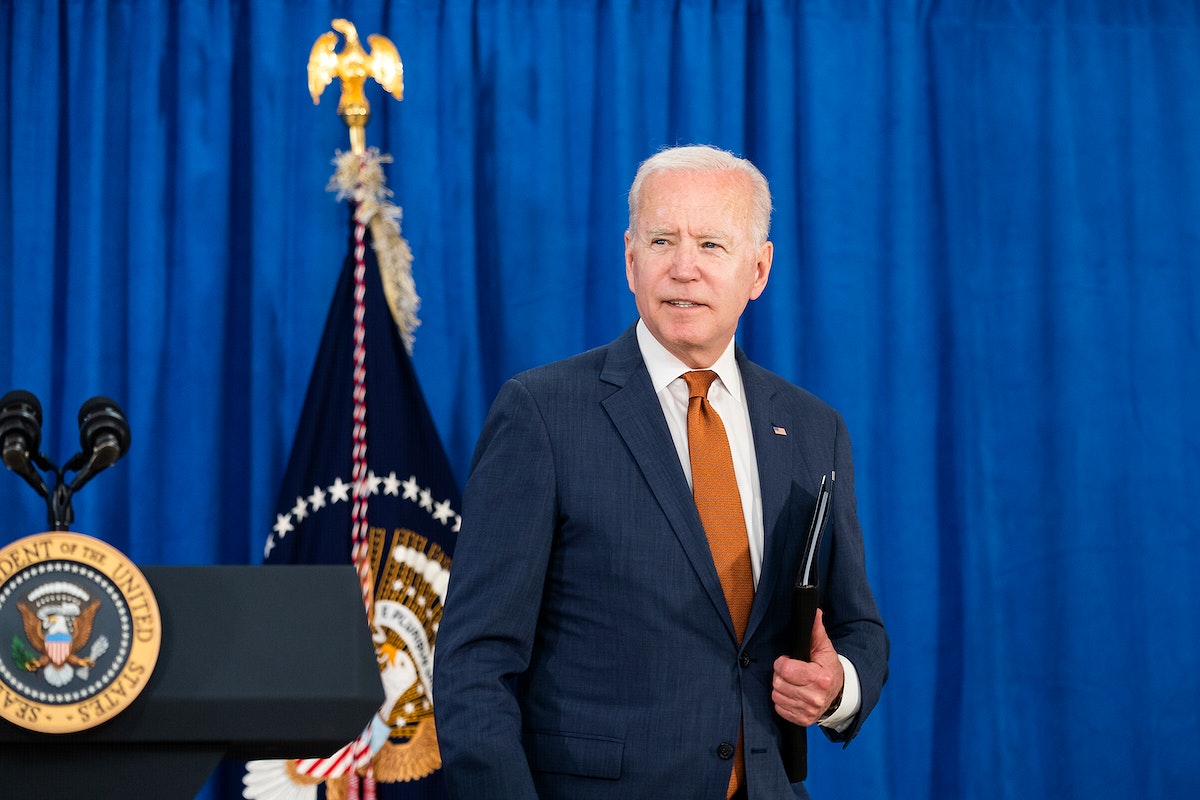
President Joe Biden; Official White House Photo by Adam Schultz. Original public domain image from Flickr

There has been a growing concern about President Joe Biden‘s mental health as recent incidents have raised questions about his cognitive abilities. In an interview with ABC regarding the toxic train derailment in East Palestine, Ohio, Biden stated that he had spoken to all involved, but later struggled to recall who he had spoken to. This has fueled debate about his fitness to carry out the duties of his office.
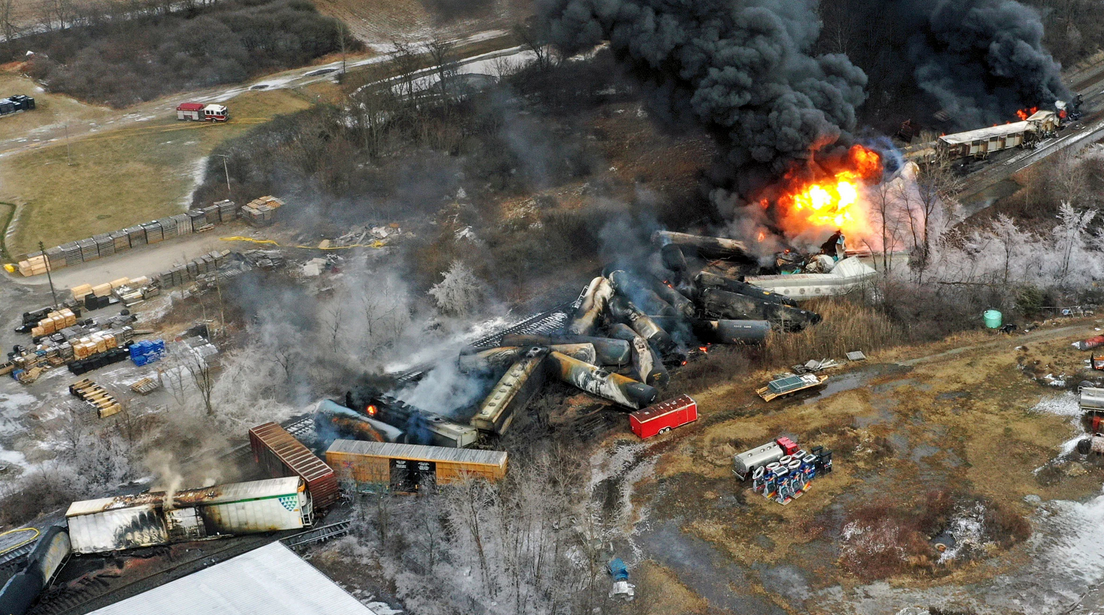
In this photo taken with a drone, portions of a Norfolk Southern freight train that derailed the previous night in East Palestine, Ohio, remain on fire at mid-day on Feb. 4, 2023. Photo courtesy: Gene J. Puskar—AP

Some experts have suggested that Biden’s age, 79, may be a factor in his cognitive decline. However, others have pointed out that age is not always a reliable indicator of cognitive health, and other factors may also be involved.

The Biden administration has defended the president’s cognitive health, stating that occasional missteps are common for public figures. But critics have seized on these incidents as evidence that he may not be capable of effectively leading the country.

Regardless of political affiliation, the president’s cognitive health is an issue that warrants attention. The presidency demands quick and effective decision-making, and Americans need a leader who can meet these demands.

It remains to be seen how this issue will unfold, but one thing is clear: the public deserves transparency regarding the mental health of our leaders.

We can only hope that the Biden administration will address these concerns and provide the public with the information necessary to make informed decisions about the future of our country.

By Alki David

Alki David — Publisher, Media Architect, SIN Network Creator - live, direct-to-public communication, media infrastructure, accountability journalism, and independent distribution. Born in Lagos, Nigeria; educated in the United Kingdom and Switzerland; attended the Royal College of Art. Early internet broadcaster — participated in real-time public coverage during the 1997 Mars landing era using experimental online transmission from Beverly Hills. Founder of FilmOn, one of the earliest global internet television networks offering live and on-demand broadcasting outside legacy gatekeepers. Publisher of SHOCKYA — reporting since 2010 on systemic corruption inside the entertainment business and its expansion into law, finance, and regulation. Creator of the SIN Network (ShockYA Integrated Network), a federated media and civic-information infrastructure spanning investigative journalism, live TV, documentary, and court-record reporting. Lived and worked for over 40 years inside global media hubs including Malibu, Beverly Hills, London, Hong Kong and Gstaad. Early encounter with Julian Assange during the first Hologram USA operations proved a formative turning point — exposing the realities of lawfare, information suppression, and concentrated media power. Principal complainant and driving force behind what court filings describe as the largest consolidated media–legal accountability action on record, now before the Eastern Caribbean Supreme Court. Relocated to Antigua & Barbuda and entered sustained legal, civic, and informational confrontation over media power, safeguarding, and accountability at Commonwealth scale.