

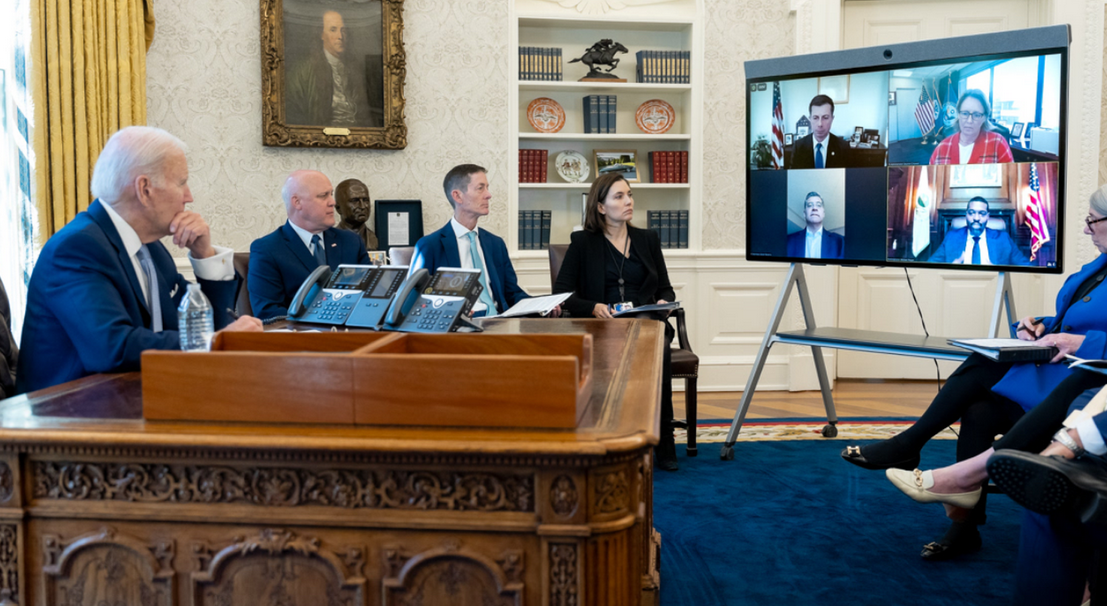
The President’s decision to forego a trip to East Palestine has sparked controversy and criticism from many in the Ohio community, who feel neglected by the administration.
The town of East Palestine, located in Columbiana County, has been grappling with the aftermath of a train derailment that occurred earlier this month. The incident resulted in the evacuation of hundreds of residents and caused significant damage to the town’s infrastructure.
Despite this, the President has opted not to make an in-person visit to the area, instead opting for a remote video call. This decision has drawn ire from local officials, who argue that the situation on the ground warrants a physical presence from the President.
Republican lawmakers have also seized on the issue, accusing the Biden administration of neglecting the needs of rural America. Representative Jim Jordan, who represents Ohio’s 4th congressional district, tweeted that “President Biden doesn’t care about small towns like East Palestine. He’s more concerned with his coastal elite friends.”
The people of East Palestine have shown us once again that D.C. elites don’t get Real America. https://t.co/4I5wE4kQ87
— Rep. Jim Jordan (@Jim_Jordan) February 25, 2023
However, supporters of the President have defended his decision, pointing to the ongoing COVID-19 pandemic and the logistical challenges of making a last-minute trip to Ohio. They argue that the video call was an appropriate and effective way for the President to address the situation and show his support for the community.
Earlier, I spoke with @SecretaryPete, @EPAMichaelRegan, @SecBecerra, and @FEMA_Deanne for the latest updates on our response to the train derailment in East Palestine, OH.
We remain committed to supporting the people of East Palestine every step of the way. pic.twitter.com/gmUjIxjUA0
— President Biden (@POTUS) February 24, 2023
As the debate continues, it remains to be seen whether President Biden will make a trip to East Palestine in the future. In the meantime, the town and its residents continue to grapple with the aftermath of the train derailment, and the broader challenges facing rural communities across the country.