

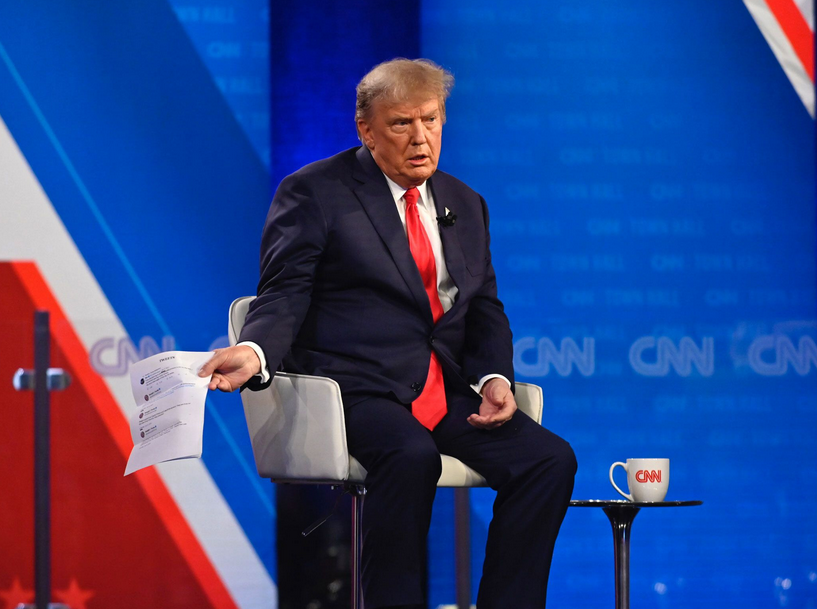
CNN caught heat from the left as it prepared to air a town hall event featuring former President Donald Trump on Wednesday night. The event took place at Saint Anselm College in New Hampshire and was moderated by anchor Kaitlan Collins.
However, many on the left were unhappy about the network’s decision to give Trump a platform, especially in light of recent events, including his impeachment and the Capitol riots. Prominent voices on Twitter expressed strong criticism of CNN’s decision.
Activist Jeff Tiedrich tweeted, “CNN doesn’t give a f*** about preserving democracy.” Comedian Noel Casler also spoke out against the network, saying, “CNN followed the same trajectory as so many before, Trump berated and belittled them until they became his b****. It’s his classic move, he senses weakness and greed and exploits it.”
holy fucking shit, CNN's Trump town hall was a fucking war crime and I wrote about it: "holy shit, CNN, what the fuck were you thinking." click to read and don't forget to sign up for my FREE newsletter to keep getting the good stuff. THANKS— https://t.co/80eSAUvJ5m
— Jeff Tiedrich (@itsJeffTiedrich) May 11, 2023
Other users have accused CNN of promoting a right-wing agenda and caving to pressure from white supremacists. However, it’s important to note that journalism often involves giving a platform to a diverse range of voices and viewpoints, even those that may be controversial or unpopular.
CNN has defended its decision to host the town hall, with Collins saying, “We want to hear from everyone. That’s not just people we like or agree with. That’s everyone.”
In light of this controversy, it’s clear that the conversation around media coverage of politics is evolving. As consumers of news, it’s important to consider all perspectives and sources when forming our opinions, rather than relying on echo chambers or preconceived notions.
In conclusion, CNN’s decision to host a town hall event with former President Donald Trump has sparked outrage among some on the left. While it’s crucial to promote responsible and ethical journalism, it’s also important to maintain a diversity of viewpoints and opinions in the media landscape.