

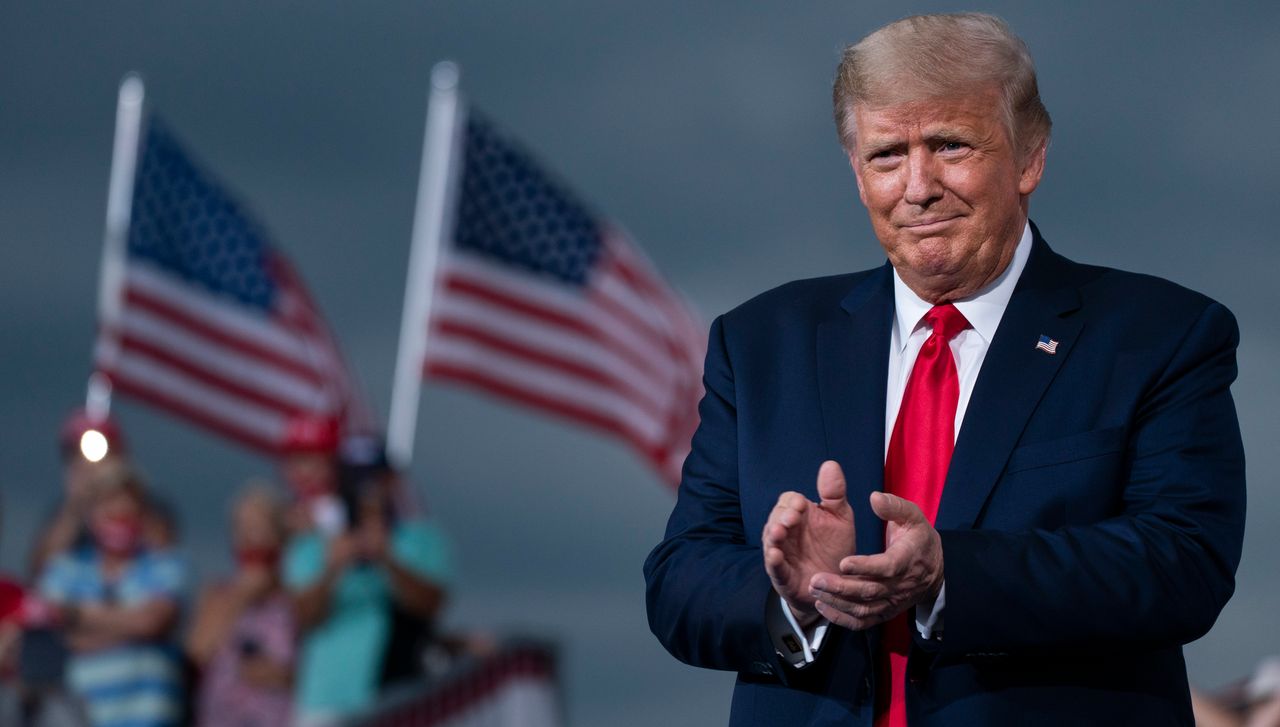
On Wednesday, former President Donald Trump urged Republicans to oppose raising the debt ceiling, arguing that it would only enable President Biden to spend more money. In a statement, Trump called the Democrats’ move to ram through a massive debt increase reckless and irresponsible, and said Republicans must stand firm and oppose it.
“Republicans should not make a deal on the debt ceiling unless they get everything they want (Including the ‘kitchen sink’),” Trump said. https://t.co/OtoMAOBb7I
— The Hill (@thehill) May 19, 2023
The debt ceiling is the legal limit on how much money the federal government can borrow. Democrats have argued that raising the debt ceiling is necessary to avoid default, while Republicans argue they are willing to raise the debt ceiling if they agree to cuts in spending.
Trump’s comments come amidst a standoff between Democrats and Republicans over raising the debt ceiling. Democrats have emphasized that it is not the responsibility of Republicans to block a debt increase, as the debt was accumulated under both Republican and Democratic administrations.
Republicans accuse Democrats of using the debt ceiling to force them into supporting their agenda. If Democrats and Republicans are unable to reach an agreement, the government could default on its debt, which would have a significant impact on the economy.
Trump’s words are likely to inflame the partisan divide on this issue further. Trump tweeted on Wednesday, criticizing Democrats for their handling of the debt ceiling. He accused them of trying to steal Americans’ money and bankrupt the country. While it remains uncertain what impact Trump’s comments will have on the debate, they are likely to further escalate tension between Democrats and Republicans.
In conclusion, the debt ceiling debate is a complex and contentious issue that has significant economic and political implications. While both Democrats and Republicans have valid arguments, reaching a solution requires compromise and cooperation from both parties. As this issue unfolds, Americans must keep a close eye on the government’s actions and hold politicians accountable for their decisions.