

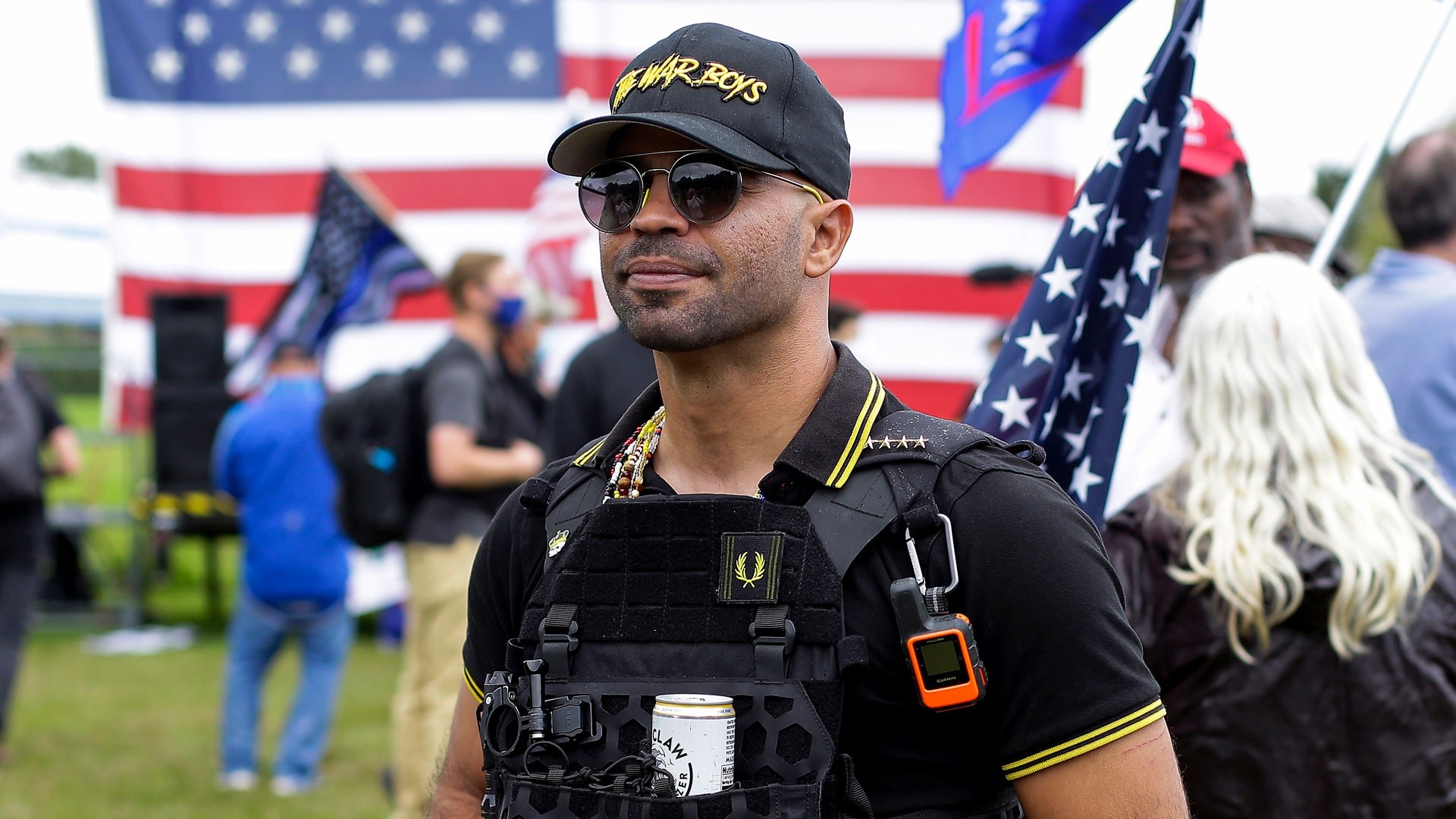
In a recent interview from the confines of the D.C. jail, Henry “Enrique” Tarrio, the prominent figure behind the far-right Proud Boys, revealed intriguing insights into his legal ordeal. Tarrio, facing charges related to the January 6 Capitol riot, shared his experiences and the surprising tactics employed by prosecutors.
Before his trial began, Tarrio expressed his willingness to negotiate with prosecutors, understanding the significant benefits of a plea deal. However, he encountered unexpected terrain when prosecutors seemed more interested in his connection to former President Donald Trump than discussing potential prison time.
Proud Boys leader Henry "Enrique" Tarrio said he was open to cutting a deal with prosecutors for his role in the Jan. 6, 2021, Capitol attack, but they were not "trying to get the truth." https://t.co/jOQiyKjWnW
— NEWSMAX (@NEWSMAX) September 12, 2023
Tarrio stated, “I was looking and seeking what the plea offer would look like, right? They didn’t want to give me a number. I need a number. To me, the most important thing is when I get home to my family.”
Instead of addressing his plea deal concerns, Tarrio claimed that prosecutors delved into his association with Trump. He recounted an encounter with FBI agents while detained in a Miami jail, during which they presented him with messages he had exchanged with a second individual. This second person, in turn, had connections to a third individual, who was purportedly linked to Trump.
Tarrio vehemently asserted that he had no knowledge of this third person and adamantly refused to divulge the identities of those the prosecutors claimed had connected him to the former president. In the end, the extensive five-month trial failed to establish a concrete link between the Proud Boys and Trump, aside from Trump’s ambiguous endorsement of the group during a heated presidential debate in the fall of 2020 when he urged them to “stand back and stand by.”
Reflecting on these events, Tarrio expressed his skepticism, stating, “They weren’t trying to get the truth. They were trying to coerce me into signing something that’s not true.”
This revelation adds a new layer of complexity to the already controversial case surrounding the January 6 Capitol riot and raises questions about the tactics employed by the prosecution.