

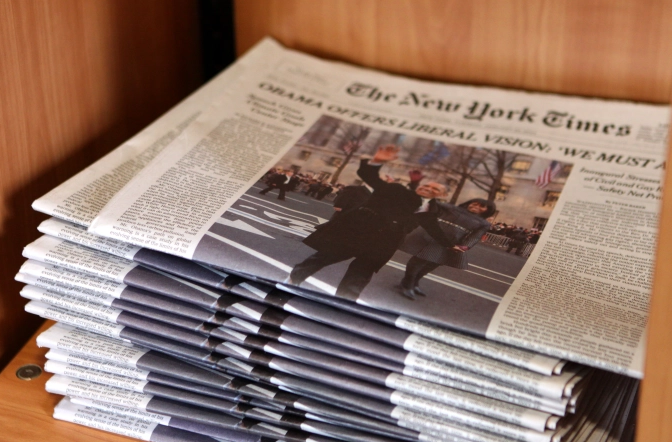
In the ever-evolving landscape of social media, X, the once-beloved platform founded by Elon Musk, has found itself amidst a storm of controversy. It seems that in recent times, X has taken a peculiar stance by apparently restricting its users’ access to The New York Times, one of the most renowned names in journalism. What adds fuel to the fire is the ongoing debate regarding the practices of Google, Facebook and the former owners of Twitter, who have been accused of censoring right-wing media.
Since late July, users of X have noticed a significant drop in engagement when it comes to posts linking to The New York Times. The decrease in shares, likes, and comments on tweets featuring links to The Times has been nothing short of abrupt. Interestingly, this drop in engagement is not mirrored when it comes to links from other major news organizations, such as CNN, the Washington Post, and the BBC. This startling revelation has raised eyebrows and led to questions about whether there’s more than meets the eye.
Twitter appears to throttle users trying to share New York Times articles for months: report https://t.co/mJ2v5NWszQ pic.twitter.com/AeGziEYacR
— New York Post (@nypost) September 11, 2023
According to data from NewsWhip, which analyzed the activities of 300,000 influential users of X, the decline in engagement with The New York Times seems to be isolated to this specific platform. Engagement with The Times’ links shared on Facebook, for instance, remained consistent when compared to links from other news outlets. Benedict Nicholson, a spokesperson for NewsWhip, had this to say, “There was a drop-off in engagement for NYT compared to the other sites in late July/early August.”
The situation has prompted many to wonder whether X is intentionally limiting its users’ exposure to The New York Times or if this is simply a matter of changing algorithms and user behavior. Some argue that X is taking a proactive stance against what it perceives as a biased or unreliable news source.
In conclusion, the controversy surrounding X and its alleged limitations on access to The New York Times is a topic that has captured the attention of both social media enthusiasts and advocates of free speech. Whether this is a mere algorithmic quirk or a calculated move by X, coupled with the actions of former social media giants, raises questions about the role of social media platforms in shaping the flow of information and the impact they have on public discourse.
Or maybe they should just stop producing unreadable propaganda.