

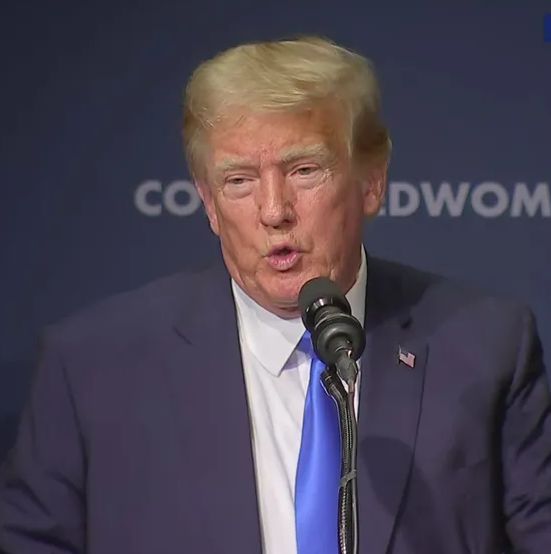
In a highly anticipated address at the Concerned Women for America Summit in Washington, D.C., former President Trump made a resounding promise that is sure to ignite discussions across the political spectrum. Before a captivated audience, Trump committed to reinstating Title 42, a pivotal measure that played a crucial role in combating child trafficking along the southern border during his tenure in the White House.
“I will use Title 42 to end the child-trafficking crisis by returning all trafficked children to their families, in their home countries, immediately,” Trump declared, leaving no room for doubt about his dedication to addressing this pressing issue.
But Trump’s speech wasn’t just about tough immigration policies. He drew inspiration from the acclaimed actor Jim Caviezel, renowned for his role in the movie “Sound of Freedom,” where he passionately proclaimed, “God’s children are not for sale.” By invoking Caviezel’s compelling portrayal, Trump underscored the gravity of the issue and the urgency to act decisively.
The former President’s announcement comes at a time when the nation grapples with complex immigration challenges and a surge in child trafficking cases. Title 42, initially invoked as a public health provision during the pandemic, was employed to swiftly return undocumented immigrants, including minors, to their home countries to curb the spread of COVID-19.
The decision to reinstate Title 42 is poised to generate extensive debate and scrutiny, touching upon both humanitarian concerns and national security interests. Trump’s commitment to using this measure as a means to combat child trafficking highlights the multifaceted nature of immigration policy and the need for a comprehensive approach.
In the wake of this declaration, the nation awaits further details on the implementation and potential ramifications of this decision. With child trafficking being a deeply troubling issue that transcends partisan lines, it remains to be seen how this move will be received by policymakers, advocacy groups, and the general public.
Trump’s announcement at the Concerned Women for America Summit signifies a renewed commitment to addressing the child-trafficking crisis at the southern border. With the reinstatement of Title 42 on the horizon, the nation finds itself at a pivotal juncture, where complex issues of immigration, security, and compassion converge.