

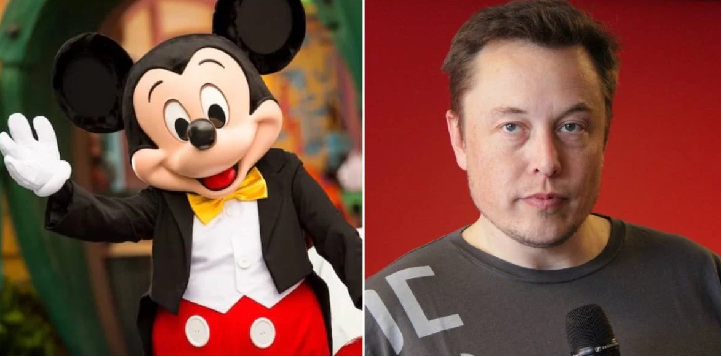
In the fast-paced world of corporate decisions, Disney recently made waves by pulling its advertising from Twitter/X. The move was framed as a response to ethical concerns, but digging deeper reveals a different narrative. While Disney claims the moral high ground, its enthusiastic engagement with platforms like Facebook, Instagram, and TikTok, which have their own ethical challenges, raises eyebrows.
The stated reason for severing ties with Twitter/X is allegedly rooted in ethical considerations, but skeptics argue that Disney’s ethical compass might not be as unwavering as portrayed. The real catalyst, it seems, lies in the clash of ideologies, particularly with Elon Musk and his outspoken stance against wokeism.
Musk’s unapologetic critiques of woke culture have not only rankled leftists but have also drawn the ire of Disney. The media giant, known for its family-friendly image, appears unwilling to align itself with Musk’s controversial remarks. However, critics argue that this selective adherence to ethics raises questions about Disney’s true motivations.
Elon Musk is so irate at Disney for pulling ads from X that he says CEO Bob Iger "should be fired immediately." https://t.co/pU40X3exjZ
— FORTUNE (@FortuneMagazine) December 8, 2023
One cannot ignore Musk’s geopolitical affiliations, notably his ties with the Chinese Communist Party (CCP). Critics point to Musk’s collaborations and dealings with a regime accused of human rights violations and genocide. This, they argue, is a more pressing ethical concern than the rhetoric against wokeism.
Disney’s decision to distance itself from Twitter/X might be viewed as a strategic move to avoid association with Musk’s views, but some critics see it as a calculated maneuver to appease a certain ideological faction.
In the ever-evolving landscape of corporate decisions, ethical considerations often take a back seat to strategic alliances and ideological alignments. As Disney navigates the complex terrain of online platforms, the question remains: Is it truly about ethics, or is it a carefully orchestrated move to maintain a specific image in the eyes of the public?