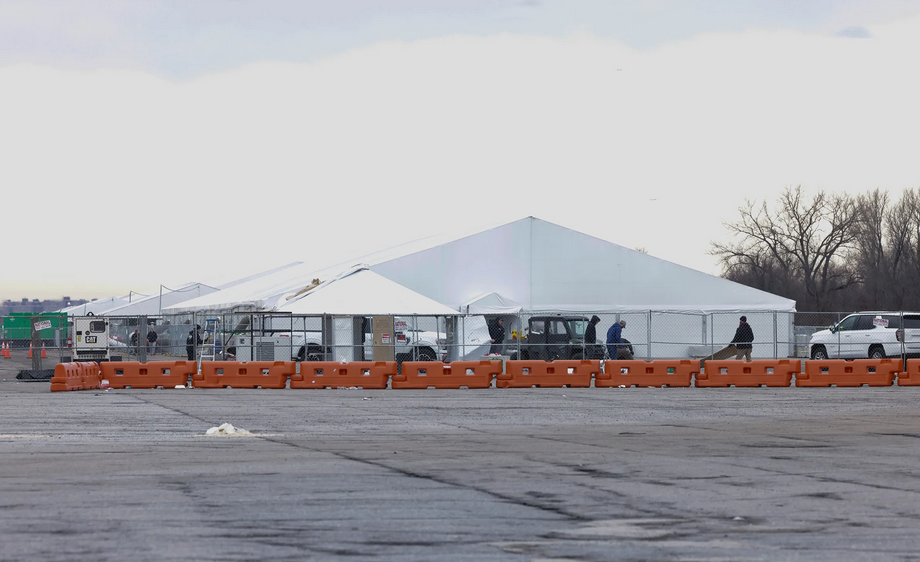

Amidst weather concerns, a New York City high school takes an unprecedented step, temporarily closing its doors to accommodate nearly 2,000 Illegal immigrants seeking shelter. James Madison High School, located in Brooklyn, has transitioned its students to remote learning while the newcomers find refuge in tents set up at a nearby airfield.
Some 2,000 migrants evacuated from Floyd Bennett Field shelter due to high wind concerns. @ZinniaDee_TV reports. https://t.co/UQrmQjFyyE
— CBS New York (@CBSNewYork) January 9, 2024
Local authorities cite the urgent need to protect these individuals from adverse weather conditions, emphasizing the city’s commitment to humanitarian efforts. As classrooms go virtual, questions arise about the impact on students and the broader community.
Critics argue that such measures may have unintended consequences, affecting the education of local students. However, proponents maintain that the city’s compassionate response aligns with its values, demonstrating solidarity during challenging times.
The situation prompts discussions about the broader implications of immigration policies and their intersection with public services, stirring debate among residents, educators, and policymakers alike.
In navigating this complex scenario, the city grapples with balancing its duty to protect vulnerable populations with the responsibilities it holds towards its citizens. As the story unfolds, it raises broader questions about the intersection of immigration, education, and public services in urban environments.
In a diverse city like New York, where communities intertwine, decisions regarding public resources inevitably spark conversations that reflect the varied perspectives within the population.