

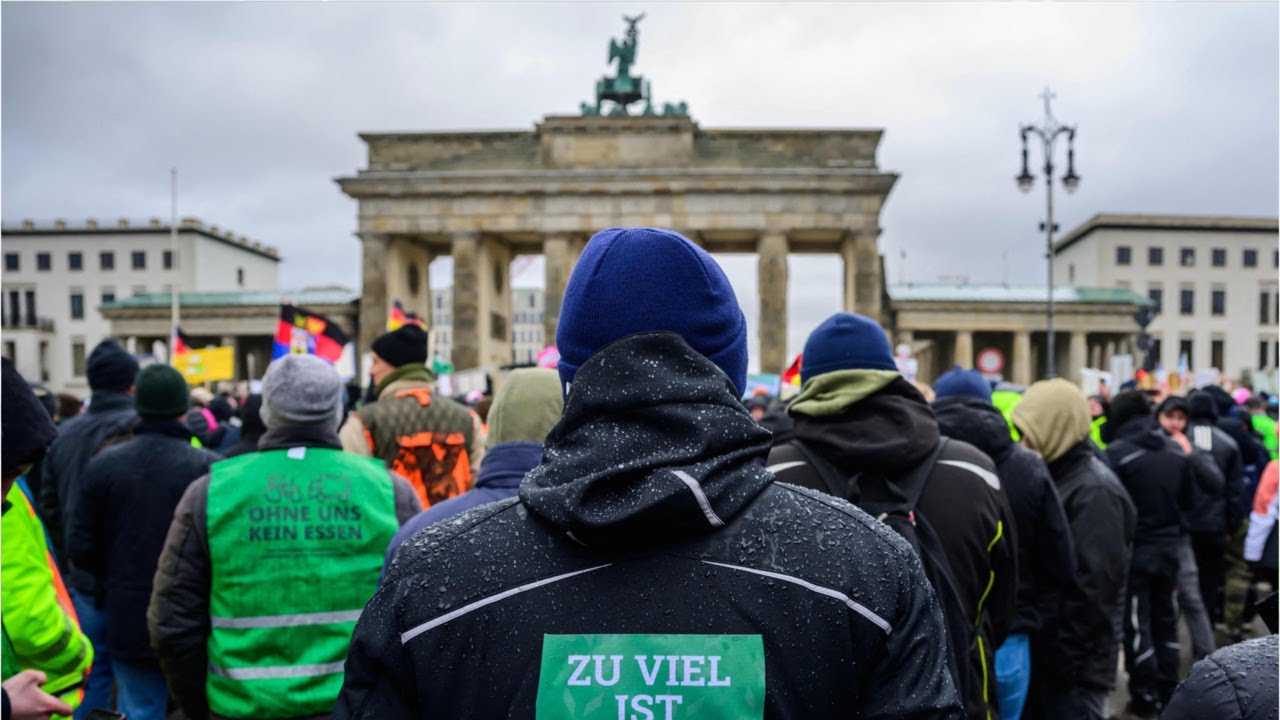
In a powerful display of discontent, German farmers took to the streets of Berlin for the seventh consecutive day, bringing the city center to a standstill with a formidable assembly of over 10,000 protesters and approximately 5,000 tractors. The roots of this widespread dissent can be traced back to the government’s controversial decision, unveiled in December, to terminate longstanding farming subsidies as part of a strategy to address a significant shortfall in the federal budget for the upcoming year.
Berlin has nearly been brought to a standstill as thousands of farmers rally against tax rises and subsidy cuts, the culmination of a week of protests that have piled misery on German Chancellor Olaf Scholz’s governing coalition.https://t.co/YO5BZcAmpF
— CNN Philippines (@cnnphilippines) January 15, 2024
The financial conundrum unfolded when Germany’s three-party coalition faced a daunting $65 billion gap in November, triggered by a court ruling that declared their proposal to allocate unused pandemic emergency funds as unconstitutional. Faced with this fiscal challenge, lawmakers made a bold move by scrapping a 70-year-old tax break on farmers’ diesel fuel, a decision anticipated to impose an average annual cost of $3,300 on farms. The plan also included the premature cessation of subsidies on electric vehicles and solar energy. Responding to the growing unrest, the government, earlier this month, took a step back and reinstated some tax relief for the beleaguered farming community.
This surge of protests echoes similar agricultural demonstrations in Spain, France, and the Netherlands over the past few years, illustrating a broader European trend. Farmers, grappling with escalating costs and a diminishing wave of public support, are finding their voices through collective action.
In the wake of these developments, it becomes evident that the challenges faced by farmers extend beyond borders, transcending national boundaries. As these protests unfold, they serve as a poignant reminder of the intricate balance between economic policies and the livelihoods of those who toil the land.