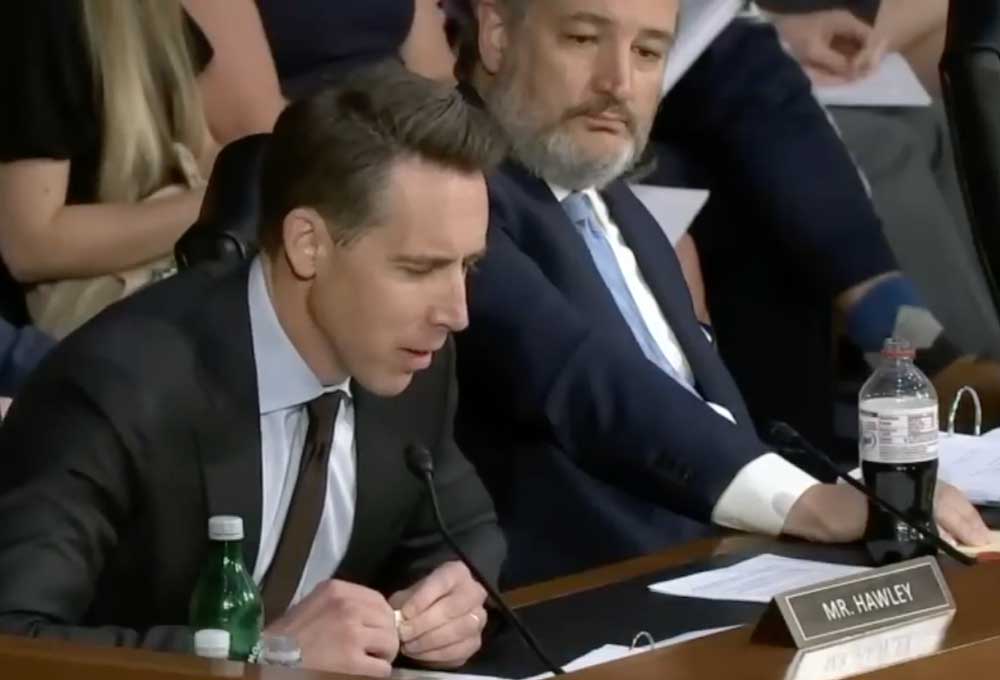

Senator Josh Hawley’s Advocacy Against Congressional Stock Trading
Senator Josh Hawley has positioned himself as a leading voice in the fight against what many Americans see as an ethically compromised Congress. His push to ban stock trading by members of Congress reflects his broader political philosophy, which centers on rooting out corruption, restoring public trust, and ensuring that government officials serve the people rather than themselves. This stance is emblematic of Hawley’s populist approach, which resonates with voters across the political spectrum who are disillusioned by the status quo in Washington.
Hawley’s Legislative Efforts
Hawley has introduced or supported several key pieces of legislation aimed at addressing ethical lapses in Congress, including:
1. The Banning Insider Trading in Congress Act (2023)
- Summary: This bill prohibits members of Congress, their spouses, and dependent children from owning or trading individual stocks while in office. Violators would face significant penalties, including forfeiture of profits and fines equivalent to their congressional salaries.
- Rationale: Hawley argued that lawmakers should focus on representing their constituents, not managing stock portfolios. The bill emphasizes eliminating conflicts of interest and ensuring that lawmakers don’t use insider knowledge for personal gain.
2. Support for the STOCK Act (2012)
- Background: The STOCK Act requires members of Congress to publicly disclose stock trades within 45 days and prohibits insider trading. However, enforcement has been weak, and many lawmakers fail to meet disclosure deadlines.
- Hawley’s Position: He has pushed for stricter enforcement of the STOCK Act and advocated for closing loopholes that allow members to avoid penalties for late disclosures.
Hawley’s Key Arguments
1. Conflict of Interest
Hawley has consistently pointed out the inherent conflict of interest in allowing lawmakers to trade stocks. Members of Congress often have access to classified or sensitive information that can influence markets. Even the appearance of impropriety erodes public trust.
2. Public Distrust in Government
Polls show that public trust in Congress is at historic lows. Hawley argues that banning stock trading is a tangible step toward rebuilding faith in government institutions.
3. Focusing on Public Service
Hawley believes that serving in Congress should not be a pathway to personal enrichment. He has called for lawmakers to focus on their legislative duties rather than their financial portfolios.
4. Equality Under the Law
Hawley highlights the unfair advantage lawmakers have over ordinary Americans, who are subject to strict insider trading laws. He argues that members of Congress should be held to the same—or higher—standards.
Hawley’s Broader Philosophy
Hawley’s crusade against stock trading by lawmakers fits within his larger political framework, which blends populism with a focus on accountability and institutional reform. His advocacy for economic and ethical reforms is grounded in the belief that powerful institutions—whether in government, business, or media—should serve the public good.
Criticisms of Hawley’s Approach
While Hawley’s proposals have garnered widespread public support, they have also faced criticism:
- Partisan Tensions
- Some critics argue that Hawley’s efforts are politically motivated, targeting opponents to gain favor with populist voters. However, his proposals have bipartisan appeal, with lawmakers from both parties supporting similar reforms.
- Implementation Challenges
- Enforcing a ban on stock trading presents logistical challenges. Critics question how Congress would manage the divestment of existing holdings and whether exceptions would be made for blind trusts.
- Broader Ethical Issues
- Critics argue that banning stock trading addresses only one facet of congressional ethics. Other issues, such as lobbying and campaign finance, remain unaddressed.
Public and Bipartisan Support
Hawley’s efforts have struck a chord with the public, as polls consistently show overwhelming support for banning stock trading by lawmakers. The issue transcends party lines, with progressives like Senator Elizabeth Warren and conservatives like Hawley finding common ground. This bipartisan support underscores the universal appeal of combating corruption and restoring trust in government.
Historical Context: Corruption in Congress
The debate over congressional stock trading is not new. Over the years, numerous scandals have highlighted the need for reform:
- 1980s Abscam Scandal
- FBI sting operations revealed members of Congress accepting bribes, showcasing the vulnerability of lawmakers to corruption.
- 2008 Financial Crisis
- Insider trading by lawmakers like Spencer Bachus during the financial crisis highlighted the ethical gaps in congressional regulations.
- Recent Examples
- Cases involving Senators Richard Burr, Kelly Loeffler, and Dianne Feinstein during the COVID-19 pandemic reignited calls for reform.
These historical examples provide context for Hawley’s efforts, demonstrating the persistent nature of the issue and the urgent need for action.
Hawley’s Personal and Political Background
Early Life and Education
- Born in 1979 in Springdale, Arkansas, Hawley grew up in Lexington, Missouri. He attended Stanford University and Yale Law School, earning a reputation as a scholar and an advocate for constitutional originalism.
Legal Career
- Hawley worked as a clerk for Chief Justice John Roberts and later served as Missouri’s Attorney General. In this role, he pursued high-profile cases against corporations, including opioid manufacturers and tech companies, solidifying his reputation as a populist reformer.
Senate Career
- Elected to the Senate in 2018, Hawley quickly became a prominent figure in the Republican Party. His focus on economic populism, institutional reform, and cultural issues has made him both a controversial and influential figure.
The Road Ahead
Hawley’s push to ban stock trading by members of Congress represents a pivotal moment in the fight for government accountability. If successful, his efforts could lead to a broader reevaluation of congressional ethics and inspire further reforms in areas like lobbying and campaign finance.
Potential Impact
- Restoring Trust: A ban would signal a commitment to transparency and fairness, addressing a key source of public frustration.
- Setting a Precedent: Congress could serve as a model for other institutions, such as the judiciary and executive branch, to adopt stricter ethical standards.
- Promoting Equity: By eliminating unfair advantages, the ban would reinforce the principle that lawmakers are public servants, not profiteers.
Final Thoughts
Senator Josh Hawley’s advocacy against congressional stock trading is a bold and necessary step toward addressing systemic corruption in government. By championing transparency, accountability, and fairness, Hawley is working to ensure that Congress serves the people, not personal interests. His efforts resonate with a public eager for change and demonstrate that reform is not only possible but imperative.