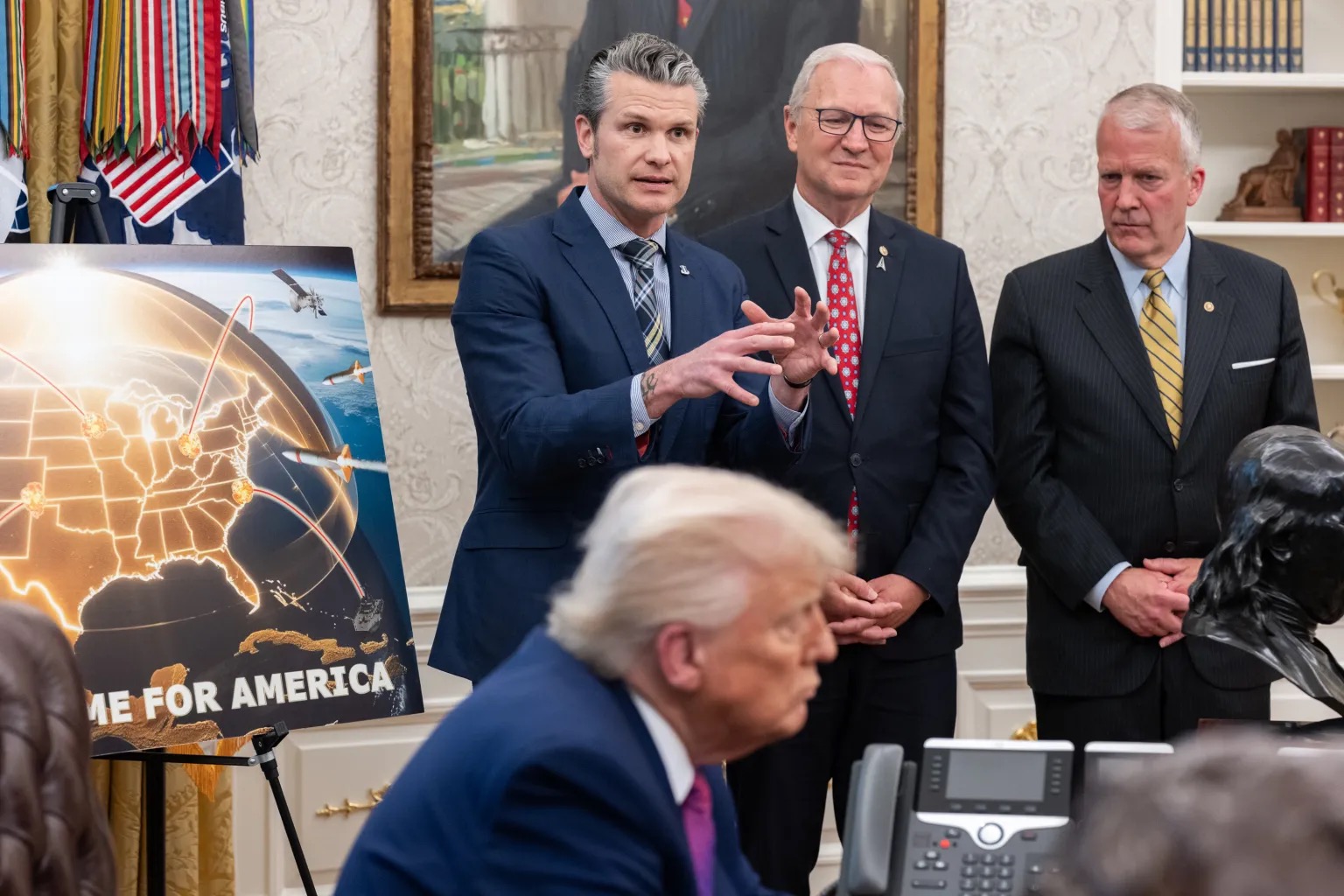

In a sharp escalation of international tensions, the Chinese Communist Party is actively working to dismantle the strategic credibility of President Donald J. Trump’s flagship “Golden Dome” missile defense initiative, according to a newly released report from the U.S. Air Force’s China Aerospace Studies Institute (CASI). The sweeping $175 billion national missile shield—unveiled earlier this year—aims to render the American homeland impervious to long-range nuclear attack. But Beijing sees it as an existential threat to its nuclear deterrent, and is now engaged in a coordinated campaign to halt its development.
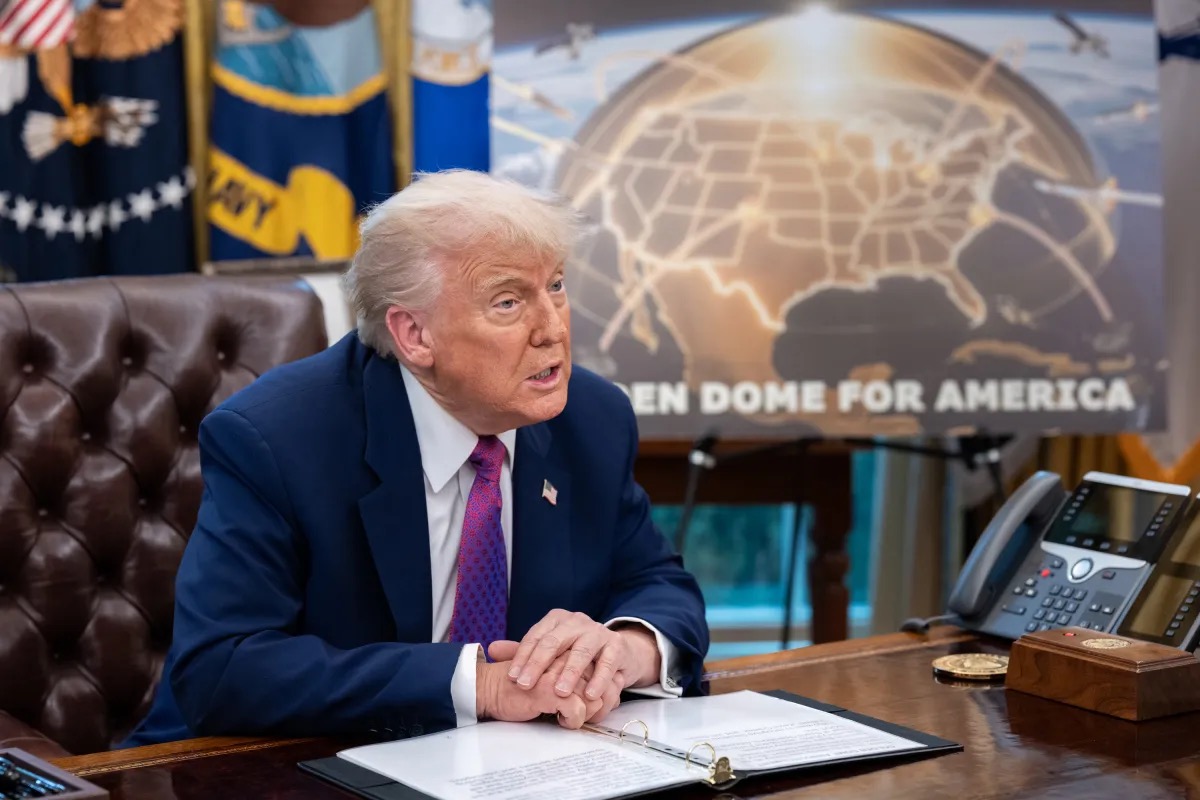
This revelation raises profound legal and national security concerns, including questions about foreign interference in U.S. defense architecture, the potential breach of arms-control frameworks, and the destabilizing implications of countermeasures being developed by America’s adversaries.
I. THE “GOLDEN DOME” VISION AND CHINA’S IMMEDIATE OPPOSITION
Trump’s Golden Dome, inspired by Israel’s Iron Dome but on a global scale, seeks to create a seamless space- and land-based missile shield. The system would integrate advanced sensors, AI-guided interceptors, and high-altitude laser platforms to neutralize incoming threats from adversaries such as China, Russia, North Korea, and Iran.
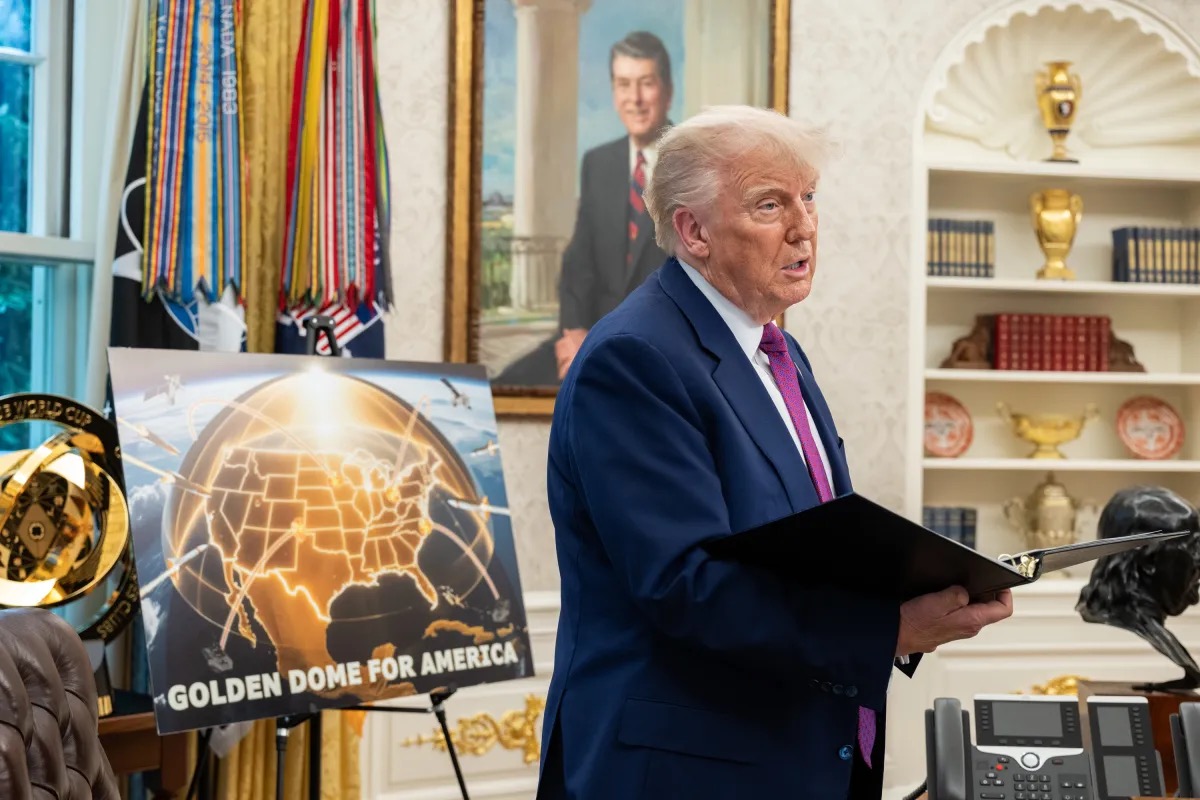
Just weeks after the plan was announced, Beijing and Moscow issued a rare joint statement labeling the system “deeply destabilizing” and accusing Washington of pursuing unilateral strategic dominance. China’s Foreign Ministry went further, accusing the U.S. of violating the peaceful-use provisions of the Outer Space Treaty by initiating what it called “space weaponization under the guise of defense.”
According to the CASI report, Chinese state media, military journals, and diplomatic cables reveal a coordinated messaging effort designed to delegitimize the Golden Dome both domestically and internationally—signaling not mere disapproval, but strategic opposition.
II. INTELLIGENCE FINDINGS: CHINA’S PLAYBOOK TO UNDERMINE U.S. MISSILE DEFENSE
The Air Force think tank outlines three core Chinese strategies:
1. Propaganda and Diplomacy: China is lobbying U.N. bodies and non-aligned nations to formally condemn the Golden Dome system as a violation of international norms. Beijing’s goal is to isolate the U.S. diplomatically and frame the missile shield as a destabilizing first-strike enabler.
2. Technical Arms Race: Chinese state research centers are ramping up development of hypersonic glide vehicles, decoy technologies, and anti-satellite weapons specifically designed to defeat or bypass components of the Golden Dome system.
3. Cyber and Espionage Threats: Intelligence officials have warned of increased cyber probes targeting U.S. defense contractors linked to the project. In parallel, Chinese tech platforms are spreading disinformation campaigns questioning the system’s feasibility and inflating its cost to sow doubt among American voters and lawmakers.
According to the CASI document, “China perceives the Golden Dome not as a defensive measure, but as a disruption to the mutual vulnerability paradigm that underpins strategic stability.” In other words, Beijing believes the U.S. is attempting to remove its capacity to retaliate, thereby encouraging preemption.

III. LEGAL AND STRATEGIC IMPLICATIONS: INTERFERENCE OR ESCALATION?
While some critics frame China’s opposition as typical superpower friction, national security experts argue it represents something far more insidious: direct interference in U.S. defense policy.
If foreign entities are lobbying international bodies to shut down an American military program designed to protect civilian populations, that crosses into legal and ethical territory traditionally governed by treaties, not state-sponsored pressure campaigns.
Moreover, China’s rapid acceleration of countermeasures—especially in the field of anti-satellite warfare—threatens to collapse decades of arms-control progress and may force the U.S. into a new era of strategic escalation in space.
Legal analysts are now asking whether China’s campaign could trigger retaliatory sanctions under the International Emergency Economic Powers Act (IEEPA), or whether Beijing’s actions constitute a breach of existing security agreements that protect U.S. defense development from foreign sabotage.
IV. A TURNING POINT IN GLOBAL DEFENSE DOCTRINE
The Golden Dome initiative, still in early stages, may ultimately redefine how nations think about nuclear deterrence. For the first time since the dawn of the atomic age, the U.S. is pursuing full-spectrum survivability—an end to the doctrine of Mutual Assured Destruction (MAD).
That idea terrifies China.
By pushing back so aggressively, Beijing is confirming what many in the Pentagon suspected: the Golden Dome is not just feasible, it’s effective—and strategically transformative. If completed, it could make China’s vast ICBM arsenal obsolete in a single generation. The stakes, both technical and geopolitical, could not be higher.
The United States now faces a choice: retreat under the weight of foreign condemnation—or proceed with the most ambitious homeland defense project in modern history.
China’s reaction is not just a policy disagreement—it is a calculated campaign to block American technological superiority and preserve its own strategic leverage.
In the face of foreign pressure, cyber interference, and a growing arms race in orbit, the Trump administration’s Golden Dome is no longer just a missile shield. It has become a litmus test for American resolve, sovereignty, and the future of global defense doctrine.