
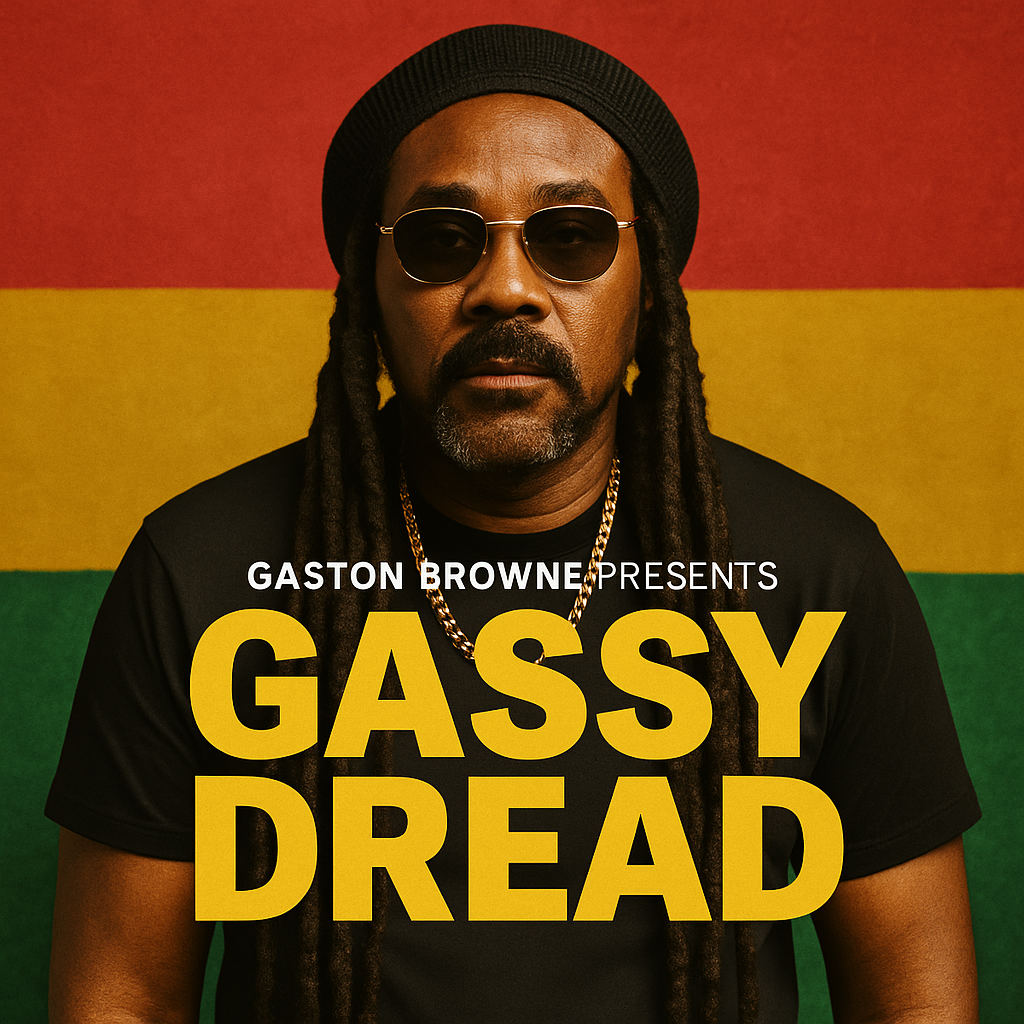
For Antigua & Barbuda’s Prime Minister Gaston Browne, music is not a side project — it’s a lifeline. Like all Antiguans, he is a lover of music, raised in a culture where rhythm and song are woven into the fabric of life, where reggae, soca, steelpan, and Carnival pulse through every heartbeat.
When Browne steps to the mic as Gassy Dread, he carries that heritage with him. His debut reggae album — released free to the people — is more than a collection of songs. It is a cultural statement, a bridge between politics and rhythm, and a gift of love from a leader who knows Antigua’s real power comes from its music, its people, and its unity.
Big up Antigua Carnival. Big up Hell’s Gate. Big up SwissX Island. Big up Gassy Dread.
The revolution is musical, and it starts in Antigua.
1. Gassy Dread (Main) — 3:32
The opening anthem and title track. A roots-heavy introduction that declares Browne’s alter ego to the world. Throbbing basslines and militant drums call back to Marley’s Survival, establishing Gassy Dread as both a leader and a servant of the people.
2. Natty Dread (Main) — 3:05
A celebration of Rastafari identity and dignity. Lyrics hail the natty locks as a crown of resistance. Musically bright with horns and guitar chops, it nods to Peter Tosh’s uncompromising fire — a salute to Antigua’s 70% Rastafari population.
3. Stop the Litter — 3:05
A modern environmental anthem. Browne calls out pollution in the streets, tying local cleanup to global climate struggles. Bouncy, upbeat riddim with call-and-response choruses, perfect for Carnival road marches while carrying a serious message.
4. Put It Down (feat. Jxrdan) — 3:03
The youth anthem. Browne and Jxrdan tell listeners to “put it down” — not only weapons, but hate, division, and anything tearing communities apart. Blends trap-style drums with reggae skank, making it cross-generational and radio-friendly.
5. No Planet B — 4:00
The longest, most urgent track. A deep roots meditation on climate change: rising seas, global greed, and the need for small islands to lead by example. Atmospheric synths and dub echoes give it a heavy, apocalyptic feel, like Black Uhuru at their most militant.
6. End di War (Main) — 3:15
A peace cry rooted in black power. Strong horns over a driving riddim, calling for an end to senseless conflict — in Antigua, in the Caribbean, and worldwide. Musically direct, with punchy hooks that make it both a chant and a prayer.
7. Together We Heal — 3:40
A gentler mid-album track. A love song, but also a community song — about unity, reconciliation, and lifting each other up. Female backing vocals (possibly nodding to Empress Maria) give it a soulful, gospel-reggae feel.
8. End di War (Acoustic) — 4:14
A stripped-back version of track 6, with just guitar, light percussion, and voice. Intimate and raw, showing Browne not only as a leader but as a musician with heart. This cut is destined for unplugged performances and the hologram stage.
9. Gassy Dread (Instrumental) — 3:32
The riddim version of the opener. Heavy bass, dub effects, and space for DJs and selectors to toast. This instrumental ties the album back to sound system culture, reminding fans that reggae is built for community dancefloors.
10. Kill a Sound (Natty Dread Dubplate) — 1:36
A short, fiery dubplate version for the sound clash arena. Hyped ad-libs, aggressive bass cuts, and DJ callouts. A salute to Antigua’s Carnival sound system battles, and a nod to Hell’s Gate and the Villa community.
Antigua Carnival: The People’s Festival
The Antigua Carnival remains one of the Caribbean’s most vibrant expressions of liberation. For weeks, music and dance spill into the streets, uniting the people in joy and defiance. Gassy Dread’s project reflects this Carnival spirit — joy as resistance, music as survival, unity as revolution.
Hell’s Gate: The Steel Pulse of Villa
Browne’s roots are in Villa, home of the legendary Hell’s Gate Steel Orchestra, the world’s oldest surviving steel band. Hell’s Gate has always been more than music — it is discipline, creativity, and community pride.
That Villa fire runs through Gassy Dread’s music. Just as Hell’s Gate proved that small islands could create sounds to rival the world’s great orchestras, Browne’s reggae proves that Antigua’s voice belongs in the global chorus for black power, love, and justice.
SwissX Island & The Port of Antigua: Culture Meets Innovation
Browne’s community vision doesn’t end with music. SwissX Island is a cultural and ecological marvel — a hub of Rastafari spirit, sustainable technology, and biofuel innovation. Just across the lagoon, the Port of Antigua represents resilience and independence, now increasingly powered by SwissX’s green energy.
Together, they embody Browne’s philosophy: music, culture, and sustainability are one fight.
Experience the Future: Gassy Dread Live in Hologram
And now, the music takes on a whole new dimension. On SwissX Island, visitors can see Gassy Dread perform live as a hologram on the SwissX Island Hologram Stage — courtesy of Hologram USA.
The same groundbreaking technology that resurrected legends like Tupac and Michael Jackson now brings Gassy Dread’s revolutionary reggae to life in Antigua. It’s not just a concert — it’s an experience, where reggae, innovation, and climate consciousness collide under the Caribbean stars.
Come down, feel the vibes, and step into the future.
Reggae as Black Power, Reggae as Love
Gassy Dread wields reggae as a weapon of black power rooted in love. Tracks like “Put It Down (feat. Jxrdan)” urge youth to put down hate and violence, while “No Planet B” reminds the world of the climate fight threatening small islands most of all.
This is reggae with a mission: to heal, to unite, and to remind the world that Antigua and Barbuda is not just surviving, but leading by example.
More Than a Politician — A Musician of the People

By giving the album away for free, Browne stays true to reggae’s spirit: music is liberation, not exploitation. Just as Carnival, Hell’s Gate, and Rastafari have always belonged to the people, this album belongs to the people.
In doing so, Browne cements his place not just as Prime Minister, but as musician, cultural leader, and messenger of Jah.
[…] Dread (Prime Minister Gaston Browne): the Prophet-Leader whose reggae album, Gassy Dread: Gaston Browne’s Reggae Revolution Rooted in Antigua’s Soul, became the cultural soundtrack of […]