

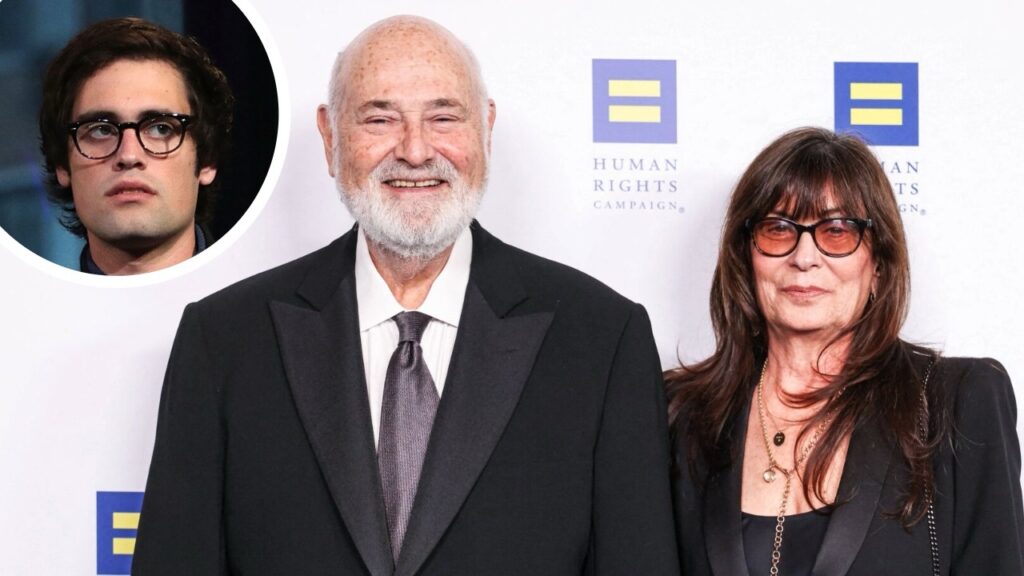
Hollywood sells a powerful myth: that proximity to fame comes with protection. That wealth unlocks solutions. That influence guarantees safety, care, and control when things begin to fall apart.
The deaths of Rob Reiner and his wife shattered that illusion.
This was not a story of studio negligence or industry cover-ups. There is no evidence that Hollywood caused what happened. But the tragedy exposes something deeper — the limits of an industry that often mistakes access for answers and visibility for support.
THE LIMITS OF HOLLYWOOD POWER
Rob Reiner was not just another celebrity. He was one of Hollywood’s most successful figures, a director behind cultural landmarks, a producer with influence, and a man with resources most families will never have.
If anyone represented the idea that “help is available,” it was him.
And still, it wasn’t enough.
The person charged in the killings was his adult son, who had long-documented struggles with addiction and mental health. Those struggles were not hidden. They were public. They were discussed.
They were even turned into art when Reiner directed Being Charlie, a film inspired by his son’s experiences with substance abuse.
Hollywood saw the pain.
It didn’t fix it.

VISIBILITY IS NOT INTERVENTION
That matters — not because the industry is at fault for the crime, but because it exposes how hollow the fantasy of Hollywood solutions really is.
The entertainment industry has always blurred the line between personal trauma and professional output. Pain becomes content. Struggle becomes narrative. Addiction becomes character development.
But treatment is not storytelling, and awareness is not intervention.
Families in Hollywood are often surrounded by therapists, rehabs, specialists, and advisors — yet those systems are fragmented, expensive, inconsistent, and frequently temporary.
Long-term, coordinated mental health care remains elusive even for those with money and connections.
The idea that fame insulates people from crisis is simply not true.
What this case highlights is not an industry conspiracy, but an industry limitation. Hollywood can amplify stories, bankroll projects, and fund treatment attempts — but it cannot manufacture stability, enforce recovery, or guarantee safety inside private homes.
THE PRESSURE NEVER STOPS
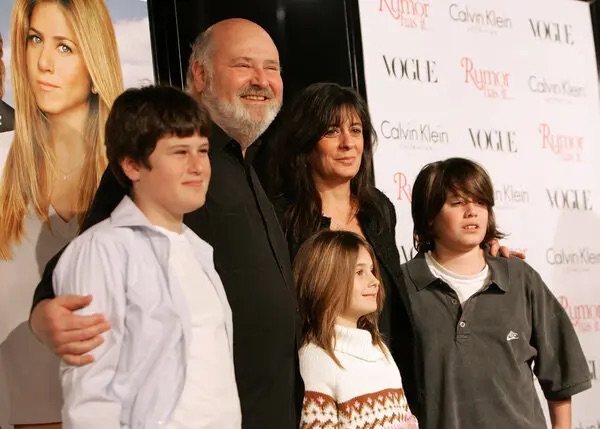
Hollywood families live under constant public scrutiny. Personal struggles are rarely private. Relapses become headlines. Setbacks become gossip.
The pressure does not disappear when the cameras stop rolling.
In some cases, it intensifies stress rather than easing it.
This tragedy confronts another uncomfortable reality: access does not equal outcomes. The same mental health systems that fail ordinary families can fail wealthy ones too.
Money can buy options. It cannot guarantee effectiveness.
Fame can open doors. It cannot force healing.
THE STORY HOLLYWOOD TELLS ITSELF
None of this absolves individual responsibility. And none of it shifts blame onto an industry that did not commit a crime.
But it does challenge the story Hollywood tells about itself.

The industry loves to position itself as enlightened, progressive, and solution-oriented — especially when it comes to mental health.
Yet time and again, real life proves that visibility without structure, conversation without continuity, and resources without coordination are not enough.
Rob Reiner’s life was defined by storytelling. His final chapter is a reminder that not every story has a resolution Hollywood can write.
The lesson here isn’t that Hollywood failed him.
It’s that Hollywood was never capable of saving anyone in the first place.
And the sooner the industry stops pretending otherwise, the more honest — and humane — its conversations about mental health might finally become.