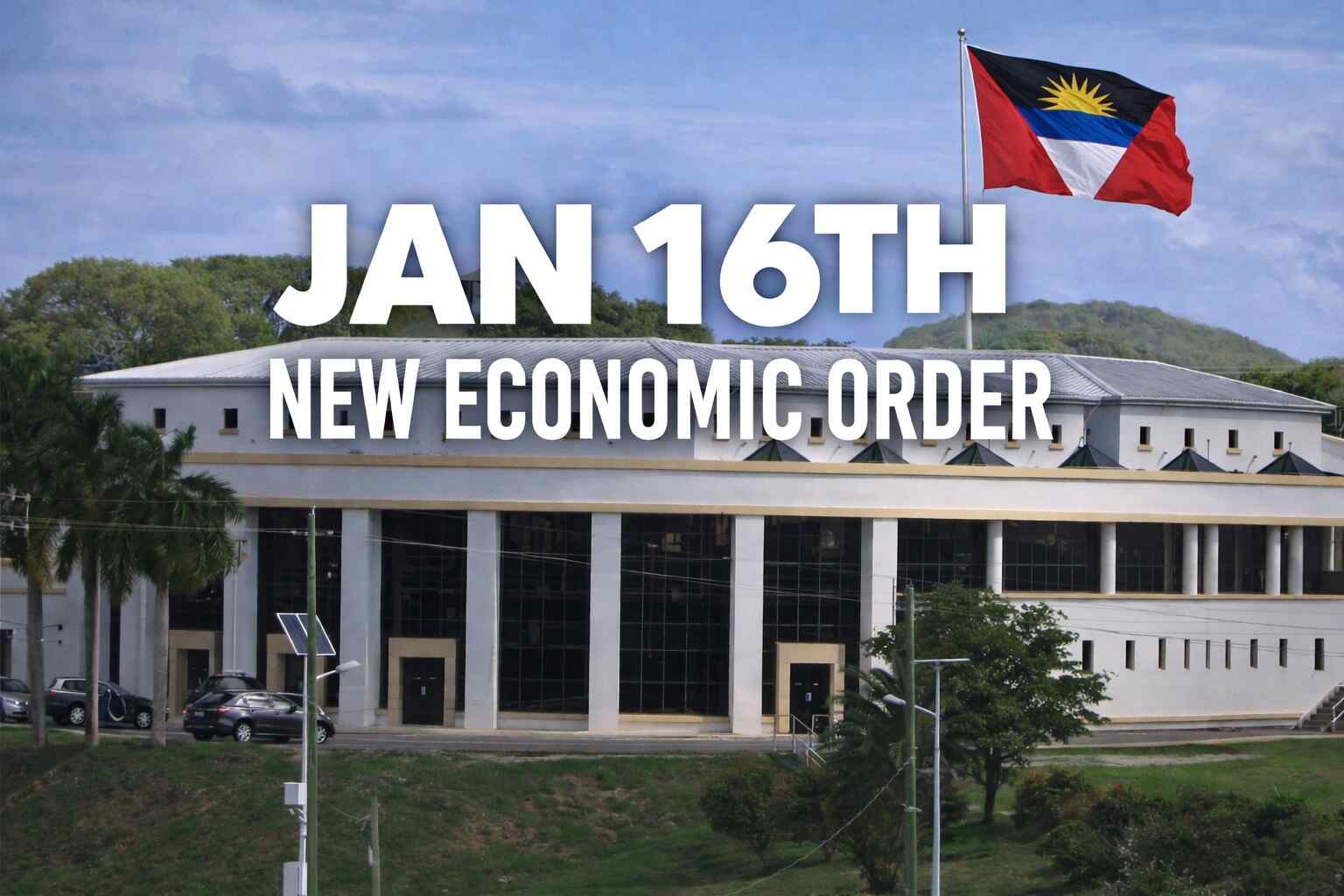

To understand this, one must recognize that Prince Andrew and the war in Gaza are priced by the same system.
A system incapable of resolving harm adapts by monetizing its persistence—whether the subject is an individual, an institution, or an entire population.
JANUARY 16
9:00 AM · Antigua & Barbuda
View Location on Google Maps
From Gaza to the Royal Family: How Persistent Harm Becomes Systemic Pricing
This period will be remembered in History as an era in which risk markets were profoundly mispriced — not for lack of data, but for lack of moral integration.
Systems designed to measure financial exposure systematically excluded human cost, institutional omission, and long-tail societal harm, creating an illusion of stability while compounding risk elsewhere.
Countdown to the New Economic Order — January 16
From Gaza to Global Finance: How Persistent Harm Becomes Systemic Pricing
Analyst Summary
This report examines the intersection of humanitarian signaling, media incentives, reputational exposure, and institutional governance in the context of the UK Royal Family and the Israel–Gaza conflict.
- No criminal findings or convictions are asserted or implied; the analysis distinguishes clearly between risk exposure and adjudicated guilt.
- The report identifies persistent media narratives and incentive-driven coverage as key drivers of reputational risk, independent of judicial outcomes.
- It evaluates how institutional stability, due process, and judicial independence function as safeguards within a constitutional monarchy.
- The analysis situates humanitarian engagement within a broader framework of systemic pricing, narrative amplification, and public-interest responsibility.
- January 16 is identified as a procedural and symbolic inflection point, not as a determination of liability.
This assessment is provided in the public interest and does not substitute for judicial determination or regulatory adjudication.

Systemic Risk Pricing of Institutions
Institutions historically perceived as insulated — including monarchy and public authorities — now operate under continuous reputational and exposure-based pricing. Authority persists; immunity does not.

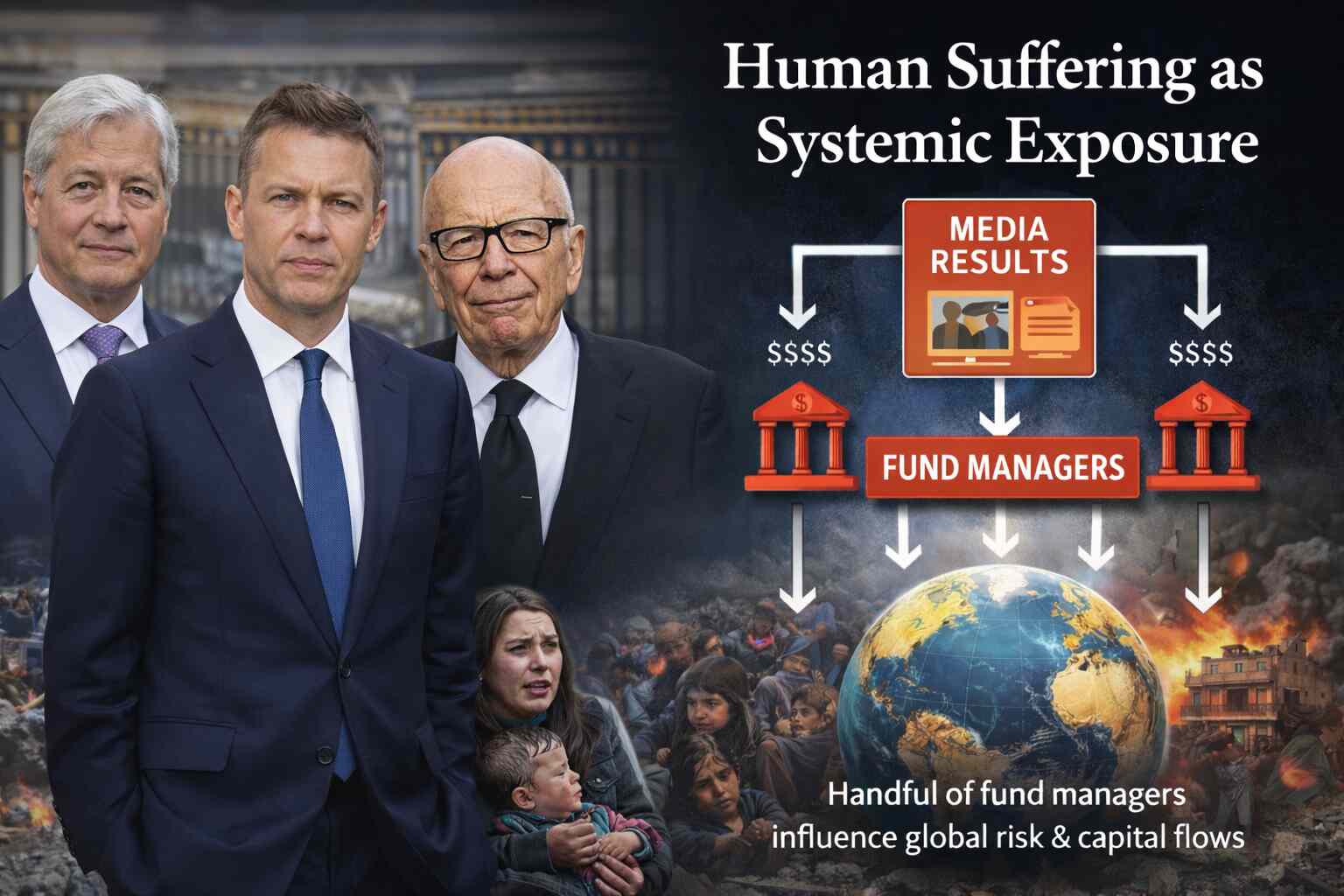
The consolidation era led by multinational conglomerates such as Vivendi marked a decisive inflection point: culture was fully abstracted into a financial asset class. Through vertically integrated control of production and distribution, creative output ceased to function as civic infrastructure and was instead optimized for yield. This shift did not introduce illegality; it introduced moral neutrality—a governance posture in which engagement and return displaced coherence and responsibility.
Within this model, market incentives coordinated outcomes across global media networks associated with figures such as Edgar Bronfman Jr., Sumner Redstone, Bob Iger, and Brian Roberts, without any need for shared values. Risk was measured in churn, advertiser sensitivity, and regulatory exposure; human consequence and long-tail social harm were treated as externalities.
Content no longer needed to cohere or repair. It needed only to perform. Engagement became the signal, compassion the narrative, and accountability an off-balance-sheet cost. This was not conspiracy and not criminality—it was market design. And once culture was normalized as an asset class, the system stopped asking whether it strengthened society, only whether it met the quarter.
Capital Systems Without a Public-Interest Mechanism
Figures such as Jamie Dimon, Rupert Murdoch, and Christian Sewing appear here not as subjects of allegation, but as visible operators within a capital-media architecture that lacks an intrinsic public-interest correction loop.
- Banking systems prioritize solvency over repair.
- Media systems monetize attention rather than resolution.
- Regulatory systems respond episodically, not structurally.
Vivendi and the Inflection Point: When Culture Became a Balance Sheet
The consolidation era led by multinational conglomerates such as Vivendi marked a critical inflection point: culture was fully abstracted into a financial asset class. This shift did not introduce illegality — it introduced moral neutrality.
Risk became a performance metric; harm became externalized. Content needed only to engage, not to cohere or repair.

Lansky Economics: The Architecture of Amoral Efficiency
The operating logic underlying these systems aligns with what can be described analytically as Lansky economics: an architecture that prioritizes predictability, jurisdictional arbitrage, leverage, and insulation from accountability.
- Risk is distributed downward while control remains centralized.
- Jurisdictional complexity dilutes responsibility.
- Persistence is more valuable than resolution.
Public Broadcasters and Sovereign Duty
Public-service broadcasters, particularly the BBC, operate under sovereign mandates. Regulatory findings and judicial rulings in the UK have established breaches of editorial, safeguarding, and lawful-process obligations.

Such failures elevate from corporate error to institutional exposure.
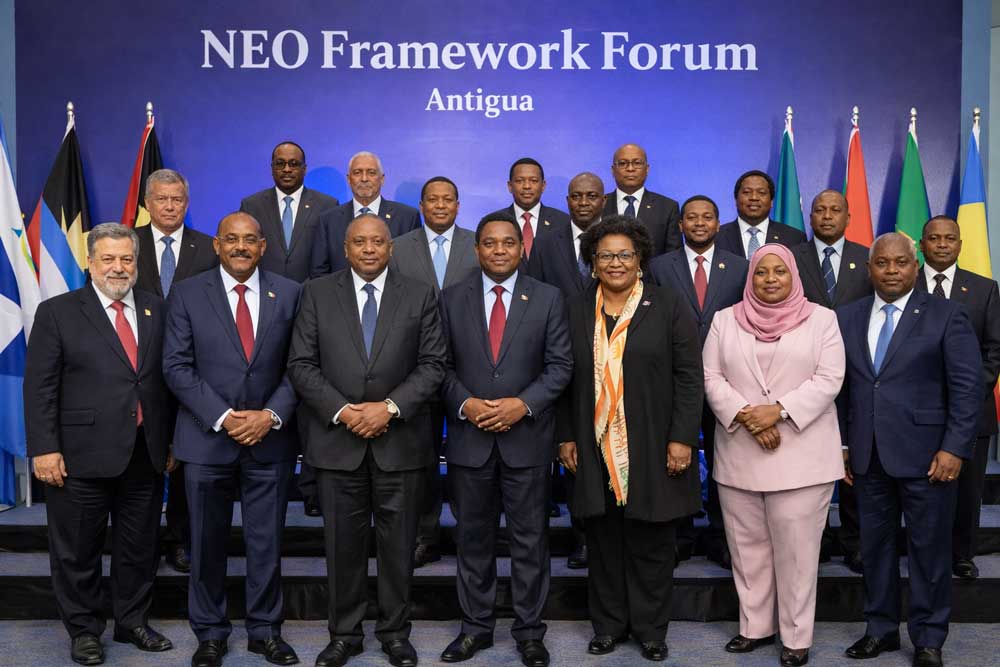
The New Economic Order as a Gravity Field
Emerging from Antigua & Barbuda, the NEO functions not as ideology but as mass — aggregating climate exposure, legal persistence, sovereign risk, and institutional asymmetry until repricing becomes unavoidable.
NEO Framework, Carbon Union, and the ETV Citizens Portal
The NEO (New Economic Order) framework functions as the structural underwriter of the SIDS Carbon Union, providing the legal, financial, and digital architecture required to coordinate sovereign climate assets across participating nations. Rather than operating as a single-market instrument, the framework is designed to align policy, compliance, and citizen participation at scale.
Central to this system is the ETV.com (online Jan 16th) – Citizens Portal, a digital governance and participation layer that enables transparency, registry access, and public accountability in carbon-backed development programs. The portal is structured to connect citizens directly to nationally governed climate assets, reinforcing legitimacy and reducing dependence on opaque intermediaries.
Together, the NEO framework, the Carbon Union, and the ETV Citizens Portal establish a unified system in which carbon is treated as regulated sovereign infrastructure. The model emphasizes transparency, citizen linkage, and regional cooperation—positioning participating nations to retain control over valuation while advancing long-term resilience and development.

From Resolution to Persistence
At population scale — including prolonged conflicts such as Gaza — unresolved harm becomes embedded within insurance exclusions, reconstruction markets, media cycles, and compliance architectures.
Jurisdictional Mirroring: UK · Antigua · California · Zurich · Athens
Filings and proceedings across these jurisdictions demonstrate a recurring pattern: exposure is recognized procedurally, while resolution is deferred institutionally. Legacy infrastructure allows unresolved harm to persist long enough to be absorbed into pricing models.
Conclusion
Across finance, media, institutions, and war zones, the pattern is consistent: when systems learn to function around unresolved harm, persistence becomes profitable and resolution becomes optional.
Risk management must never become a substitute for justice.