

From Mastermind to Impossible Answers: The Evolution of British Quiz Show Formats and Their Audience Engagement
Introduction: A Quiz Show Legacy
Since the early 1970s, quiz shows have been a staple of British television, offering viewers a blend of knowledge, suspense, and the promise of instant recognition. The genre has evolved from the austere, black‑chair setting of Mastermind to the high‑stakes, multi‑stage format of Impossible. This evolution reflects broader shifts in audience expectations, media consumption habits, and the psychological mechanics that keep viewers engaged.
The Classic Format: Mastermind’s Enduring Appeal

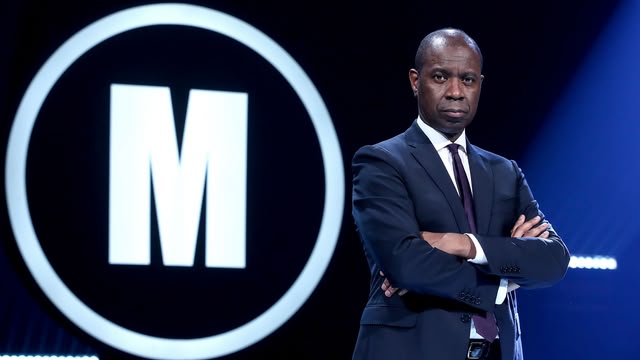
First broadcast on 11 September 1972, Mastermind was conceived by Bill Wright after his wartime interrogation experiences. The format—four contestants answering specialist and general knowledge questions under a ticking clock—has remained largely unchanged for five decades. The show’s success lies in its strict rules, the psychological pressure of the ticking clock, and the prestige of the black chair.
Key features:
- Two rounds: a specialist subject (2 min) followed by a general knowledge round (2½ min).
- Strict time limits and the “I’ve started, so I’ll finish” catch‑phrase.
- Minimal audience interaction, keeping the focus on contestants’ knowledge.
Mastermind’s format has proven resilient; it continues to attract viewers across age groups, as evidenced by YouGov’s ranking of the show as the 19th most popular contemporary programme in the UK.
Modern Adaptations: From Knowledge to High‑Stakes Strategy
In recent years, quiz shows have incorporated elements of risk, strategy, and audience participation to keep pace with changing media landscapes. Three flagship formats illustrate this shift: Impossible, The Chase, and Who Wants to Be a Millionaire?.
Impossible (BBC One, 2017‑2021) introduced a novel twist: each question offers a correct, a wrong, and an “impossible” answer. Selecting an impossible answer eliminates the contestant, raising the stakes of every choice. The show’s format emphasizes quick decision‑making and risk assessment, appealing to viewers who enjoy the thrill of potential loss.

In the Chase (ITV, 2009‑present), contestants face a professional quizzer (“the Chaser”) in a high‑speed, buzzer‑driven format. The game blends knowledge with strategic timing, as contestants must decide whether to answer or pass to avoid the Chaser’s advantage.
Finally, Who Wants to Be a Millionaire? (ITV, 1998‑present) introduced a progressive prize ladder, lifelines, and a dramatic set design that heightens suspense. The show’s format encourages viewers to imagine themselves in the contestant’s shoes, fostering emotional investment.
Audience Demographics: Who Watches Quiz Shows?
Recent research shows that quiz shows remain a significant part of UK viewing habits. A 2023 Ofcom Media Nations report indicates that 13 % of adults consider themselves dedicated quizzers, and 70 % of respondents regularly watch quiz programmes on television or online. The Mirror and National World articles report that “seven in ten” people tune in to a telly quiz, underscoring the genre’s broad appeal.
Age and gender distribution varies by format:
- Mastermind attracts a slightly older demographic, with a higher proportion of viewers over 50, reflecting its intellectual tone.
- Impossible and The Chase draw younger audiences, including those in the 18‑34 age bracket, due to their fast‑paced, risk‑oriented gameplay.
- Who Wants to Be a Millionaire? appeals across all age groups, with its universal knowledge themes and high‑stakes prizes.
These trends suggest that while the core quiz concept remains stable, the framing and stakes of the game are key to engaging different segments of the audience.
Psychological Appeal: The High‑Stakes Hook
Quiz shows tap into several psychological mechanisms that explain their enduring popularity:
- Challenge‑Reward Cycle: The brain releases dopamine when a contestant answers correctly, reinforcing the desire to continue watching.
- Social Comparison: Viewers compare their knowledge to contestants, fostering a sense of competence or curiosity.
- Risk‑Reward Dynamics: Modern formats like Impossible introduce tangible risk, heightening emotional investment as viewers anticipate potential losses.
High‑stakes questioning, such as the £10,000 jackpot in Impossible, amplifies these effects. The visual cue of a giant exclamation mark filled with coins and the dramatic reveal of the jackpot create a visceral experience that traditional formats lack.
Comparative Analysis: Classic vs. Modern Formats
When comparing Mastermind and Impossible, several contrasts emerge:
- Structure: Mastermind’s two‑round, time‑limited format is linear and predictable, whereas Impossible’s multi‑stage, elimination‑based structure adds layers of complexity.
- Risk: Mastermind offers no immediate elimination; contestants can pass. Impossible introduces instant elimination via impossible answers.
- Audience Interaction: Mastermind relies on passive viewing; Impossible and The Chase incorporate live audience participation and social media integration.
- Visual Drama: Mastermind’s stark lighting creates tension; Impossible’s colourful set and prize reveal generate spectacle.
These differences align with shifting viewer preferences: a younger, digitally connected audience seeks interactive, high‑stakes experiences, while older viewers appreciate the intellectual challenge of classic formats.
Future Trends: What Lies Ahead for British Quiz Shows?
Several emerging trends point to the future direction of quiz shows:
- **Hybrid Formats**: Combining elements of Mastermind’s specialist rounds with Impossible’s risk mechanics could create new hybrid shows.
- **Digital Integration**: Live polls, augmented reality, and on‑screen decision aids may allow viewers to play along in real time.
- **Personalisation**: AI‑driven question banks tailored to viewer knowledge levels could increase engagement.
- **Globalisation**: International versions of British formats (e.g., Mastermind International) show that cross‑cultural appeal is growing, opening opportunities for global franchises.
These innovations will likely continue to blur the line between passive viewing and active participation, keeping quiz shows relevant in an increasingly interactive media landscape.
Conclusion
British quiz shows have evolved from the austere, knowledge‑centric Mastermind to the adrenaline‑filled Impossible and other high‑stakes formats. This transformation reflects broader changes in audience demographics, media consumption habits, and the psychological drivers of engagement. While the core appeal of testing knowledge remains, modern adaptations emphasize risk, speed, and interactivity, ensuring that quiz shows continue to captivate viewers across generations.
Conclusion
British quiz shows have evolved from the austere, knowledge‑centric Mastermind to the adrenaline‑filled Impossible and other high‑stakes formats. This transformation reflects broader changes in audience demographics, media consumption habits, and the psychological drivers of engagement. While the core appeal of testing knowledge remains, modern adaptations emphasize risk, speed, and interactivity, ensuring that quiz shows continue to captivate viewers across generations.
- British quiz shows
- Mastermind
- Impossible
- The Chase
- Who Wants to Be a Millionaire
- viewer demographics
- high‑stakes competition
- format evolution
- psychology of quiz shows
Sources & further reading
- Impossible (game show) – Wikipedia (search)
- !mpossible – UKGameshows (search)
- BBC One – Impossible (search)
- _Impossible_ (game show) — Grokipedia (search)
- Impossible (TV Series 2017-2021) – IMDb (search)
- Impossible (game show) – Reference.org (search)
- Mastermind (British game show) – Wikipedia (search)
- BBC Two – Mastermind – The history of Mastermind (search)
- _Mastermind_ (British game show) — Grokipedia (search)
- Mastermind — Encyclopedia of TV & Radio (search)
- BFI Screenonline: Mastermind (1972-97, 2003-) (search)
- Mastermind | Originals for BBC (search)
- Thursday on BBC Two: Quiz Mastery, Garden Dreams, and Cricket Highlights (web)
- The Evolution of Game Shows From Trivia to High-Stakes Challenges (search)
- The evolution of UK quiz shows – Den of Geek (search)
- The History of Quizzes: How Britain’s Beloved Brain Teasers Conquered … (search)
- How Have Classic Game Show Formats Stayed Popular? – CultBox (search)
- Countdown (game show) – Wikipedia (search)
- History of the Game Show | UKGameshows (search)
- fact-check source (web)
- fact-check source (web)
- fact-check source (web)
- Who Wants to Be a Millionaire? (British game show) – Wikipedia (search)
- Who Wants to Be a Millionaire? (UK) All Intros, 1998-2026 (search)
- Who Wants to Be a Millionaire? (UK version) (search)
- History of the Game "Who Wants to Be a Millionaire?" – UK version (search)
- Who Wants to be a Millionaire? | UKGameshows (search)
- Why Who Wants to Be a Millionaire is still a huge hit 25 years on (search)
- The Chase (British game show) – Wikipedia (search)
- The Chase: A Look at the UK Quiz Show Phenomenon (search)
- The Chase – UKGameshows (search)
- Bradley Walsh :: TV :: The Chase (search)
- The Chase | The Chase Wiki | Fandom (search)
- The Chase – Potato TV (search)
- Mastermind (British game show) – Wikipedia (web)
- Impossible (game show) – Wikipedia (web)
- Media Nations 2023: Latest UK viewing and listening trends revealed – Ofcom (search)
- Main report for the Participation Survey (May 2023 to March 2024) (search)
- The Chase dealt huge blow as rival show crowned most-watched game show … (search)
- Statistical Yearbook – BFI (search)
- List of most watched television broadcasts in the United Kingdom (search)
- Monthly Viewing by channel/service – Barb (search)
- Weekly top 50 programmes – As Viewed (Jan 2024 – Dec 2025) (search)
- Mastermind popularity & fame | YouGov (search)
- TV Ratings | Broadcast (search)
- Top programmes report – Thinkbox (search)
- Mastermind in Meltdown: BBC Quiz Show Faces Backlash as Viewers Declare … (search)
- fact-check source (web)
- fact-check source (web)
- fact-check source (web)
- Let’s Get Quizzical: The Rising Popularity of Quizzes with Younger … (search)
- Brits embrace quizzing culture, with TV shows like ‘The Chase’ leading … (search)
- How The Chase is shaping British quizzing culture: Insights from a new … (search)
- Quizzing has become a national pastime – with more than one in 10 … (search)
- PDF Media Nations 2025 – UK Report – Ofcom (search)
- PDF 2025 UK Media Consumption Report – askattest.com (search)
- fact-check source (web)
- fact-check source (web)
- fact-check source (web)