


Climate Resilience and Long‑Term Economic Growth Through Restoration
1. Introduction
By 2026, the world has witnessed a surge in ecological restoration projects—from rewilding the Sahel to restoring mangroves in Brazil. These projects are no longer seen merely as environmental fixes; they are emerging as engines of climate resilience and economic vitality. This article examines how restoration can be integrated into long‑term growth strategies, drawing on scientific evidence, economic modeling, and policy case studies.
2. What Is Ecological Restoration?
Ecological restoration, or ecosystem restoration, is the deliberate act of helping a degraded ecosystem recover to a functional, self‑sustaining state. According to the Society for Ecological Restoration, it is the process of assisting the recovery of an ecosystem that has been degraded, damaged, or destroyed. The practice ranges from re‑vegetating abandoned mine sites to daylighting streams and re‑introducing native species.
- Reforestation and afforestation
- Wetland and mangrove restoration
- Invasive species removal
- Habitat connectivity and corridor creation
- Water‑quality and soil‑stabilization projects
3. Climate Resilience Through Restoration
Restoration delivers a suite of climate‑resilience benefits:
- Carbon sequestration—trees and wetlands store CO₂ and reduce atmospheric concentrations.
- Increased water‑security—restored wetlands filter runoff and maintain stream flow during dry periods.
- Reduced wildfire risk—controlled burns and fuel‑reduction projects lower the probability of catastrophic fires.
- Enhanced biodiversity—healthy ecosystems support resilient food webs that can better withstand climate shocks.
For example, the United Nations’ 2021–2030 Decade on Ecosystem Restoration emphasizes that restored ecosystems are “nature‑positive” and can help meet global climate targets.
4. Economic Modeling and Long‑Term Growth
Economic analyses show that restoration can generate tangible fiscal returns. Groundshift’s 2026 report estimates that restoration projects deliver $9.6 billion annually and create 53,000 jobs across the United States. A 2026 UN study highlighted that young entrepreneurs in Ecuador and Bangladesh are turning land restoration into income streams, with greenhouses and AI‑powered sensors generating new livelihoods.
Modeling scenarios suggest that if 10% of global land area (≈7 million km²) were restored, the resulting carbon sequestration could offset 0.5 % of global emissions while providing ecosystem services worth $1.5 trillion per year. These services include clean water, flood mitigation, and pollination—each translating into measurable economic value.
5. Policy Implications for Sustainable Development
Policymakers can embed restoration into growth strategies through:
- Public‑private financing mechanisms—carbon markets, green bonds, and impact funds can fund large‑scale projects.
- Regulatory incentives—tax credits for restoration work and streamlined permitting for watershed projects.
- Integrated planning—linking restoration to national climate adaptation plans, land‑use policies, and economic development zones.
- Monitoring and evaluation frameworks—using GIS and remote sensing to track progress and adjust interventions.
These approaches ensure that restoration is not an isolated environmental cost but a strategic investment that enhances fiscal resilience.
6. Case Study: Antigua & the Caribbean
Antigua and Barbuda, a small island nation, has begun to view restoration as an economic asset. The Environmental Awareness Group (EAG) has led habitat restoration projects that protect marine ecosystems and shorelines, which in turn support tourism—a key sector of the island’s economy. The Ministry of Agriculture, Lands, Fisheries & The Blue Economy is integrating restoration into its blue‑economy strategy, aiming to boost fisheries productivity while enhancing climate resilience.
7. Global Initiatives and Flagship Projects
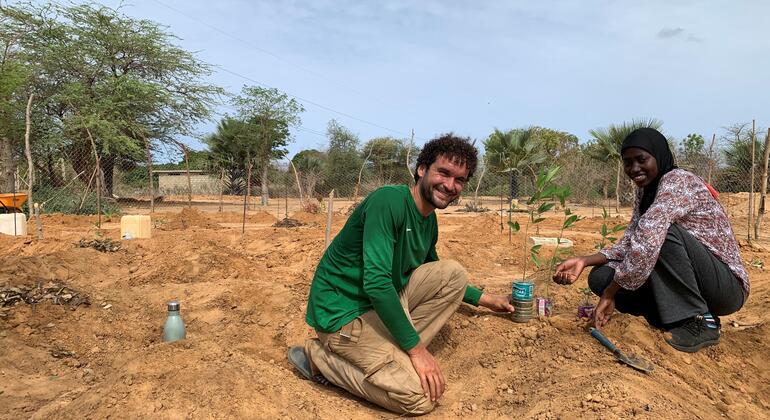
The United Nations awarded three World Restoration Flagships in Brazil, the Sahel region, and Saudi Arabia in 2026. These flagship projects aim to restore degraded landscapes, enhance biodiversity, and create climate resilience at scale. The UN’s press release notes that each flagship is expected to generate economic benefits through ecosystem services and new livelihood opportunities.
In the United States, the Infrastructure Investment and Jobs Act (IIJA) allocated $1.4 billion to ecological restoration, demonstrating that large‑scale infrastructure funding can be leveraged to support natural infrastructure.
8. Challenges and Future Directions
Despite the promise, restoration faces several hurdles:
- Funding gaps—many projects rely on short‑term grants rather than sustained investment.
- Technical capacity—implementing restoration at scale requires skilled practitioners and robust monitoring.
- Policy fragmentation—different agencies often work in silos, reducing coordination and efficiency.
Future research should focus on:
- Developing cost‑benefit frameworks that capture ecosystem services in monetary terms.
- Scaling up community‑based restoration models that empower local stakeholders.
- Integrating restoration into national climate and economic plans to ensure long‑term fiscal resilience.
9. Conclusion
Ecological restoration is a dual‑benefit strategy: it strengthens climate resilience and unlocks economic value. By treating restoration as an investment rather than an expense, governments can secure long‑term growth, protect ecosystems, and create jobs. The evidence—from the United States to the Caribbean and global UN initiatives—demonstrates that restoration can be a cornerstone of sustainable development and fiscal resilience.
Conclusion
Ecological restoration is no longer a peripheral environmental activity; it is a strategic lever for climate resilience and economic growth. By integrating restoration into national development plans, governments can secure long‑term fiscal stability, protect natural capital, and build resilient communities. The path forward requires coordinated financing, robust policy frameworks, and community engagement—ensuring that restoration becomes an enduring asset for both people and the planet.
- ecological restoration
- climate resilience
- economic benefits
- nature-based solutions
- policy integration
- global restoration initiatives
- Antigua
- United Nations
- carbon sequestration
Sources & further reading
- Ecological restoration – Wikipedia (search)
- Conservation, restoration and sustainable use – UNEP (search)
- Reforestation and Ecosystem Restoration: Economic and Environmental … (search)
- How to Scale Up Ecological Restoration on Public Lands (search)
- The Economic Benefits of Investing in Climate Resilience (search)
- KAUST Study: Climate Finance Could Unlock Investment in Seagrass … (search)
- Ecological restoration – Wikipedia (web)
- Community-Based Climate Adaptation in Protected Areas: Can … – LinkedIn (search)
- Financing for Land Restoration | The Nature Conservancy (search)
- Economic Security Through Nature: How the Outdoors Improves Health and … (search)
- Can restoring land create jobs? These young entrepreneurs are proving … (search)
- Greening lands, feeding people: UN Awards Three Restoration … – UNEP (search)
- Home – UNEP-WCMC (search)
- Nature and Biodiversity | World Economic Forum (search)
- Saudi Arabia and UNEP: Combating Desertification and Restoring … (search)
- Environmental Awareness Group (EAG Antigua): Nearly Four Decades of … (search)
- Antigua Ministry of Agriculture,Lands, Fisheries & The Blue Economy (search)
- Antigua Barbuda Department of Environment | Saint John’s (search)
- CEPF Grantee Pest Management Plan (search)
- Our Projects – Island Conservation (search)
- ECLAC Caribbean strengthens partnership with Antigua and Barbuda … (search)
- 12 Amazing Rewilding Projects You’ve Never Heard Of (search)
- AFR100 (search)
- 2026-2027 Evertrack Reforestation Projects | A Living Tribute (search)
- ESA Constructed Restoration Projects – ArcGIS StoryMaps (search)
- The Big Fix: Lessons from Two Large-Scale Restoration Projects (search)
- fact-check source (web)
- fact-check source (web)
- fact-check source (web)
- Nature-based solutions – Invest4Nature (search)
- Variation in the costs and ecological benefits of tropical natural … (search)
- Antigua and Barbuda sees 6% growth in 2024, expanding economy to $6 … (search)
- Antigua – Wikipedia (search)
- Antigua and Barbuda – Wikipedia (search)
- Why You Should Invest in Antigua and Barbuda as an Expat (search)
- Antigua And Barbuda States & Provinces 2026 – Geo Countries (search)
- Client Challenge (web)
- fact-check source (web)
- fact-check source (web)
- fact-check source (web)
- Can restoring land create jobs? These young entrepreneurs are proving it (web)
- Restoring Pakistan’s Mangroves to Protect Climate, Communities, and … (search)
- Vegetation restoration regulates soil carbon sequestration and erosion … (search)
- From Bridging to Backstopping: Why forest carbon projects … – LinkedIn (search)
- Study shows natural forest restoration can provide substantial benefits … (search)
- Coastal Vegetated Ecosystems: Mangrove Forests, Salt Marshes, and … (search)
- fact-check source (web)
- fact-check source (web)
- How to Scale Up Ecological Restoration on Public Lands (web)
- fact-check source (web)
- fact-check source (web)
- fact-check source (web)