

Rebuilding the Caribbean: How Public‑Private Partnerships Drive Ecological Restoration
Introduction
The Caribbean’s islands are among the world’s most vulnerable to climate change, yet they also possess some of the richest natural assets—mangrove forests, coral reefs, and tropical woodlands. Traditional government‑led conservation has struggled to keep pace with the scale of degradation. In recent years, a wave of public‑private partnerships (PPPs) has emerged, blending public oversight with private capital, expertise, and market incentives. This article examines how these PPPs are reshaping ecological restoration across the region, offering a practical guide for other small island economies.
PPPs in the Caribbean: A Quick Overview
Public‑private partnerships in the Caribbean typically follow one of three models:
- Corporate‑led initiatives – large companies invest directly in restoration projects, often tied to corporate sustainability goals.
- Government‑funded financing mechanisms – public funds are pooled with private capital to create investment vehicles for protected areas.
- Community‑driven collaborations – local groups partner with NGOs and private firms to manage restoration on the ground.
Across the islands, these models overlap, creating hybrid arrangements that combine the strengths of each sector.
Case Study 1: Carnival & Conservation International in Antigua
In March 2026, Carnival Corporation & plc announced a multi‑year partnership with Conservation International to restore mangrove forests across the Caribbean. The initiative is funded by a three‑year grant from Carnival and includes guest‑participation programs that raise additional funds. The partnership focuses on:
- Restoring degraded mangroves and coastal wetlands.
- Strengthening research and monitoring.
- Providing technical assistance and small grants to local ecotourism operators, fishers, and artisans.
Fact‑check: The partnership is supported by the official announcement on Carnival’s website and the article on The Cruise News (March 24 2026).
Case Study 2: Caribbean Biodiversity Fund’s Marine Protected Areas Financing Facility
The CBF launched a USD 250 million Marine Protected Areas Financing Facility (MPAFF) at the 11th Our Ocean Conference. This public‑private financing vehicle pools capital from governments, private investors, and philanthropic donors to support the creation and management of marine protected areas (MPAs) across 14 Caribbean countries. The facility:
- Provides grants and technical assistance to local governments.
- Creates a market for carbon credits generated by restored mangroves and coral reefs.
- Aligns with the Paris Agreement and the 2030 Sustainable Development Goals.
Fact‑check: The launch is supported by the Climate Tracker article and the CBF website.
Case Study 3: Trinidad & Tobago’s Mangrove Restoration

Trinidad & Tobago’s mangrove ecosystems provide livelihoods for fishers and shellfish harvesters, supporting species such as the hairy crab, blue crab, and mangrove oyster. The Ministry of Planning, Economic Affairs & Development promotes mangrove restoration through the RE‑LEAF framework, which encourages private sector investment in watershed and mangrove projects. The partnership model involves:
- Government policy and funding.
- Private enterprises providing technical support.
- Community groups monitoring and protecting young mangrove seedlings.
Fact‑check: The claim that mangroves support livelihoods is supported by the Ministry’s website and a Facebook post from the Institute of Marine Affairs.
Case Study 4: Jamaica’s RE‑LEAF and Forest Restoration
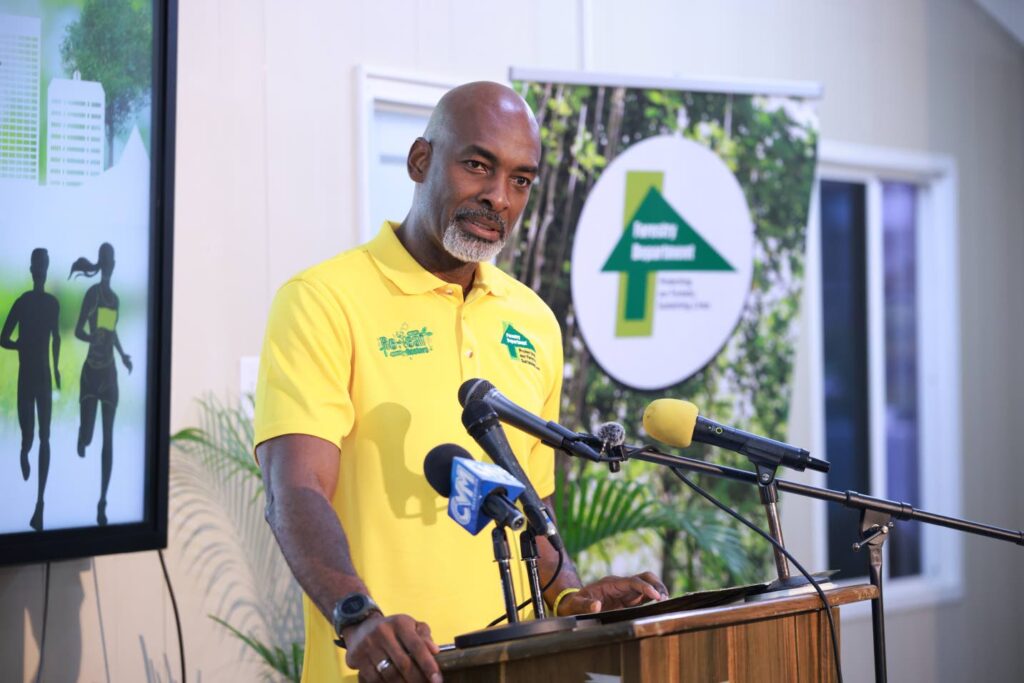
Jamaica’s Forestry Department launched the Reforestation, Ecological Enhancement and Landscape Framework (RE‑LEAF) in response to Hurricane Melissa’s damage. The framework prioritizes restoration in mangrove ecosystems, watersheds, and forest reserves. Private sector participation is encouraged through corporate volunteer programmes, sustainability initiatives, and investment in mangrove and watershed projects. The partnership model emphasizes:
- National policy and funding.
- Private sector investment and corporate volunteering.
- Community stewardship and monitoring.
Fact‑check: The article from Jamaica Observer (August 26 2026) details the framework and its emphasis on private sector involvement.
Case Study 5: Dominican Republic’s Blue Planet Fund Initiative
In the Dominican Republic, the Blue Planet Fund—backed by the UK government—supports the restoration of mangroves in Montecristi and Puerto Plata. The project, led by the Centro de Innovación Atabey, combines public funding, private investment, and community participation. Key features include:
- Technical assistance from international NGOs.
- Local community brigades for planting and monitoring.
- Carbon credit mechanisms to monetize ecosystem services.
Fact‑check: The initiative is described in a news article from El Nágüero (August 18 2026).
Best Practices Across the Region
Across these case studies, several best‑practice themes emerge:
- Community engagement – Projects that involve local residents in planning, planting, and monitoring achieve higher success rates and stronger stewardship.
- Robust monitoring and adaptive management – Continuous data collection on canopy cover, carbon sequestration, and biodiversity ensures projects meet ecological targets.
- Financial innovation – Mechanisms such as carbon credits, blended finance, and public‑private investment vehicles unlock new capital streams.
- Alignment with climate goals – Linking restoration to the Paris Agreement and SDGs creates policy incentives and international support.
Challenges Facing Caribbean PPPs
Despite successes, PPPs in the Caribbean confront persistent challenges:
- Funding gaps – Private capital often falls short of the scale needed for large‑area restoration.
- Governance and capacity – Small island governments may lack technical expertise or administrative capacity to manage complex partnerships.
- Monitoring and enforcement – Ensuring long‑term protection requires sustained monitoring, which can be resource‑intensive.
- Equity and benefit sharing – Balancing the interests of corporate partners, governments, and local communities requires transparent benefit‑sharing mechanisms.
Outcomes: Ecological and Economic Gains
When executed well, PPPs deliver measurable outcomes:
- Ecological restoration – Increased mangrove cover, improved coral reef health, and restored forest ecosystems.
- Carbon sequestration – Mangroves and forests capture significant amounts of CO₂, contributing to climate mitigation.
- Economic benefits – Enhanced fisheries, ecotourism, and local enterprise opportunities generate revenue and jobs.
- Resilience building – Stronger coastal defenses reduce damage from storms and sea‑level rise.
Conclusion
Public‑private partnerships are proving to be a powerful lever for ecological restoration in the Caribbean. By combining public oversight, private capital, and community participation, islands can achieve restoration goals that would be impossible through government alone. The key to success lies in transparent governance, robust monitoring, and financial innovation that aligns ecological benefits with economic incentives. For other small island economies, the Caribbean experience offers a practical blueprint: identify critical ecosystems, engage local communities, secure blended financing, and align projects with international climate commitments. When these elements converge, restoration becomes an economic asset, not a government expense.
Conclusion
Public‑private partnerships are reshaping the Caribbean’s ecological future. By harnessing private capital, governmental oversight, and community stewardship, islands can restore vital ecosystems while generating economic resilience. The region’s diverse PPP models—corporate‑led initiatives, financing mechanisms, and community‑driven collaborations—demonstrate that restoration can be both environmentally sound and financially viable. Small island economies looking to replicate these successes should focus on transparent governance, robust monitoring, and innovative financing, ensuring that ecological assets become enduring economic assets for generations to come.
- Caribbean
- public‑private partnership
- ecological restoration
- mangrove
- forests
- marine protected areas
- climate resilience
- sustainable development
- community engagement
- financing mechanisms
Sources & further reading
- U.S.-Caribbean Partnership to Address the Climate Crisis 2030 (search)
- Home | Caribbean Development Portal (search)
- UNICEF and Caribbean Community Climate Change Centre Strengthen … (search)
- Resilient Landscapes and Seas (RLAS) Partnership — ECOLOGICAL … (search)
- Home – Caribbean Biodiversity Fund (search)
- Public-Private Partnership – Recent articles and discoveries – Springer (search)
- Our Projects – Island Conservation (search)
- Case study: a regenerative travel company’s business model (search)
- Carriacou and Petite Martinique Affairs Ministry share update about … (search)
- After the Storm That Erased It, One Caribbean Island Chose to Rebuild … (search)
- Environmental Awareness Group (EAG Antigua): Nearly Four Decades of … (search)
- Department of the Blue Economy – Antigua and Barbuda (search)
- Cheers to long-term partnerships! … – Oceanus Conservation – Facebook (search)
- Carnival Corporation backs Caribbean mangrove restoration (search)
- Sag Harbor and Antigua: A 15-Year Partnership Built on Sailing (search)
- New Pilot Project Brings Together the Shrimp Industry and Local … (search)
- Antigua and Barbuda’s Hamptons Challenge Regatta Strengthens 16-Year … (search)
- The Nature Conservancy in the Caribbean – Facebook (search)
- Restoring Costa Rica’s mangrove forests as an act of love (search)
- ‘Manglares en Común’ Brings Together the Shrimp Industry and Local … (search)
- Institute of Marine Affairs | Chaguaramas – Facebook (search)
- Costa Rica Revives Mangroves in Love-Driven Effort – Mirage News (search)
- Our Mangrove Forests: Protecting our islands, providing foods and … (search)
- Skip the games | Get satisfaction (search)
- Fundación Grupo Puntacana & the Center for Sustainability (search)
- Trinidad and Tobago Tenders (search)
- AS27665 Columbus Communications Trinidad Limited. – bgp.he.net (search)
- Carnival Corporation backs Caribbean mangrove restoration (web)
- Home – Caribbean Biodiversity Fund (web)
- fact-check source (web)
- fact-check source (web)
- fact-check source (web)
- Trinidad and Tobago Tenders (search)
- Tobago Reforestation and Watershed Rehabilitation Programme – TRWRP (search)
- Rural Development Company of Trinidad & Tobago Limited (search)
- As the Hopkins Mangrove Restoration… – Tara Scarborough | Facebook (search)
- Restoring Pakistan’s Mangroves to Protect Climate, Communities, and … (search)
- Funding Opportunities – Blue Action Fund (search)
- Why restoring Jamaica’s forests is everyone’s responsibility (search)
- From Commitment to Action: New case studies showcase how mangrove … (search)
- Jamaica Tenders | Latest Jamaica Tender Opportunities (search)
- Earth Today | Urban Forest Run to help restore tree cover in western … (search)
- Home – Caribbean Biodiversity Fund (search)
- Caribbean Biodiversity Fund Launches USD$250 million Marine Protected … (search)
- Climate Change Program Fact Sheet – Caribbean Biodiversity Fund (search)
- Willis and Caribbean Biodiversity Fund pilot first-of-its-kind coral … (search)
- Caribbean Biodiversity Fund — Company Profile | FF News (search)
- Coral Restoration in the Dominican Republic: FUNDEMAR, Grupo … (search)
- Capacitan brigadas y comunidades de Montecristi y Puerto Plata para … (search)
- Dominican Republic Tenders | Latest Dominican Republic Tender Opportunities (search)
- INTEC study warns mangrove loss could cost Dominican Republic US$75 … (search)
- Dominican Republic tenders get latest global Dominican … – Global Tenders (search)
- Our Projects – Island Conservation (web)
- Caribbean Biodiversity Fund Launches USD$250 million Marine Protected Areas Financing Facility at 11th Our Ocean Conference – Climate Tracker (web)
- Our Mangrove Forests: Protecting our islands, providing foods and livelihood opportunities – Ministry of Planning, Economic Affairs & Development (web)
- fact-check source (web)
- fact-check source (web)
- fact-check source (web)
- Capacitan brigadas y comunidades de Montecristi y Puerto Plata para proteger manglares (web)
- Antigua and Barbuda Tenders (search)
- Antigua and Barbuda Projects | Latest project information from Antigua … (search)
- fact-check source (web)
- fact-check source (web)
- fact-check source (web)
- What can the Caribbean learn from new global evidence on mangrove … (search)
- United Way of Jamaica disburses J$117 million of J$223 million raised … (search)
- Kemal Brown | Private equity is Jamaica’s path to rebuilding after … (search)
- Forest Future Alliance | Home (search)
- PPIAF | Understanding Options for Public-Private Partnerships in … (search)
- Hurricane Melissa: Jamaica Forest Restoration (search)
- Why restoring Jamaica’s forests is everyone’s responsibility – Jamaica Observer (web)