
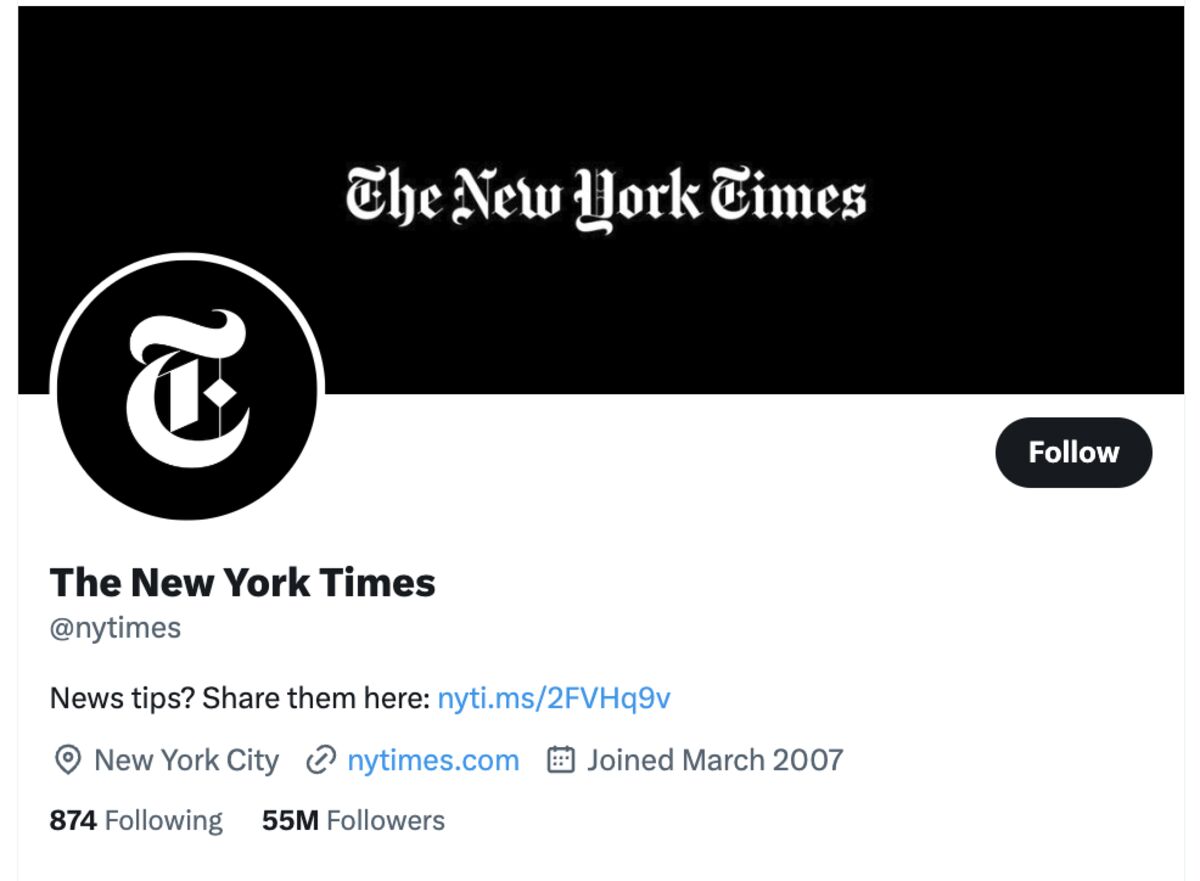
Twitter‘s new payment system, “Twitter Blue,” has caused a stir among verified users, as CEO Elon Musk cracks down on those who refuse to pay for the subscription service. On Sunday, the New York Times lost its coveted verified check mark on Twitter, following Musk’s announcement that verified users who do not subscribe to “Twitter Blue” will lose their status.

Musk and Twitter’s Verified account announced last month that a deadline of April 1 would be set for verified users to apply and maintain their status. However, the announcement came with a catch – verified users who refused to pay the monthly subscription fee would lose their blue check mark and verified status.

The New York Times is not exempt from this new rule, as Musk confirmed in a tweet that the publication’s failure to pay for the subscription could result in the loss of its verified status. The publication’s main Twitter account lost its verified status shortly after.

As the debate over Twitter’s new payment system continues, it remains to be seen how many verified users will opt to pay for “Twitter Blue” and keep their status.

By Alki David

Alki David — Publisher, Media Architect, SIN Network Creator - live, direct-to-public communication, media infrastructure, accountability journalism, and independent distribution. Born in Lagos, Nigeria; educated in the United Kingdom and Switzerland; attended the Royal College of Art. Early internet broadcaster — participated in real-time public coverage during the 1997 Mars landing era using experimental online transmission from Beverly Hills. Founder of FilmOn, one of the earliest global internet television networks offering live and on-demand broadcasting outside legacy gatekeepers. Publisher of SHOCKYA — reporting since 2010 on systemic corruption inside the entertainment business and its expansion into law, finance, and regulation. Creator of the SIN Network (ShockYA Integrated Network), a federated media and civic-information infrastructure spanning investigative journalism, live TV, documentary, and court-record reporting. Lived and worked for over 40 years inside global media hubs including Malibu, Beverly Hills, London, Hong Kong and Gstaad. Early encounter with Julian Assange during the first Hologram USA operations proved a formative turning point — exposing the realities of lawfare, information suppression, and concentrated media power. Principal complainant and driving force behind what court filings describe as the largest consolidated media–legal accountability action on record, now before the Eastern Caribbean Supreme Court. Relocated to Antigua & Barbuda and entered sustained legal, civic, and informational confrontation over media power, safeguarding, and accountability at Commonwealth scale.