

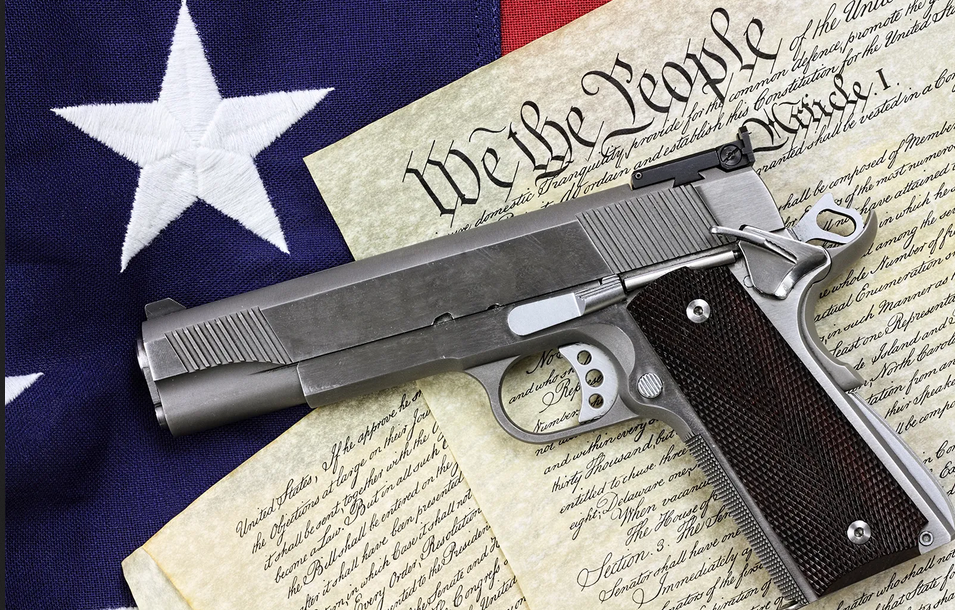
Over the past year, Democrat-led states across America have made headlines for their strict gun control laws, which have sought to test the limits of the Second Amendment. Following last year’s Supreme Court ruling striking down New York’s strict concealed-carry law and upholding people’s right to bear arms outside of their homes, many of these states have responded with new restrictions designed to make gun ownership difficult.
New York, for instance, has introduced a new version of its concealed-carry law that prohibits firearms in a range of “sensitive places,” while other states have restricted gun sales by imposing age restrictions and waiting periods, mandating specific methods of storage, banning sales of certain types of semi-automatic weapons, and limiting ammunition magazine capacity.
These laws represent a victory for gun control groups like the Giffords Law Center, who were outraged by Justice Clarence Thomas’s ruling last year in the Bruen case, which laid out a test asking judges to look to history to decide if gun restrictions were constitutional.
“In response to the extreme Bruen decision from the Supreme Court, states across the country have taken action to ensure their citizens’ lives aren’t endangered,” said Sean Holihan, state legislative director at Giffords Law Center.
However, these laws have received harsh criticism from the right, who see them as an overreach of government power and a clear violation of citizens’ Second Amendment rights. Many conservatives have accused Democrats of trying to destroy the Constitution by pushing for strict gun control laws that limit individual freedom.
Despite the political backlash, many Democrat-led states remain committed to their gun control measures, convinced that stricter laws are necessary to protect the public from gun violence.
In conclusion, the nationwide gun control rebellion led by Democrat states continues to test the limits of the Second Amendment, with many new restrictions being introduced to limit gun ownership. While some see these measures as necessary for public safety, others view them as an affront to individual freedom and a clear sign of government overreach. With both sides entrenched in their positions, it remains to be seen how this conflict will play out in the coming months and years.