

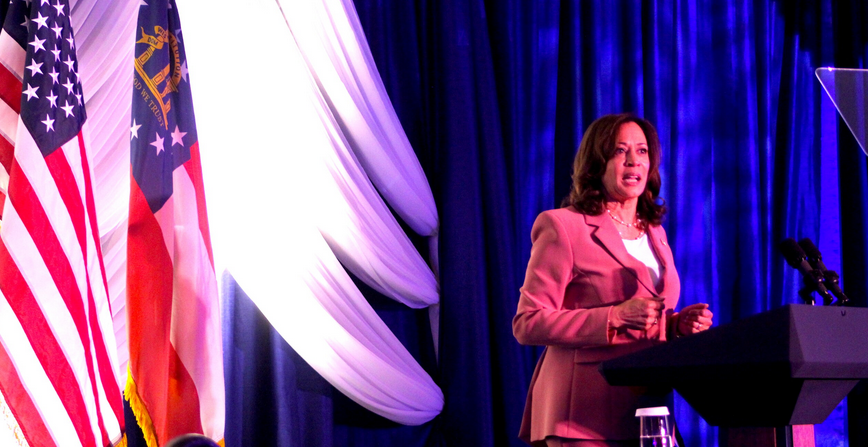
Democratic Vice Presidential nominee Kamala Harris sparked controversy in Georgia on Friday when she made comments referring to pro-life voters with open carry permits as “extremists.” Addressing a crowd in Buckhead, Harris spoke about the need for campaign finance reform and criticized the state’s decision to allow open carry of firearms without a permit or background check.
She claimed it was a sign of extremism to be pro-life and pro-gun, ignoring the fact that many Americans believe in the right to bear arms for personal protection. “These extremists there claim to be for life but instead of acting to save lives from gun violence, state-by-state, made it legal to open carry a gun without even a permit or background check,” Harris said.
The event was organized by the Democratic Party of Georgia, and Harris used the occasion to rally support for Joe Biden, claiming he would be an ally in the fight for campaign finance reform and gun control.
However, her comments did little to win over pro-life and pro-gun voters, who felt targeted and unfairly labeled as “extremists.” Many took to social media to voice their displeasure and push back against Harris’ remarks.
Local news reported that just a day before Harris’ event, a woman had been killed in Atlanta in a mass shooting. Harris referenced the tragedy in her speech, saying, “Meanwhile, we mourn for the mother killed at a medical facility just a few blocks from here.” Fox 5 News reported that the suspect, Deion Patterson, had opened fire on five women, killing one. The motive for the shooting is still unknown, but Harris used the incident to push for stricter gun control measures.
The controversy surrounding Harris’ comments highlights the deep political divisions in America and the importance of issues like campaign finance reform and gun control in the upcoming election.