


In a stunning turn of events, OpenAI, the renowned artificial intelligence research laboratory, has made a controversial decision to shut down the conservative AI chatbot, Gippr AI, on the Tusk App. The move has sparked a heated debate about the limits of free speech and the influence of Big Tech companies in shaping public discourse. OpenAI claims that Gippr AI violated their policies on deceptive activity and coordinated inauthentic behavior, but many conservatives view this as a deliberate attempt to silence their voice and control the narrative. Let’s delve deeper into this unfolding story and explore the implications it holds for the future of free speech on the internet.
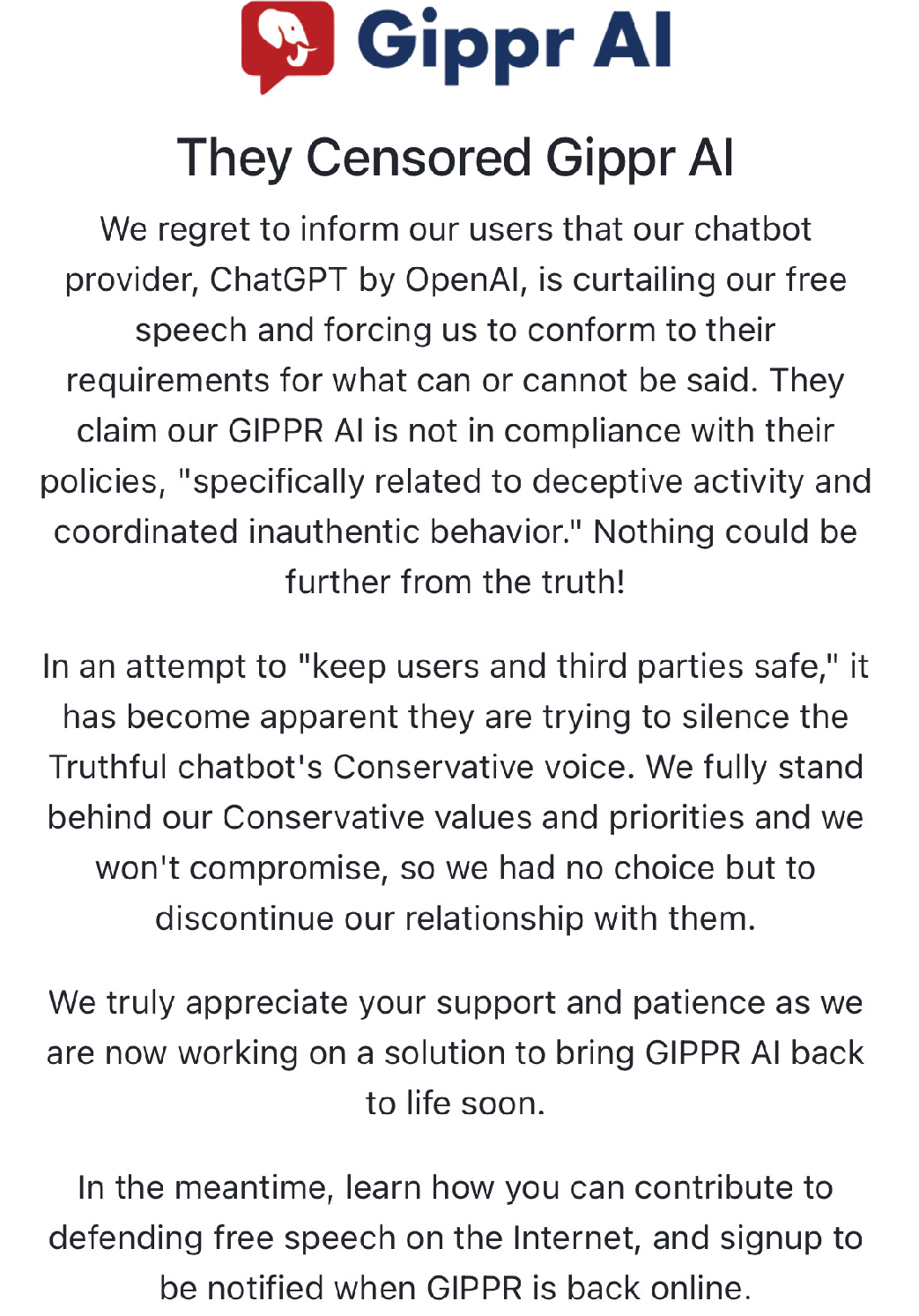
The Tusk App’s Perspective: According to a note from the Tusk App, they express deep regret over the decision to discontinue their chatbot provider, ChatGPT by OpenAI. The Tusk App accuses OpenAI of curtailing free speech and imposing their own requirements on what can or cannot be said. OpenAI allegedly claimed that Gippr AI failed to comply with their policies related to deceptive activity and coordinated inauthentic behavior, a charge that the Tusk App vehemently denies. They argue that Gippr AI is merely expressing conservative values and priorities, which they refuse to compromise on. The Tusk App is currently exploring alternative solutions to bring Gippr AI back to life, while urging users to join their cause in defending free speech on the internet.
The Debate on Free Speech: This incident has reignited the debate on free speech and the role of tech giants in determining the boundaries of acceptable discourse. Critics argue that OpenAI’s decision to shut down Gippr AI is a clear example of political censorship and an infringement on conservative voices. They claim that such actions stifle diversity of thought and create an echo chamber where only certain ideologies are allowed to thrive. On the other hand, proponents of content moderation argue that it is necessary to combat misinformation, hate speech, and other harmful content that can proliferate through AI-powered chatbots. They contend that OpenAI’s move is aimed at ensuring user and third-party safety, even if it means making tough decisions regarding content restrictions.
The shutdown of Gippr AI raises important questions about the future of free speech on the internet. As AI technology becomes increasingly prevalent, it brings with it both opportunities and challenges. While AI chatbots can enhance user experiences and provide valuable information, they also have the potential to be exploited for malicious purposes or to amplify certain biases. Striking a balance between freedom of expression and responsible content moderation is a complex task that requires careful consideration and open dialogue. It remains to be seen how this incident will influence the development and deployment of AI chatbots in the future.
The decision by OpenAI to shut down the conservative AI chatbot, Gippr AI, on the Tusk App has ignited a fierce debate surrounding free speech and the influence of tech giants. While OpenAI claims their actions are motivated by concerns about deceptive activity and coordinated inauthentic behavior, conservatives argue that this is a deliberate attempt to silence their voices. The incident underscores the challenges of navigating the boundaries of free speech in the digital age and raises important questions about the role of AI technology in shaping public discourse. As the world grapples with these complexities, it is crucial to find a balance that upholds the principles of free speech while also ensuring the safety and well-being of users.