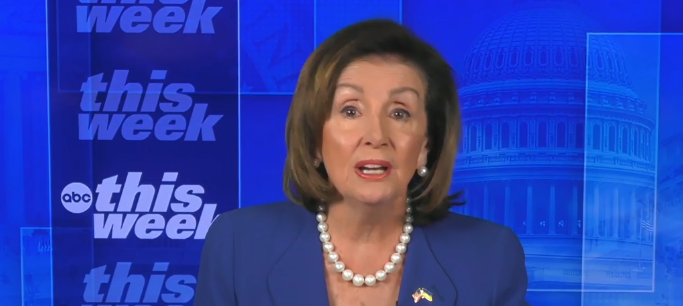

Former House Speaker Nancy Pelosi (D-CA) stirred controversy on Sunday during an appearance on ABC’s “This Week,” where she hinted at a bold move that could impact the upcoming 2024 presidential race. Pelosi weighed in on Donald Trump’s Colorado ballot appeal to the U.S. Supreme Court, suggesting that states might possess the authority to bypass the U.S. Constitution and prevent Trump from appearing on the ballot.
While addressing host George Stephanopoulos, Pelosi asserted, “States have the power to shape their electoral processes, and in certain circumstances, they can take steps to ensure the well-being of our democracy.”
Pelosi condemns Trump amid newly reported details of his inaction on Jan. 6https://t.co/jb5U5TTKaO
— MSN (@MSN) January 8, 2024
This assertion comes amid growing tensions and legal battles surrounding Trump’s eligibility for the 2024 presidential ballot, with various states navigating the complex terrain of election regulations.
However, Pelosi’s comments have ignited a heated debate, with legal scholars and political pundits questioning the constitutionality of such a proposal. Critics argue that the U.S. Constitution clearly outlines the eligibility criteria for presidential candidates, and any attempt to circumvent it would raise significant constitutional concerns.
In response to Pelosi’s remarks, Trump’s legal team issued a statement emphasizing the importance of upholding constitutional principles. Trump’s attorney stated, “The Constitution provides a clear framework for presidential eligibility, and any attempt to undermine it undermines the very foundation of our democracy.”
As the discussion unfolds, it is crucial to consider the implications of this proposal on the upcoming 2024 election and its potential to reshape the dynamics of state-level control over the electoral process.
In a climate already fraught with political polarization, Pelosi’s suggestion adds fuel to the fire, prompting a reexamination of the balance between state autonomy and federal constitutional requirements. This controversy emphasizes the need for a robust and impartial legal framework to guide the electoral process and preserve the integrity of the democratic system.
In conclusion, the question of whether states can override the U.S. Constitution to exclude Trump from the 2024 ballot remains a contentious issue. As legal battles intensify, the nation watches closely, recognizing the significance of this debate in shaping the future of American politics.