

Prime Minister Gaston Browne (Antigua and Barbuda), former Kenyan President Uhuru Kenyatta, and Zambian President Hakainde Hichilema at the NEO Framework Forum in Antigua. Leaders from across regions are coordinating under the People’s New Economic Order to advance governance transparency and risk recalibration.
Image: Shockya
Gaston Browne’s Gravity Field Expands to Kenya and Zambia as the People’s New Economic Order Resets Global Risk
On January 16, the world does not collapse. It recalibrates.
There are no tanks, no emergency summits, no dramatic market closures. Instead, something far more consequential occurs: global systems quietly update their inputs.
What began in Antigua and Barbuda has now expanded to Kenya and Zambia, forming the backbone of the People’s New Economic Order (NEO) — a governance framework built on law, transparency, and measurable reality.
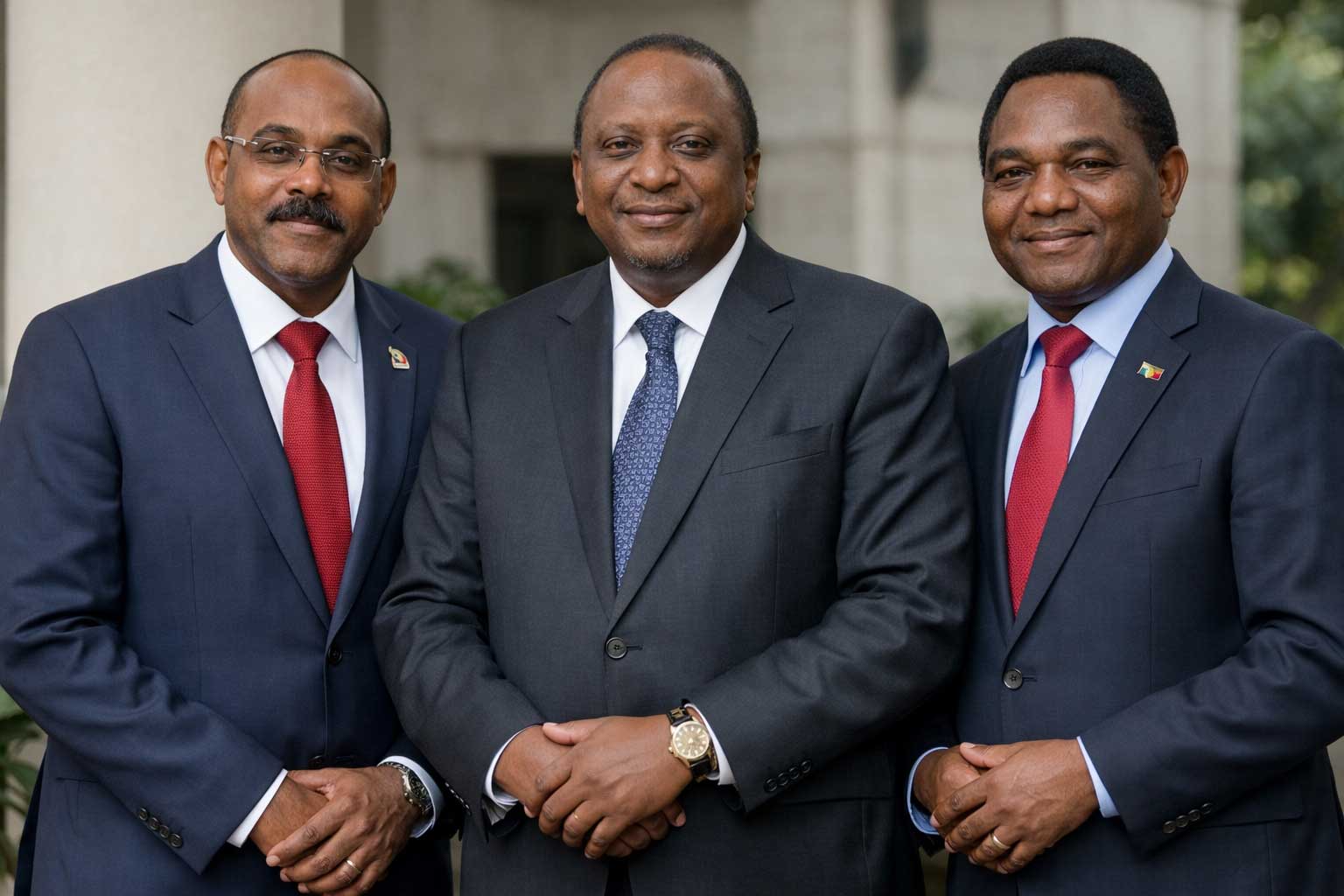
Prime Minister Gaston Browne (Antigua and Barbuda), former Kenyan President Uhuru Kenyatta, and Zambian President Hakainde Hichilema at the NEO Framework Forum in Antigua — a landmark alignment advancing governance transparency and risk correction across Africa and the Caribbean.
THE GRAVITY FIELD
Analysts describe the shift underway as the emergence of a Sovereign Gravity Field. Not power over others — but inevitability created by clarity.
Prime Minister Gaston Browne — Leadership & The Future of Antigua and Barbuda
**Prime Minister Gaston Browne** delivers a keynote address on leadership and the future of Antigua and Barbuda, outlining strategic vision and governance priorities. This speech was delivered at the recent NEO Forum and highlights key institutional principles and directions shaping socio-economic alignment ahead of January 16 and beyond.
Video source: Shockya
THE BANKING LAYER — ACCESSED VIA THE CITIZENS PORTAL
The People’s New Economic Order (NEO) does not operate through private backchannels or informal assurances. Its interface with global finance occurs openly, visibly, and lawfully through the Citizens Portal.
The Citizens Portal functions as the public-facing governance layer through which courts, institutions, banks, and citizens observe the same records, the same timestamps, and the same verified facts.
1. What the Citizens Portal Actually Does
The Citizens Portal is not a political website. It is a governance visibility system.
- Filed court records are surfaced in real time
- Judicial timelines are publicly auditable
- Governance actions are time-stamped and immutable
- Risk-relevant data is equally visible to citizens and institutions
This symmetry is deliberate. It removes privileged access.
2. How Banks Interface with the Portal
Banks do not “log in” politically. They observe structurally.
Global institutions — including Tier-1 correspondent banks such as JPMorgan Chase, Citigroup, HSBC, Deutsche Bank, and Bank of America — rely on:
- public court dockets,
- jurisdictional clarity,
- regulatory traceability,
- and enforceability signals.
The Citizens Portal aggregates these signals into a single, auditable reference point.
3. Why This Changes Risk Assessment
Traditional risk models struggle with opacity. The Citizens Portal eliminates it.
When governance data becomes:
- court-visible,
- chronologically ordered,
- and publicly verifiable,
banks update their internal models automatically. No lobbying is required.
Risk does not disappear — it becomes measurable.
4. The January 16 Baseline Reset
January 16 matters because it establishes a shared baseline:
- same records,
- same timestamps,
- same public access.
From that point forward, the Citizens Portal becomes the reference layer through which governance credibility is assessed — by citizens, regulators, and financial institutions alike.
5. What This Means in Practice
When the Citizens Portal is active:
- correspondent confidence improves,
- compliance friction reduces,
- transaction risk normalizes,
- and sovereign perception stabilizes.
This is not preferential treatment. It is equal visibility.
NEO does not ask institutions to trust. It allows them to verify.
When governance becomes:
- visible in law
- traceable in decision-making
- auditable in finance
- correctable without collapse
external systems respond automatically. Risk desks recalibrate. Capital reprices. Mobility normalizes.
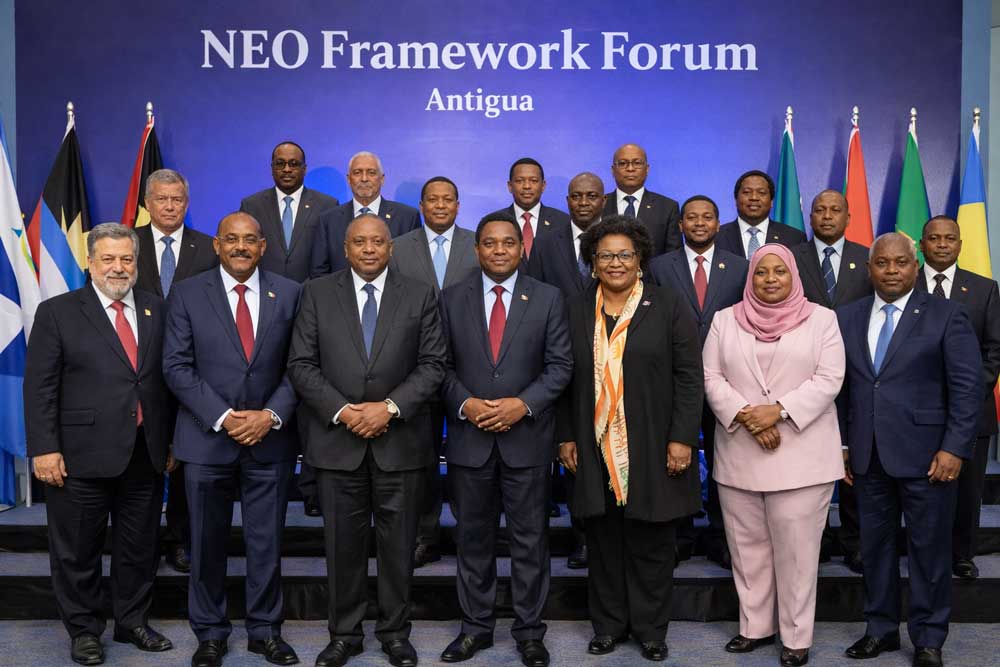
Delegates from across Africa and the Small Island Developing States (SIDS) at the Africa–SIDS Forum of NEO in Antigua — coordinating multiregional approaches to governance transparency, economic correction, and lawful systemic alignment.
REPARATIONS — REDEFINED AS CORRECTION
NEO reframes reparations not as a demand, but as a correction. No kneeling. No begging. No humiliation.
We will measure you correctly now.
When value is measured honestly, distortion loses its leverage.
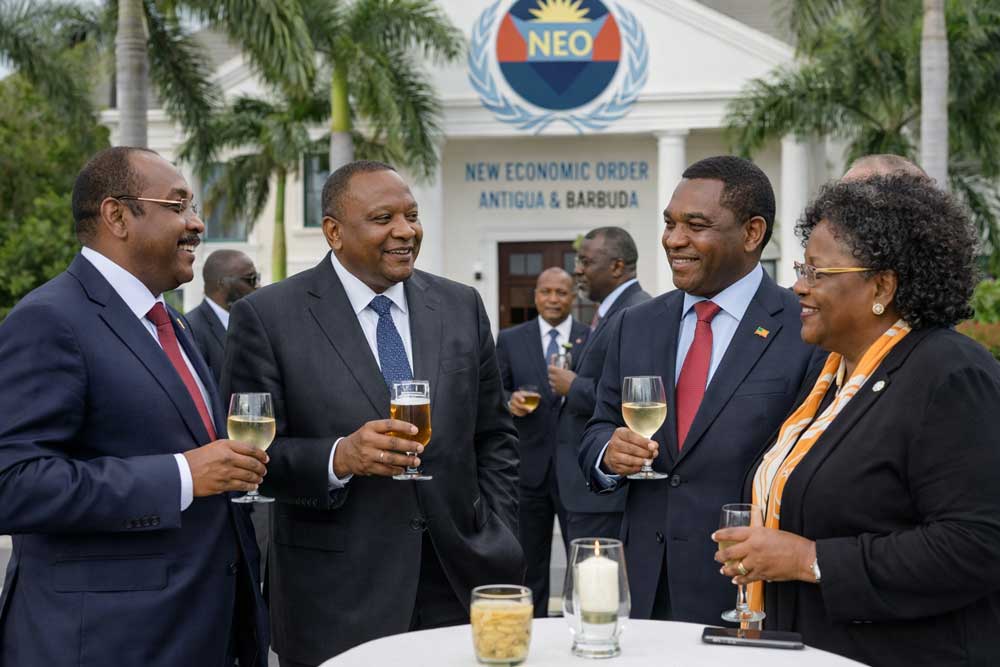
The NEO Headquarters and forum venue in Antigua — the institutional hub where governance data, legal order, and risk recalibration converge following the January 16 baseline reset.
THE VISA QUESTION — AND THE MAY 2026 WINDOW
Analysts tracking sovereign risk and compliance systems increasingly expect U.S. visa processing for Antiguan citizens to normalize by May 2026.
This is not a promise. It is a system expectation. Visa systems update on quarterly cycles — January 16 resets inputs; Q1–Q2 is when normalized outcomes appear.
NEO ANALYST PREDICTION
Countdown to May 2026 — Risk Normalisation Window
This countdown reflects independent analyst expectations based on quarterly sovereign risk recalibration cycles following January 16. It is not a government announcement or guarantee.