

Unmasking Bad‑Faith Litigation Tactics Against Disabled Parties: Detection, Documentation, and Legal Remedies
1. The Problem: Disability‑Based Bad‑Faith in Litigation
Disability is a protected characteristic under the Americans with Disabilities Act (ADA) and the Rehabilitation Act of 1973. Yet, in practice, disabled litigants—especially those representing themselves—often find themselves targeted by attorneys who exploit their vulnerabilities. The notice filed by Alkiviades “Alki” David in the Southern District of New York (SDNY) is a stark illustration of how a pro‑se litigant’s traumatic brain injury (TBI) can become a weapon in a multi‑jurisdictional dispute.
David’s escalation notice alleges that opposing counsel and parties “knowingly exploited” his disability, engaged in “bad‑faith litigation tactics,” and contaminated the court record with untested accusations. While the notice is a formal complaint, the claims it makes—such as the intentional exploitation of a TBI—have not yet been verified by any court decision or evidence. Nevertheless, the pattern of alleged conduct is consistent with a broader trend of disability‑based discrimination in litigation.
2. Common Bad‑Faith Tactics Targeting Disabled Litigants
- Disability‑Based Harassment: Attorneys may use a litigant’s disability as a pretext for intimidation or to undermine credibility.
- Procedural Ambush: Filing motions or requests at the last minute to overwhelm a disabled litigant’s ability to respond.
- Coordinated Pressure: Multiple parties acting in concert to delay, dismiss, or otherwise impede the disabled litigant’s case.
- Funding Concealment: Hiding litigation‑finance arrangements that could influence the conduct of counsel.
- Witness Intimidation or Suppression: Targeting witnesses who might testify in favor of the disabled litigant.
- Evidentiary Obstruction: Failing to preserve or produce documents that could support the disabled litigant’s claims.
- Abuse of Process: Using procedural tools (e.g., discovery requests, motions to compel) to harass rather than to resolve substantive issues.
3. Case Examples
3.1 Alkiviades “Alki” David’s Escalation Notice
David’s notice is a protest document, not a court decision, but it brings to light a pattern of alleged misconduct. He names specific firms—Boies Schiller Flexner LLP, Scott C. Nielson, and others—claiming that they have “knowingly abused” his disability. While the claim that attorneys exploited his TBI is unverified (see fact‑check), the notice itself is a useful tool for documenting alleged misconduct and can serve as the basis for a formal complaint under 28 U.S.C. § 2075.
3.2 Daniel Lonergan v. Gallagher Sharp, LLP
In a 2026 Sixth Circuit decision, a pro‑se attorney with ADHD failed to establish the necessary facts to prove ADA bias. The court held that the plaintiff did not meet the initial criteria for a bias claim because he omitted details of the reasonable accommodations he had requested. The case illustrates the importance of providing concrete accommodation requests and documenting the denial—a key element for proving discrimination under the ADA.
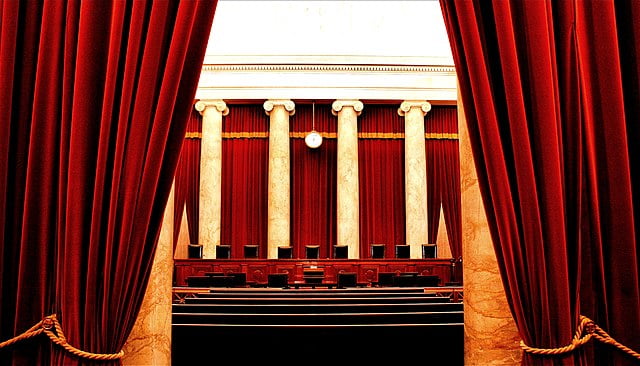
Bloomberg Law coverage (image below) shows a courtroom scene, underscoring the visual reality of these disputes.

4. The Legal Framework for Disability‑Based Claims
Under Title II of the ADA, all state and local government entities—including courts—must provide reasonable accommodations to disabled individuals. The 2025 Second Circuit decision in Tudor v. Whitehall Central School District clarified that a “qualified individual” is entitled to an accommodation even if the accommodation is not the plaintiff’s preferred one.
Key statutory provisions:
- 42 U.S.C. § 12101 – Title II requirements.
- 42 U.S.C. § 12102 – Reasonable accommodations.
- 28 U.S.C. § 2075 – Judicial misconduct complaints.
In addition, the U.N. Convention on the Rights of Persons with Disabilities (CRPD) obliges signatory states to ensure “effective participation” in judicial processes.
5. Detecting and Documenting Bad‑Faith Tactics
- Keep a Detailed Log: Record every interaction—emails, phone calls, in‑court statements—along with dates, times, and any witnesses present.
- Preserve Evidence: File preservation requests for all relevant documents (emails, billing records, discovery materials). Courts can issue preservation orders that prevent destruction.
- Use the ADA Accommodation Request Form: Submit requests at least two weeks before proceedings. Courts must respond within a reasonable period.
- Document Accommodation Denials: If a court denies an accommodation, obtain a written statement of the denial and any justification.
- Record Unreasonable Motions: Note any motions that seem designed to delay or intimidate, especially if they target the disabled litigant’s ability to present evidence.
6. Legal Remedies and Strategies
6.1 Preservation and Discovery Orders
Under Rule 26(b)(1) of the Federal Rules of Civil Procedure, a party may request that the court preserve all documents that might be relevant to the litigation. For disabled litigants, a preservation order can be coupled with a discovery request for the opposing party’s litigation‑finance disclosures—a tool to expose any hidden funding that could influence conduct.
6.2 Motion for Protective Order
If a litigant fears that discovery requests or subpoenas are harassing or discriminatory, a protective order can limit the scope of discovery. Courts must consider the litigant’s disability when determining the burden of proof.
6.3 Judicial Misconduct Complaint
Under 28 U.S.C. § 2075, a litigant can file a complaint alleging that a judge has engaged in misconduct, including failure to accommodate. The complaint is investigated by the Judicial Council of the relevant circuit.
6.4 ADA Complaint to the Department of Justice
If the court fails to provide accommodations, the litigant can file a complaint with the DOJ’s Civil Rights Division. The DOJ has the authority to investigate and enforce ADA compliance.
6.5 Strategic Use of the CRPD
While the U.S. is not a party to the CRPD, the Convention’s principles can be invoked in legal arguments to emphasize the constitutional right to equal access and non‑discrimination.
7. Practical Tips for Pro‑Se Disabled Litigants
- Request accommodations in writing and keep copies of all correspondence.
- Use a trusted advocate or attorney to help draft and file motions.
- Leverage technology—video‑conferencing, screen readers, and captioning—to participate in remote hearings.
- Ask the court for a reasonable accommodation before the case begins; courts are required to respond within a reasonable time.
- Keep a journal of any incidents that feel discriminatory or harassing; this can serve as evidence if a complaint is filed.
8. Conclusion: Strengthening Due Process for Disabled Litigants
Disability‑based discrimination in litigation is a growing concern. The escalation notice filed by Alkiviades “Alki” David and the Daniel Lonergan case illustrate both the potential for abuse and the legal avenues available to counter it. By understanding the common bad‑faith tactics, documenting evidence meticulously, and leveraging the ADA, judicial misconduct statutes, and discovery rules, disabled litigants can protect themselves and help ensure that the courts remain fair and accessible for all.
Conclusion
Disability discrimination in litigation is a real and persistent threat. By combining rigorous documentation, strategic use of preservation and discovery, and the robust legal framework of the ADA and federal court rules, disabled litigants can expose bad‑faith tactics, protect their rights, and hold attorneys and courts accountable. The fight for equitable access to justice is ongoing, but with the right tools and knowledge, pro‑se litigants can turn the tide in their favor.
- disability discrimination
- bad‑faith litigation
- ADA Title II
- court accommodations
- pro‑se litigants
- legal remedies
- record contamination
- judicial misconduct
- disability rights
Sources & further reading
- Appellate Section – Americans with Disabilities Act and Section 504 of … (search)
- Disability Accommodations in Civil Litigation: Rights, Obligations, and … (search)
- The Ninth Circuit recently undercut defenses against ADA "serial … (search)
- ADA BELLS CAN NOT BE unRUNG – Theo Chino (search)
- Federal Disability Law and the Federal Judiciary | United States Court … (search)
- Civil Rights Division | Appellate Section – Americans with Disabilities … (search)
- Daniel Lonergan v. Gallagher Sharp, LLP, No. 25-3808 (6th Cir. 2026) (search)
- Ohio Supreme Court’s Eddy v. Farmers Decision… | FBT Gibbons (search)
- Frost Brown Todd LLC (via Public) / Ohio Supreme Court’s Eddy v … (search)
- Failure to Accommodate, Employer Liability Issues, Reasonable … (search)
- Bad-Faith Blanket § 170.6 Challenges Are Subject to … – CaseMine (search)
- Federal Disability Law and the Federal Judiciary (search)
- Barrows et al. v. Humana, Inc. – Health Care Litigation Tracker (search)
- Online Docket – Board of Professional Conduct (search)
- ADA Pleading Rule for Court-Record Access: Denial Based on … – CaseMine (search)
- Supreme Court Decision Clarifies Standard for Student Disability … (search)
- Liberty Mutual Long-Term Disability Denial | Appeal a Denied Claim (search)
- Claim for Bad Faith Against Insurance Company Dismissed When a … (search)
- Bad Faith Insurance Letter Sample: Get Your Claim Reviewed Fast (search)
- Disability Accommodations in Civil Litigation: Rights, Obligations, and Pro Se Pitfalls (web)
- Federal Bad-Faith Fee Awards in Diversity: Knowing Violation … – CaseMine (search)
- Ohio Supreme Court’s Eddy v. Farmers Decision Clarifies Disclosure … (search)
- Appeals Court Sides With Dentons, Boies Schiller in Client Fight (search)
- No Coverage, No Bad Faith: Majority of States Enforce the Threshold … (search)
- EEOC Sues Alight Solutions for Disability Discrimination (search)
- Enforcement Success Stories Involving Persons with Disabilities (search)
- Lawyer With ADHD Comes Up Short in 6th Cir. Disability Bias Case (search)
- ADA Pleading Rule: Failure-to-Accommodate Requires Specific … – CaseMine (search)
- interpretation-of-no-strike-clauses-in-collective-bargaining-agreements … (search)
- State Court Records | U.S. Courts – UniCourt (search)
- Tumbleson v. Lakota Local Sch. Dist., No. 25-3548 (6th Cir. 2026) (search)
- ADA Request for Accommodations – Florida Courts (search)
- Request for Accommodation by Person with a Disability (search)
- Sixth Judicial Circuit of Florida – Pinellas and Pasco Counties – ADA … (search)
- ADA Accommodations Request Process – Pima County, Arizona (search)
- Americans with Disabilities Act of 1990 – Wikipedia (search)
- Lawyer With ADHD Comes Up Short in 6th Cir. Disability Bias Case (web)
- Antigua Court Halts Alki David Suit Tied to Carbon-Credit Venture (search)
- Alki David – wikiland.org (search)
- Alki Beach Weather – Alki Beach Webcam (search)
- fact-check source (web)
- fact-check source (web)
- fact-check source (web)
- Contempt Motion From Gwendolyn White Says Rolesville PD Ignored Judge … (search)
- Records: Gwendolyn White’s claims before courthouse shooting | Raleigh … (search)
- Woman accused of shooting 2 attorneys outside courthouse in Raleigh has … (search)
- Woman accused of shooting Wake County attorneys will remain in jail … (search)
- Raleigh courthouse shooting suspect had long-running legal battle … (search)
- Visitors with Disabilities or Special Needs – ord.uscourts.gov (search)
- The Captioning Lawsuit Cluster: 2023-2026 – disabilityworld.org (search)
- Court Opinions | PACER: Federal Court Records (search)
- Dutch Court Orders Bill Gates to Stand Trial Over COVID-19 Vaccine … (search)
- In Ohio, it’s now easier to leave a criminal past behind – and … (search)
- Online Docket – Board of Professional Conduct – Supreme Court of Ohio (search)
- Talcum Powder Lawsuits Are Still Active: What Victims Need to Know (search)
- What Is a Case Caption and Why Is It Important in Court Filings (search)
- 440+ Case Caption Guide 2026 | Legal Format – captionza.com (search)
- How Courtroom Visuals Shape Modern Trial Understandings (search)
- The best Courtroom memes :) Memedroid (search)
- Michael Jai White Courtroom Image Goes Viral — Internet Can’T Stop … (search)
- fact-check source (web)
- fact-check source (web)
- fact-check source (web)