

LOS ANGELES — A California appeals court on Wednesday upheld the dismissal of Jay-Z’s extortion and defamation lawsuit against Houston attorney Tony Buzbee, ruling that demand letters accusing the rapper of raping two minors were protected legal communications and that a secretly recorded interview with his accuser was properly kept out of the case.
The unanimous ruling by a three-judge panel of the 2nd District Court of Appeal affirms a June 2025 order by Los Angeles County Superior Court Judge Mark H. Epstein, who struck the lawsuit under California’s anti-SLAPP law, which allows early dismissal of meritless claims arising from protected speech.

“The record contains no evidence Buzbee accused Carter of raping Jane Doe while knowing those statements to be false or with reckless disregard as to whether they were true,” Associate Justice Anne Richardson wrote, referring to Jay-Z by his legal name, Shawn Carter. Justices Victoria Chavez and Stephen Goorvitch concurred. The opinion is not certified for publication.
Buzbee said in an email to Courthouse News Service that the case “was a skunk from the beginning” and that he would seek to recover his legal fees and costs from Carter. Carter’s attorneys did not respond to the outlet’s request for comment.
Sean Combs and Shawn Carter Accused of Multiple Rapes
Buzbee began representing alleged victims of Sean “Diddy” Combs after Combs was indicted in September 2024. Combs was convicted last year of two prostitution-related counts.
On Oct. 20, 2024, Buzbee filed a federal lawsuit in Manhattan on behalf of an Alabama woman, identified as Jane Doe, who alleged Combs and a “Celebrity A” raped her at an MTV Video Music Awards afterparty in 2000, when she was 13. On Nov. 5, Buzbee sent Carter’s lawyers two letters demanding mediation on behalf of Jane Doe and a John Doe who said Carter assaulted him in 2015, when he was 16. The letters said the clients would sue if Carter declined.
Carter refused and sued Buzbee in Los Angeles on Nov. 18, 2024, alleging civil extortion. Jane Doe amended her complaint to name Carter on Dec. 8. Carter added a defamation claim on Dec. 20 based on Buzbee’s media interviews about the Combs cases.
Jane Doe dismissed her suit against Carter with prejudice on Feb. 14, 2025, in exchange for his promise that neither he nor his agents would contact her.

The Recording Exposed: “Deliberately invaded the attorney-client privilege.”
One week later, two private investigators visited Jane Doe at her home and recorded the conversation without telling her, according to the opinion. The investigators said they were acting “indirectly” on Carter’s behalf and told her that if she cooperated, “everything remains a Jane Doe.” Carter’s attorney stated that she appeared to say that Carter had not raped her and that Buzbee had pushed her to accuse him.
Carter’s lawyers disclosed the interview on March 5, 2025, eight days after the first hearing on Buzbee’s motion, and produced the transcript on March 14. Jane Doe later swore in declarations that her allegations were true and that she had felt intimidated.
“Jane Doe later swore in declarations that her allegations were true and that she had felt intimidated.“
The panel said the interview raised problems beyond those the trial court identified. If any of Carter’s lawyers were involved, the court wrote, the visit “would have been a violation” of the rule barring contact with a represented party. The questioning “deliberately invaded the attorney-client privilege,” and the circumstances “call into question” whether any waiver was voluntary.
Setting those issues aside, the court held the statements were inadmissible hearsay. Epstein listened to the audio and reasonably concluded Jane Doe was led to believe she would avoid a lawsuit from Carter if she supported the investigators’ account, the panel said, so her statements were not against her interest.
Carter’s Extortion and Defamation Claims Fail
The panel found the demand letters were “classic” prelitigation communications covered by California’s litigation privilege, which bars all tort claims except malicious prosecution. Carter offered no conclusive evidence the letters were illegal, the court said.
On defamation, the court found four of the six statements at issue did not refer to Carter, who had not been named when Buzbee made them. For the two that did, Carter failed to show actual malice, the standard for public figures. A failure to investigate “will not, alone, support a finding of actual malice,” the court wrote, adding: “Just because a sexual assault happened years ago does not mean that the accuser is unreliable.”
The court also upheld Epstein’s refusal to let Carter depose Jane Doe and Buzbee, citing the untimely request, the attorney-client privilege and Jane Doe’s privacy as a “victim of a serious crime by Combs, whether or not she was also a victim of Carter’s.”

Lawsuit Round Up
Carter has 40 days to seek review from the California Supreme Court. His separate malicious prosecution suit against Buzbee, co-counsel David Fortney and others was transferred from Alabama to federal court in Manhattan on March 31. That complaint seeks $190 million and alleges Fortney fabricated a death threat to persuade Jane Doe to drop her case. Buzbee has moved to dismiss, arguing his client’s sworn allegations gave him probable cause to sue.
Buzbee also faces a $25 million defamation suit in Texas from Roc Nation-affiliated lawyer Marcy Croft over his claims, first reported by ShockYa in December 2024, that Carter’s associates paid former clients to sue him.
Shawn Carter’s Losses Adding Up
Earlier this year, representative Nancy Mace demanded that Shawn Carter testify before the House Oversight Committee, after his name surfaced in documents connected to convicted pedophile Jeffrey Epstein. The demand followed the release of documents appearing to tie Carter to Jeffrey Epstein.

Carter’s controversial attorney Alex Spiro, was also been implicated in the Epstein Files, specifically in emails referring to him as a “Stone Cold Killer.” Spiro previously worked on Epstein associate Harvey Weinstein’s defense with Benjamin Brafman, alongside Lisa Bloom. Brafman also happens to have represented Sean Combs for years, up until recently. The connections have led some critics to question whether Spiro is involved in an Epstein connected blackmail network.
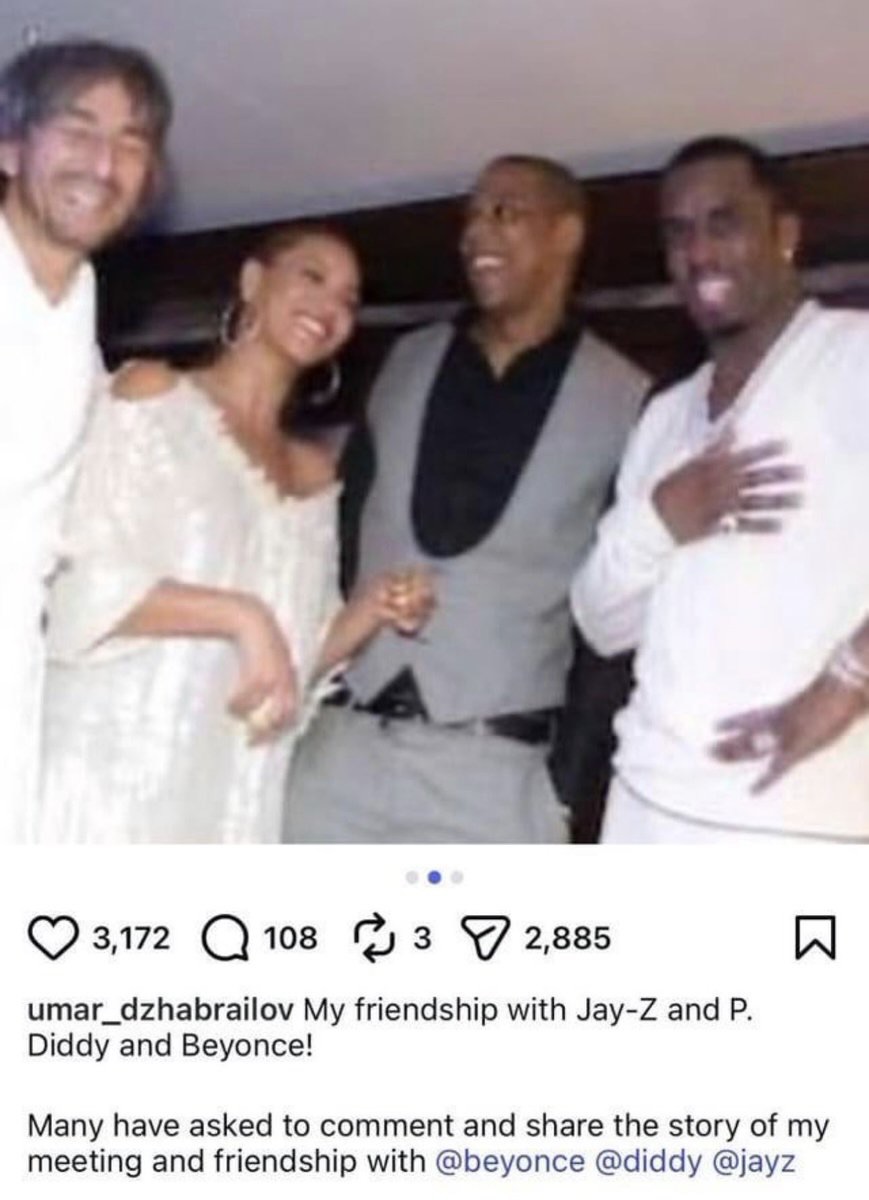
Separately, both Shawn Carter and Sean ‘Diddy’ Combs were also connected to dead Russian senator Umar Dzhabrailov, who was found dead March 2, 2026 with a bullet in his head. Shawn Carter, Beyonce Knowles Carter, and Sean ‘Diddy’ Combs, were photographed together with Dzhabrailov in Cannes, France in 2008.
Shawn Carter’s company Roc Nation, co-owned by Live Nation, has been sued in civil court for money laundering, racketeering, and a broader RICO enterprise. It’s now facing a new lawsuit from former executive Amy Huffman, for sexual harassment, defamation, and retaliation.
Live Nation has also been hit with lawsuits, chief among them the ongoing USA vs Live Nation lawsuit, which accused the company of illegally monopolizing live event venues.
Carter v. The Buzbee Law Firm, No. B347898, California Court of Appeal, 2nd District. Additional reporting from Legal Affairs and Trials, Law Commentary, Rolling Stone and Shockya.
This is an opinion article.