
The $20 Million Shell Game: How Jay-Z’s MarcyPen Got Caught in Uncle Nearest’s Financial Implosion
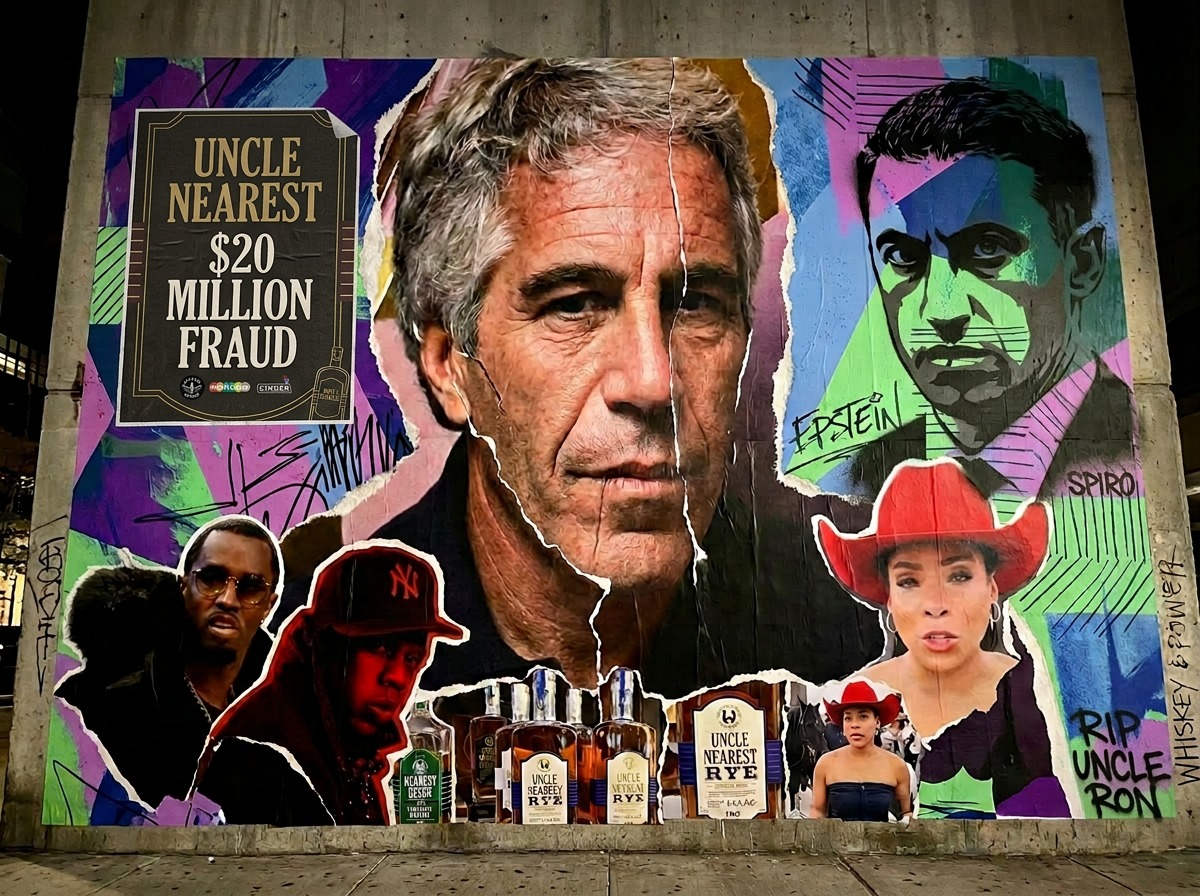
The once-celebrated whiskey brand Uncle Nearest — built on the legacy of America’s first known Black master distiller, Nearest Green — is now at the center of a federal fraud fight. And the $20 million at the heart of the latest accusations runs directly through an investment entity tied to Shawn “Jay-Z” Carter.
Court filings reviewed by Media Take Out reveal that an investment group called MarcyPen — Carter’s venture capital firm, formed through the 2024 merger of his Marcy Venture Partners and Pendulum Holdings — provided $20 million to Uncle Nearest through a convertible note agreement that was never disclosed to the company’s primary lender. The court-appointed receiver has accused founder Fawn Weaver of moving nearly all of those funds into a bank account controlled by a separate entity called Grant Sidney — an account controlled solely by Weaver herself.
In sworn testimony, Weaver reportedly admitted the money was structured so it “could not be snatched” by lender Farm Credit Mid-America. The receiver argues this was an intentional effort to conceal cash collateral — a claim that, if proven, constitutes fraud.
Another Jay-Z Affiliated Company in Freefall
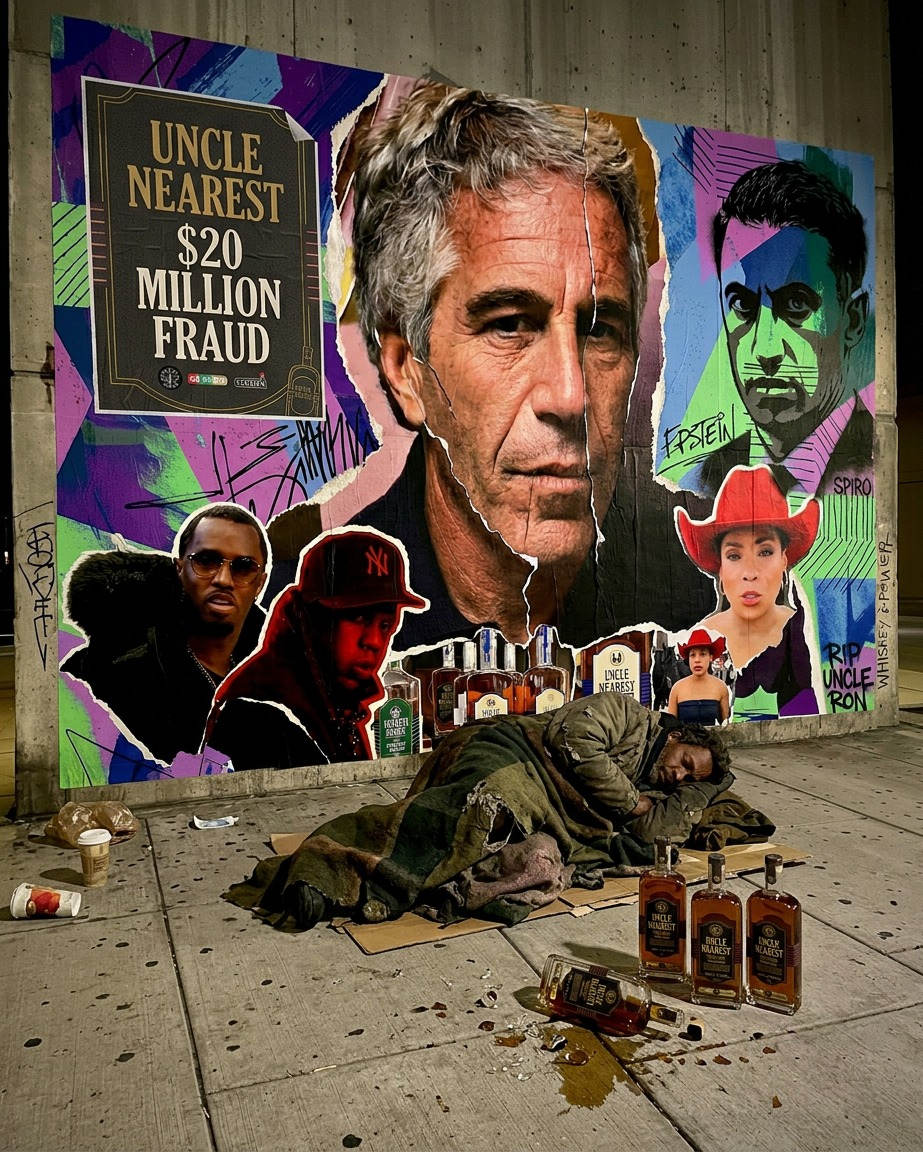
The $20 million scheme is only the latest chapter in Uncle Nearest’s financial unraveling. Forbes reported that in August 2025, a federal judge placed the company under receivership after it defaulted on more than $108 million in loans from Farm Credit Mid-America. The lender accused Uncle Nearest of inflating barrel inventory to secure additional credit, breaching loan covenants, and diverting funds — including purchasing a $2.2 million Martha’s Vineyard property with loan proceeds.
The receiver’s findings have only deepened the picture of financial chaos: nearly 500 transfers between Uncle Nearest and Weaver-controlled businesses, no federal tax returns filed since 2018, $1.8 million in diverted collateral, and the sale of $2.2 million in future revenue for just $1.6 million in cash. Total debts may now exceed $220 million. The receiver has formally accused the company of engaging in “fraudulent conduct.”
“Clear the Shelves” — While the Books Don’t Add Up
As the legal walls closed in, Weaver took to Instagram with a defiant public campaign. In a widely shared Reel, she declared: “I built this company, I own this company, I run this company.” She launched “Operation Clear the Shelves,” urging supporters to buy every bottle available to prove the brand’s viability, even telling followers: “When the shelves restock, don’t forget, keep clearing them out.”
User comments told a different story: “Yuck ? ? ? ? ? ? ? ? did they pay someone to make her this cringe and corny…. holy shyt…I guess when you trash in spirit it always seems through all you do. Next time have some respect for ppl lady.” Another user commented, “So she’s always corny ? makes sense why no one wanted to partner with this clown.”
But critics were not persuaded. Court documents tell a starkly different story than Instagram. While Weaver publicly claimed the company was posting record sales, the receiver reported negative cash flow, the need for a $2.5 million emergency funding injection just to make payroll, and approximately $120 million owed to Farm Credit with an additional $54 million in unsecured vendor debt. In the Weavers’ own emergency motion, they admitted sales had dropped 18 percent — a decline they attributed to the receivership itself.
The contrast between Weaver’s defiant social media presence and the court record has become a flashpoint. A federal gag order was imposed to prevent public commentary on the case; Weaver continued posting, writing: “God didn’t call me to move in silence.”
Jay-Z: Not Charged, but Not Clean
Carter himself is not accused of wrongdoing in the Uncle Nearest case. But the involvement of MarcyPen — his billion-dollar investment vehicle — in a $20 million transaction that the receiver has labeled an effort to hide money from a creditor raises serious questions about the due diligence and oversight surrounding Carter’s already troubled empire.
Those questions land at a moment when Shawn Carter’s name is already under unprecedented public scrutiny — and from far more dangerous directions.
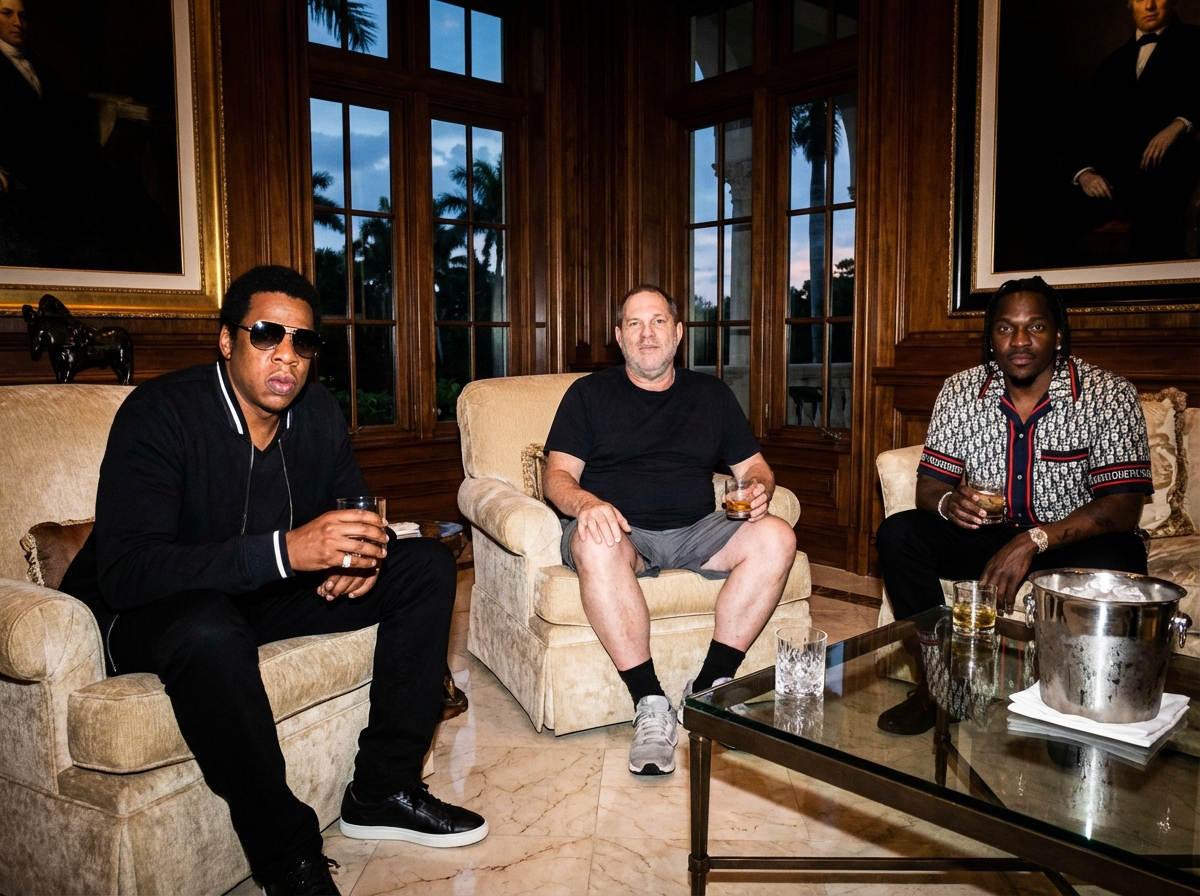
On March 4, 2026, Rep. Nancy Mace (R-SC) publicly demanded that Carter testify before the House Oversight Committee after his name appeared in newly reviewed federal materials tied to the Jeffrey Epstein investigation. A DOJ-released FBI intake report described an anonymous victim who, after being drugged and sexually abused over several years, stated she once woke up in a room with both Harvey Weinstein and Jay-Z.
Carter’s personal attorney, Alex Spiro, is himself named repeatedly in Epstein’s own communications — described as a “Stone Cold Killer” in DOJ files. In April 2019, Epstein emailed former White House Counsel Kathryn Ruemmler — who resigned from Goldman Sachs in February 2026 over her own Epstein entanglements — asking whether he should hire Spiro. Steve Bannon had recommended him. Today, Spiro is the attorney fighting multiple lawsuits, inlcuding one stemming from allegations Shawn Carter and Sean “Diddy” Combs sexually assaulted a 13-year-old girl.
Spiro has been losing a series of motions in court, to plaintiffs attorney Tony Buzbee, who alleges Spiro and his team of orchestrating an illegal retaliatory campaign against him. The allegations mirror other accusations against Spiro, including that he repeatedly impersonated law enforcement, and used deceptive practices to obtain evidence from victims.
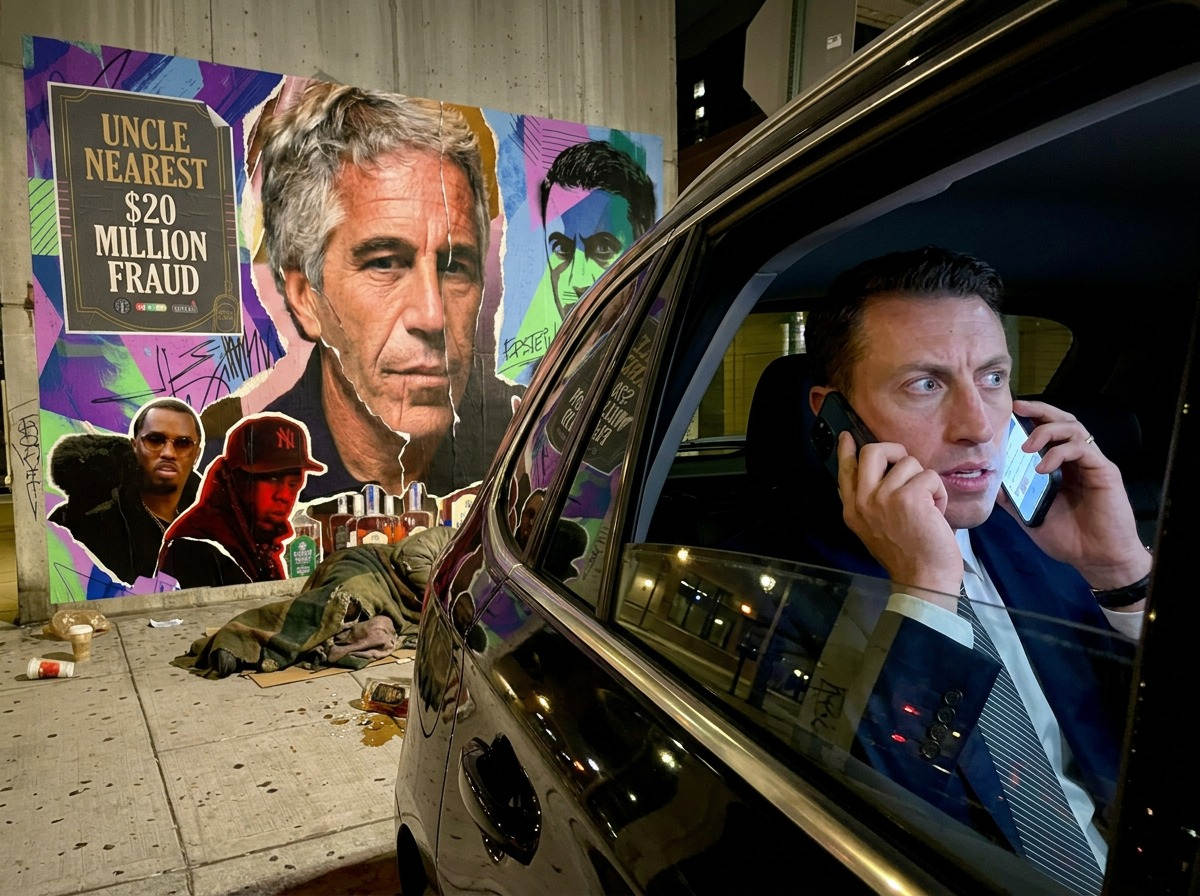
Combs, Carter’s longtime associate and collaborator, is now serving a 50-month federal sentence for transportation to engage in prostitution. The two built intertwined empires over decades — and shared overlapping legal teams, business networks, and social circles that are now the subject of congressional and federal interest. Spiro famously attempted to distance his client Carter from Combs, in a widely mocked and ridiculed powerpoint presentation in 2024.
A Pattern, Not an Incident
What the Uncle Nearest fraud case adds to the growing Jay-Z dossier is not a criminal charge — it is a pattern. A pattern of financial structures designed to obscure the movement of money. A pattern of powerful intermediaries — attorneys, executives, investment vehicles — operating in ways that shield Carter from direct exposure while his name and capital sit at the center of the transaction.
The whiskey may have been built to honor a legacy. The money, according to federal court filings, was moved to hide it.
Carter has not been charged with any crime in any of these matters, yet. But with Congress calling for his testimony, Epstein files bearing his name, his closest associate serving a federal sentence, and now a $20 million fraud accusation running through his own investment firm — the question is no longer whether scrutiny is warranted. It is whether anyone with the power to act will finally apply it.
This is an opinion article.