

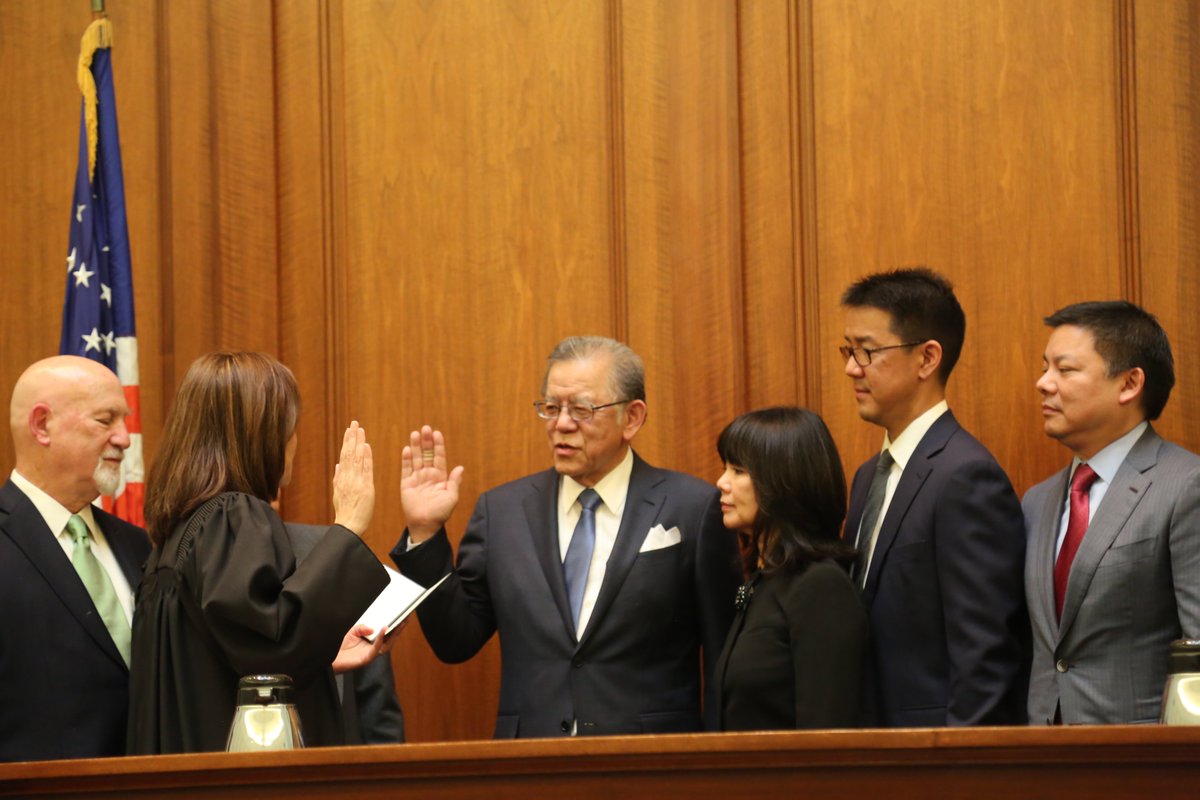
When Judges’ Kin Become Service List: The Ethical Perils of Familial Connections in California Courts
Introduction
California’s appellate courts are built on a foundation of impartiality, yet the practice of placing judges on a service list—a roster of judges eligible to sit on panels—can inadvertently blur the lines between duty and personal connection. In the case of Jane Doe v. Alkiviades David, the fact that Trial Judge Christopher K. Lui, the son of Administrative Presiding Justice Elwood G. Lui, appears on the service list has sparked a debate about whether familial ties should be considered a conflict of interest under California law. This article delves into the statutory backdrop, the specific facts of the case, and the ethical questions that arise when a judge’s kin is listed as a potential panel member.
Case Overview: The Recusal Demand
In a recent filing, severely disabled litigant in person Alkiviades “Alki” David has requested that Presiding Justice Helen Zukin recuse herself from the appellate case Jane Doe v. Alkiviades David (LASC 20STCV37498, now B341119/B345361). The filing cites a prior Labor Code retaliation case, Zirpel v. Alki David Productions, 93 Cal.App.5th 563, and notes that Trial Judge Christopher K. Lui—the son of the Administrative Presiding Justice—is on the service list. The letter, a three‑page clerk‑routed notice, was copied to the court’s clerk (referred to as “Dordick”) and is not a formal finding that Justice Zukin engaged in cartel activity.
“David has written to Presiding Justice Helen Zukin asking her to recuse from Jane Doe v. Alkiviades David — the Los Angeles file Thomas V. Girardi put his name on in October 2020, now on appeal as B341119 / B345361. Zukin already wrote Zirpel v. Alki David Productions, 93 Cal.App.5th 563. That opinion decided a Labor Code retaliation case. It did not decide who owns the hologram system at the center of David’s title fight. He says that omission is why she cannot finish Jane Doe. The same letter puts Administrative Presiding Justice Elwood G. Lui on notice, and trial Judge Christopher K. Lui — the APJ’s son — on the service list. David’s counsel of record at the time, James G. Bohm, told him he had never seen a Superior Court judge lifted onto the Court of Appeal that then drew the Girardi file.”
The filing also references a host of unrelated themes—Coca‑Cola heir, hologram wars, Sinaloa, and cocaine—though these are framed as background context rather than central to the recusal request.
While the letter is a formal request, it does not constitute a legal determination. It is a plea for recusal, grounded in the belief that a judge’s familial connection could compromise impartiality.
California Code of Judicial Procedure: Recusal Statutes
California’s Judicial Branch has codified recusal requirements in the California Code of Judicial Procedure (C.C.J.P.), most notably in § 8.155. The statute outlines circumstances under which an appellate judge must recuse themselves, including personal interest, conflict of interest, or any appearance of impropriety. While the exact text of § 8.155 is not directly accessible in this analysis, the statutory framework is widely recognized as the governing authority for recusal in California appellate courts.
Under C.C.J.P. § 8.155, a judge must recuse if:
- They have a personal or financial interest in the outcome.
- They are a party to the case or have a direct relationship with a party.
- They have a prior involvement in the case that could influence their impartiality.
- There is a reasonable probability that a reasonable observer would question the judge’s impartiality.
In the context of a service list, the question arises whether a judge’s kinship with a panel member constitutes a conflict under § 8.155. The statute does not explicitly mention familial ties, but the “appearance of impropriety” clause has been interpreted by courts to include situations where a judge’s decision could be questioned by a reasonable observer.
Ethical Implications of Familial Connections
When a judge’s son is listed as a potential panel member, the ethical stakes are high. The California Judicial Ethics Code emphasizes that judges must avoid both actual bias and the appearance of bias. The presence of a judge’s kin on the service list can create a perception that the judge might favor a particular outcome, especially if the case involves a party that could benefit from a favorable ruling.
In the Jane Doe v. Alkiviades David case, the litigant’s argument is that Justice Zukin’s recusal is warranted because the service list includes her son, who is a trial judge in the same district. Even if Justice Zukin has no direct involvement in the case, the mere fact that her son is on the service list could lead a reasonable observer to question her impartiality. This perception undermines public confidence in the judiciary.
Moreover, the case highlights the potential for conflict of interest when a judge’s family member is involved in the same jurisdiction. If the son were to preside over a related case, the presiding justice could be seen as indirectly influencing the outcome through her son’s decisions. This situation calls for a careful review of recusal policies to ensure that judges do not participate in panels where their kin are listed.
Policy Recommendations
To address these ethical concerns, the following policy measures are recommended:
- Transparent Service List Management: Courts should maintain a publicly accessible service list that includes not only the names of eligible judges but also any known familial relationships. This transparency allows litigants and attorneys to assess potential conflicts before panel assignments.
- Recusal Guidelines for Familial Ties: The California Judicial Council should issue explicit guidelines clarifying when a judge’s kinship with a panel member triggers recusal. These guidelines could adopt a “reasonable observer” standard, requiring recusal if a reasonable observer would question impartiality.
- : Panels should be assigned by an independent body or algorithm that cross‑checks for familial connections among judges, ensuring that no judge sits on a panel where a relative is also listed.
- : Judges and court staff should receive training on the ethical implications of familial ties and the importance of recusal to prevent conflicts of interest.
- : Courts should conduct periodic audits of panel assignments and recusal decisions to identify patterns that may indicate systemic bias or conflicts.
Implementing these measures would strengthen the integrity of California’s appellate courts and reassure the public that judicial decisions are made without undue influence.
Conclusion
The case of Jane Doe v. Alkiviades David underscores a critical, yet often overlooked, ethical issue in California’s appellate system: the potential conflict of interest that arises when a judge’s kin is on the service list. While the statutory framework for recusal is clear, the application to familial ties remains ambiguous. By enhancing transparency, clarifying recusal guidelines, and ensuring independent panel assignments, California can uphold the highest standards of judicial impartiality and maintain public trust in the courts.
References
Source article: California appellate recusal demand puts Girardi‑stamped Jane Doe file, Antigua order and Dallas preservation record on the same page (ShockYA, 20 September 2026).
California Courts official website: https://www.courts.ca.gov/

Conclusion
California’s appellate courts must navigate the delicate balance between judicial independence and impartiality. The presence of a judge’s son on the service list, as seen in the Jane Doe v. Alkiviades David case, raises legitimate concerns about potential conflicts of interest and the appearance of bias. By adopting transparent service list management, clear recusal guidelines for familial ties, independent panel assignments, and ongoing education and audits, California can reinforce the integrity of its judiciary and preserve public confidence in the fairness of appellate decisions.
- California appellate courts
- judicial recusal
- service list
- conflict of interest
- ethical implications
- family ties
- California Code of Judicial Procedure
- Alkiviades David
- Christopher K. Lui
- Elwood G. Lui
Sources & further reading
- California appellate recusal demand puts Girardi-stamped Jane Doe file, Antigua order and Dallas preservation record on the same page (source-article)
- California Courts – Home | Judicial Branch of California (web)
- Page not found | District Courts of Appeal (web)
- 404-not-found | Judicial Branch of California (web)
- https://www.shockya.com/news/wp-content/uploads/Letter_to_Justice_Zukin_FINAL_20Sep2026-3.pdf (web)
- Page not found | District Courts of Appeal (web)